
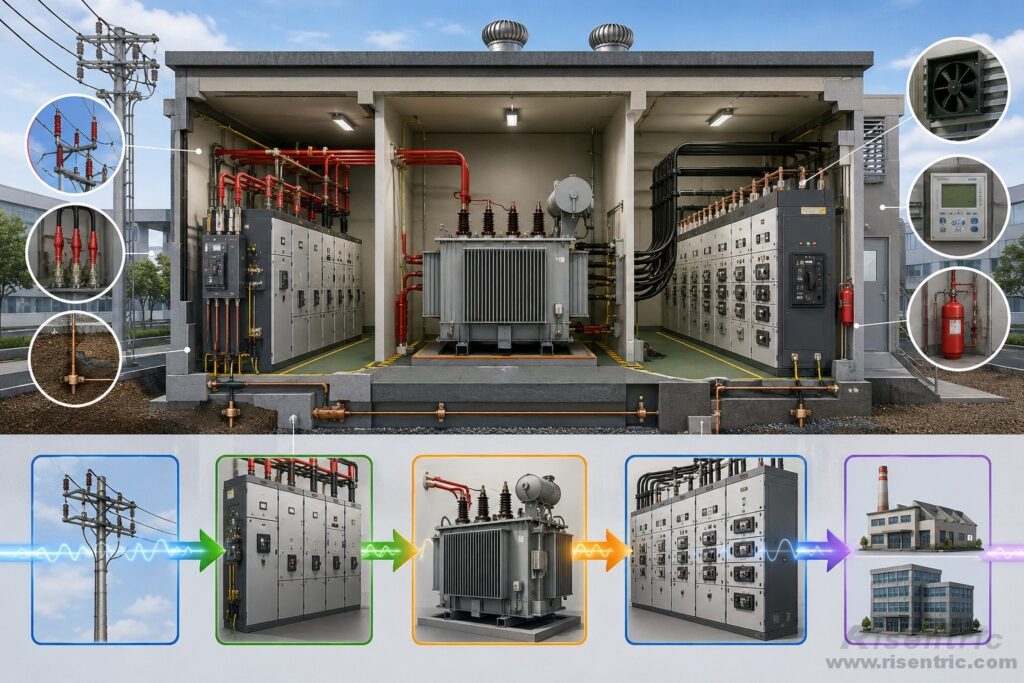
A transformer substation is a power distribution point where electrical energy is received, controlled, transformed, and sent to downstream loads.
This article focuses on the more common step-down transformer substation, which is widely used in factories, commercial buildings, industrial parks, and infrastructure projects. In this type of system, medium-voltage power is transformed into low-voltage power for local distribution.
Its whole function is to receive medium-voltage power, control and protect it, transform it into low-voltage power, and distribute that power safely to downstream loads.
We will discuss step-up substations and their differences from step-down substations in a separate article.
The easiest way to understand what is inside a transformer substation is to follow the power flow:
Incoming MV power → MV switchgear → transformer → LV switchgear → outgoing loads
In this process, the three main power units are:
| Main Unit | Position in the Process | Main Function |
|---|---|---|
| MV switchgear | Before the transformer | Receives, controls, isolates, and protects incoming medium-voltage power |
| Transformer | Middle of the system | Changes voltage from MV to LV |
| LV switchgear | After the transformer | Distributes low-voltage power to loads |
Around these three units, the substation also needs protection, metering, cables, busbars, earthing, ventilation, and auxiliary systems. These supporting systems make the whole process safe, measurable, and maintainable.
- The Whole Function of a Transformer Substation
- Step 1: Medium-Voltage Power Enters the Substation
- Step 2: MV Switchgear Controls and Protects the Incoming Side
- Step 3: The Transformer Changes the Voltage
- Step 4: LV Switchgear Distributes Power to Loads
- Step 5: Protection and Monitoring Keep the Whole Process Safe
- Supporting Units Inside the Substation
- What Happens During Normal Operation?
- What Happens During a Fault?
- Simple Example: Factory Transformer Substation
- Conclusion
The Whole Function of a Transformer Substation
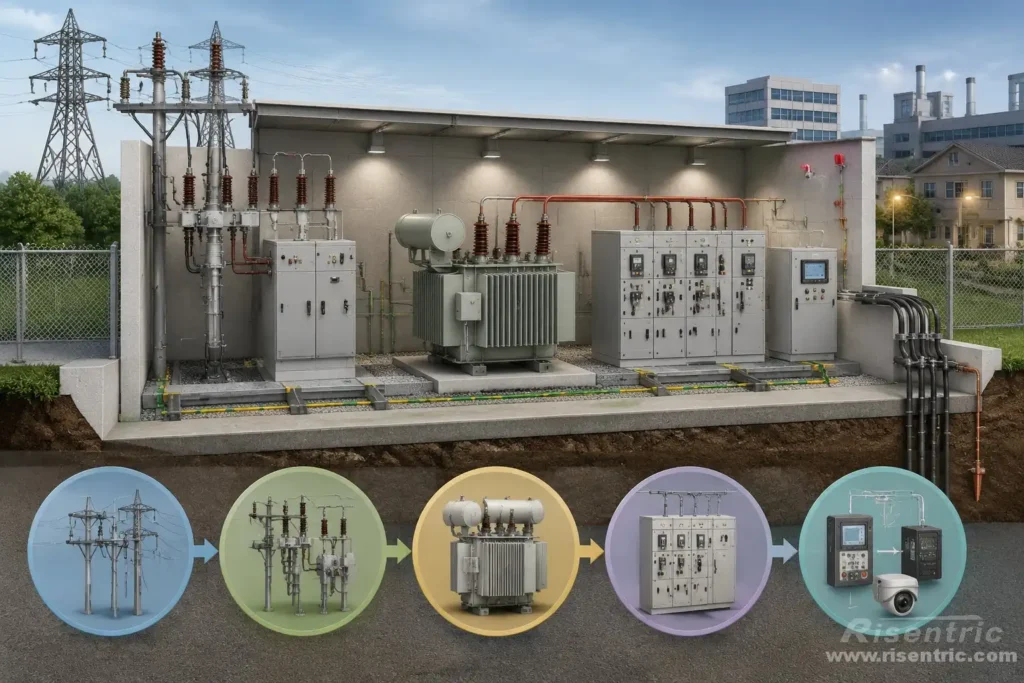
A transformer substation works as a controlled power conversion and distribution point.
It does five things:
- Receives incoming medium-voltage power.
- Controls and isolates the incoming circuit.
- Transforms voltage from MV to LV.
- Distributes low-voltage power to different loads.
- Protects and monitors the system during normal operation and fault conditions.
So, the transformer substation should not be understood as one single piece of equipment. It is a system made of several units working together.
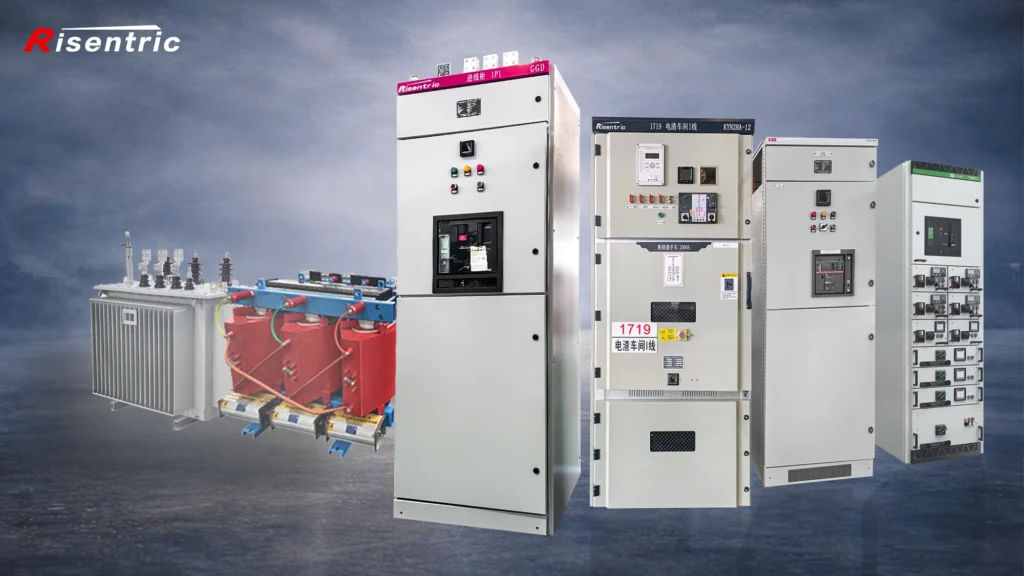
Looking for factory-tested Electrical Substation & Panelboards for your project?
Step 1: Medium-Voltage Power Enters the Substation
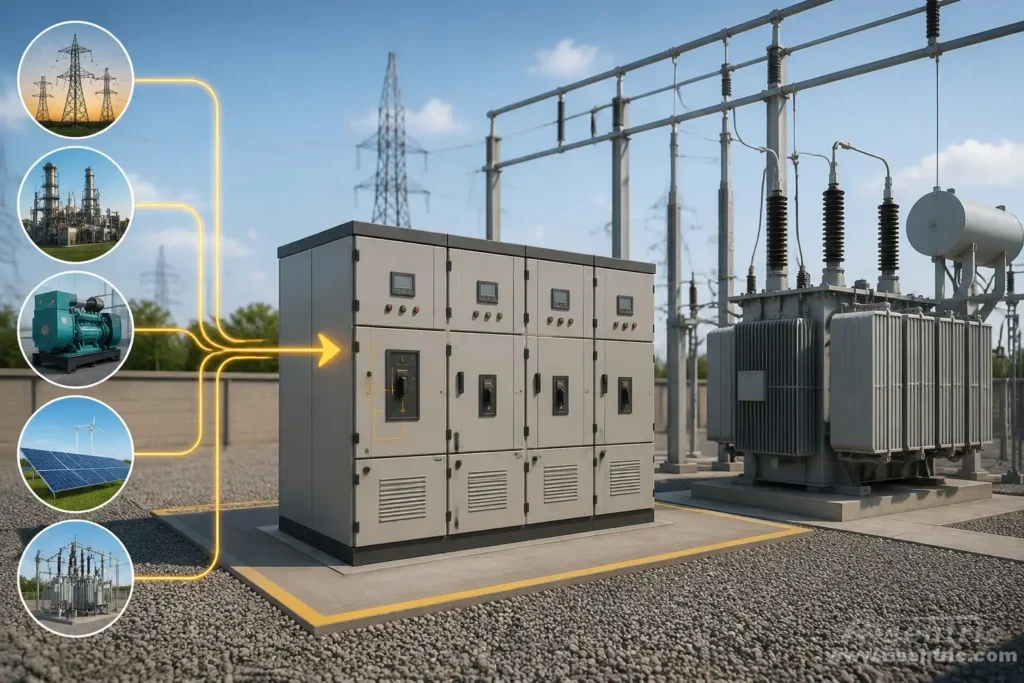
The process starts when medium-voltage power enters the substation.
This power may come from:
- Utility grid
- Industrial power network
- Generator system
- Renewable energy system
- Upstream substation
Common incoming voltage levels may include 10 kV, 11 kV, 20 kV, or 33 kV, depending on the project and local grid system.
At this stage, the power first reaches the medium-voltage switchgear.
The MV switchgear is the first control point of the substation. It allows the incoming power to be connected, disconnected, isolated, and protected before it reaches the transformer.
Without MV switchgear, the transformer would be directly connected to the upstream medium-voltage supply. That would make operation, fault protection, and maintenance much more difficult and unsafe.
Step 2: MV Switchgear Controls and Protects the Incoming Side
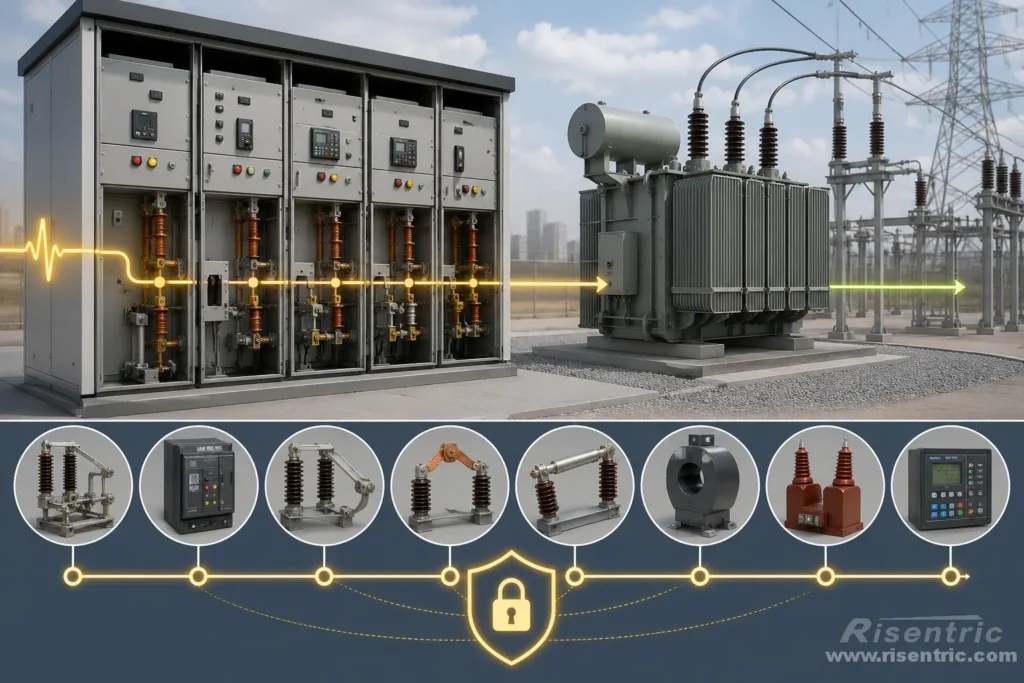
Before power enters the transformer, the MV side must do three things: switch the circuit, isolate it for maintenance, and protect it during faults.
In a real project, these functions may be achieved by different MV devices. For example, a load break switch or circuit breaker may control the circuit, a disconnector and earthing switch may support safe isolation, and protection devices may detect fault conditions and disconnect the transformer when necessary.
The exact equipment arrangement depends on the project voltage, fault level, protection requirement, and whether the substation is part of a radial or ring distribution network.
| MV-side function | Typical devices |
|---|---|
| Switching | Load break switch, circuit breaker |
| Isolation and earthing | Disconnector, earthing switch |
| Protection and sensing | Fuse-switch combination, CT, VT, protection relay |
Step 3: The Transformer Changes the Voltage
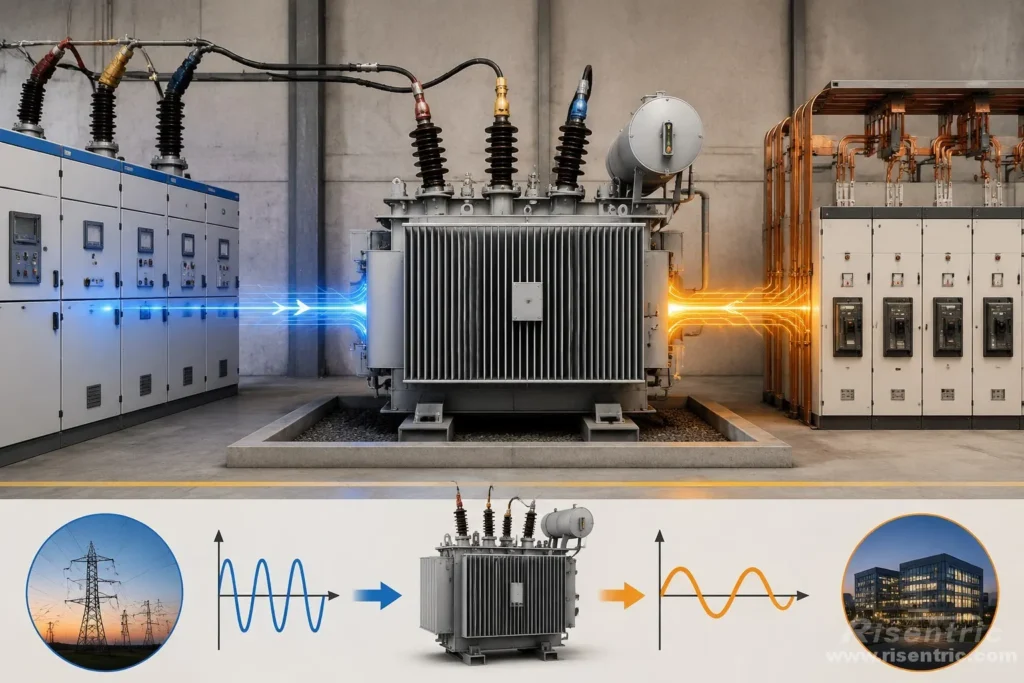
After the incoming power is controlled by the MV switchgear, it flows into the transformer.
This is the voltage conversion stage.
In most commercial and industrial distribution substations, the transformer steps medium voltage down to low voltage.
For example:
| Input Voltage | Output Voltage | Typical Use |
|---|---|---|
| 10 kV | 400 V | Factory and commercial distribution |
| 11 kV | 415 V | Building and industrial systems |
| 20 kV | 400 V | Utility and industrial distribution |
| 33 kV | 415 V or 690 V | Larger industrial projects |
The transformer does not create electricity. It changes the voltage and current relationship so that power can be used by downstream equipment.
A key point is this:
When voltage is stepped down, current increases.
That is why the low-voltage side often needs larger busbars, stronger cable connections, and properly rated LV switchgear.
The transformer is the center of the substation, but it is not the whole substation. It needs the MV switchgear before it and the LV switchgear after it to form a complete power process.
Step 4: LV Switchgear Distributes Power to Loads
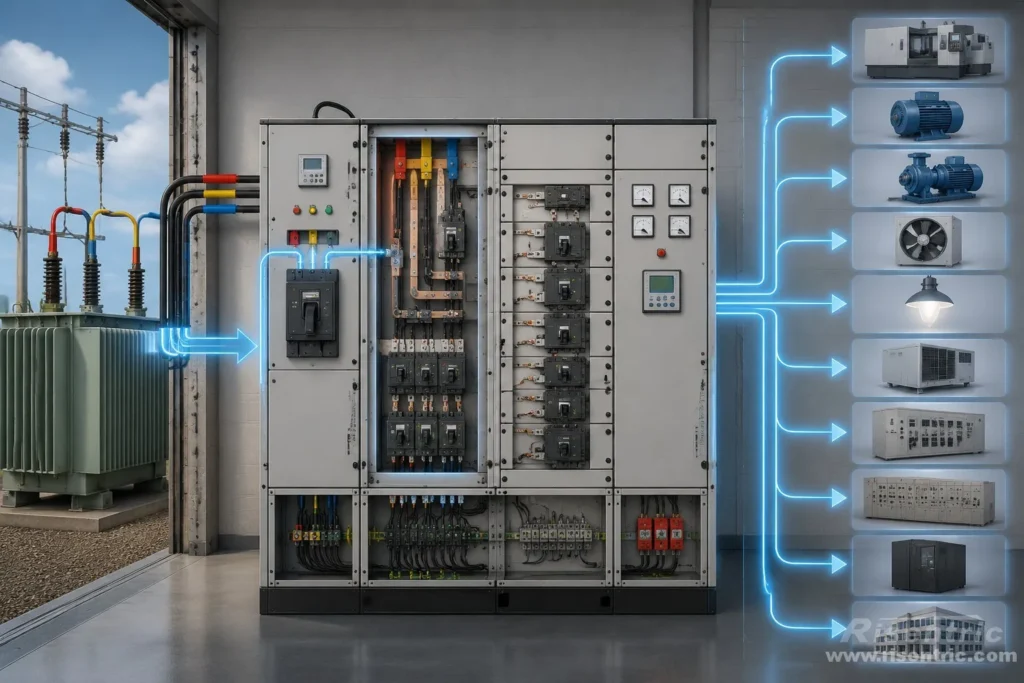
After the transformer steps the voltage down, power flows into the low-voltage switchgear.
This is where the transformed power becomes usable power for the site. The LV switchgear receives power from the transformer and divides it into different outgoing circuits for machines, motors, lighting, HVAC, building services, and other electrical loads.
However, the LV switchgear does more than distribute power. It also controls and protects the outgoing side of the system. If one feeder has a fault, the related breaker should disconnect that feeder without shutting down the whole substation unnecessarily.
In normal operation, the LV switchgear works like the main distribution hub after the transformer. During maintenance or fault conditions, it allows individual circuits to be switched off, isolated, or protected.
In simple terms, the LV switchgear is the final distribution and protection center inside the step-down transformer substation.
Step 5: Protection and Monitoring Keep the Whole Process Safe
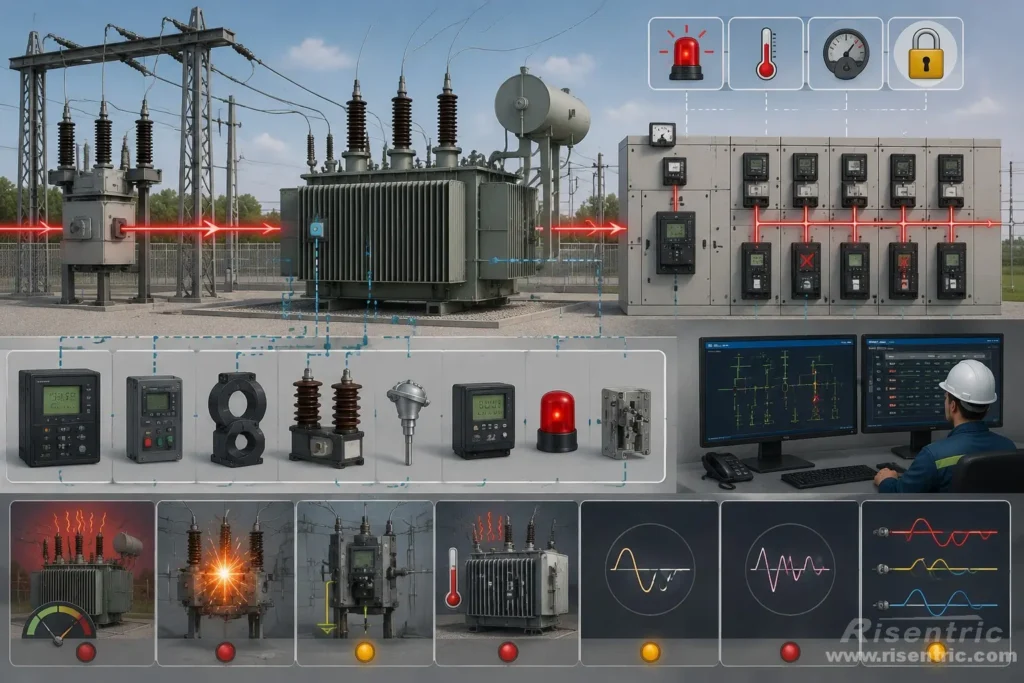
A transformer substation must not only transfer power. It must also supervise the power flow.
During normal operation, power flows continuously from the MV side, through the transformer, and then to the LV side. At the same time, protection and monitoring systems watch for abnormal conditions such as overload, short circuit, earth fault, overtemperature, abnormal voltage, or phase imbalance.
If a problem happens, the system should respond at the correct point.
For example, if a fault happens on one LV outgoing feeder, the related LV breaker should trip first. If the fault is inside the transformer or very close to it, the MV-side protection may disconnect the transformer from the incoming supply.
This coordination is very important. A transformer substation is not protected by one device only. Protection must work across the whole power path, from the incoming MV side to the transformer and then to the outgoing LV side.
In simple terms, protection and monitoring act as the supervision layer of the substation. They help the system operate safely during normal conditions and respond correctly when abnormal conditions occur.
Supporting Units Inside the Substation
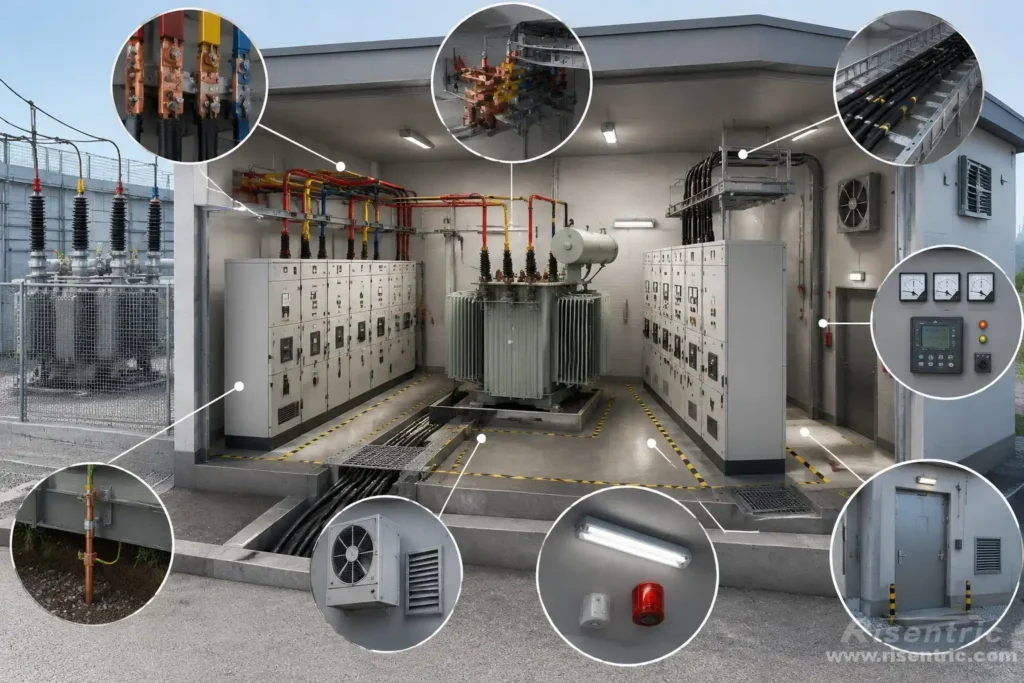
The main power path is formed by MV switchgear, transformer, and LV switchgear. However, a real transformer substation also needs supporting units.
| Supporting Unit | Function in the Whole System |
|---|---|
| Busbars and cables | Carry current between the MV side, transformer, LV side, and outgoing feeders |
| Earthing system | Supports safety and provides a path for fault current |
| Metering system | Shows voltage, current, power, energy, and load condition |
| Auxiliary system | Provides lighting, ventilation, heating, alarm, and control power |
| Enclosure or electrical room | Provides mechanical protection, access control, and environmental protection |
These units should not be treated as minor details. Poor cable termination, weak earthing, insufficient ventilation, or bad access space can create serious operation and maintenance problems.
What Happens During Normal Operation?
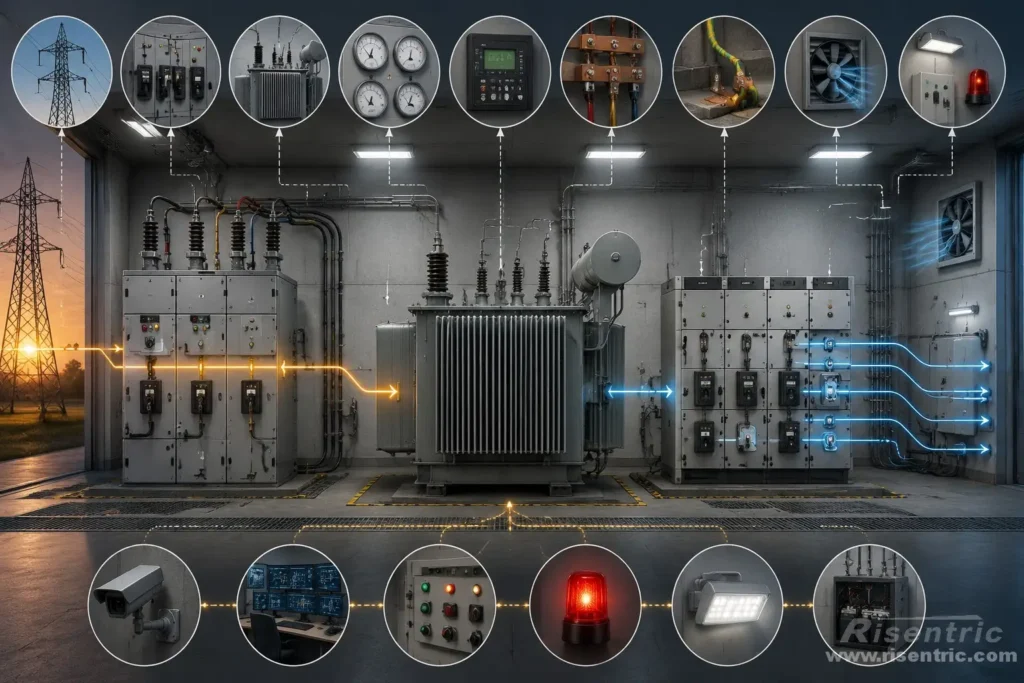
During normal operation, the transformer substation works as one continuous system.
The MV switchgear keeps the incoming circuit connected and controlled. The transformer converts the voltage. The LV switchgear distributes power to outgoing circuits.
At the same time:
- Meters show operating values
- Protection devices monitor abnormal conditions
- Busbars and cables carry current
- Earthing keeps exposed conductive parts safer
- Ventilation helps remove heat
- Auxiliary systems support lighting, control, and alarms
So the substation is not only transferring power. It is also supervising and protecting the power flow.
What Happens During a Fault?
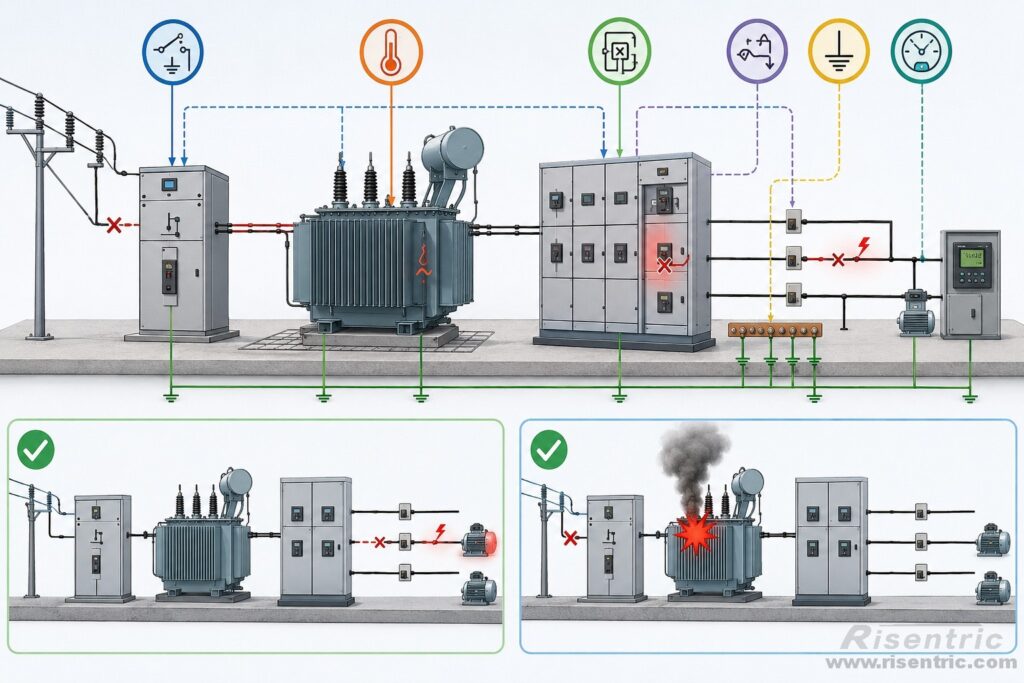
During a fault, the function of each unit becomes clearer.
| Unit | Function During Fault or Maintenance |
|---|---|
| MV switchgear | Disconnects or isolates the transformer from incoming MV supply |
| Transformer | May trigger temperature, pressure, or internal fault protection |
| LV switchgear | Trips faulty outgoing circuits or the main LV circuit |
| Protection devices | Detect abnormal current, voltage, temperature, or earth fault |
| Earthing system | Helps control touch voltage and provides a fault-current path |
| Metering system | Helps operators identify abnormal operation |
For example, if one outgoing feeder has a short circuit, the LV breaker should disconnect that feeder. If there is a serious fault near the transformer, the MV protection may disconnect the transformer from the upstream supply.
This coordination is one reason a transformer substation cannot be designed by looking at the transformer alone.
Simple Example: Factory Transformer Substation
Imagine a factory receives 10 kV power from the utility grid.
The process may work like this:
- The 10 kV cable enters the MV switchgear.
- The MV switchgear controls and protects the incoming supply.
- The transformer steps 10 kV down to 400 V.
- The 400 V power enters the LV switchgear.
- The LV switchgear distributes power to machines, motors, lighting, HVAC, and other factory loads.
- Protection devices monitor the system and trip circuits during faults.
- Metering devices help operators check load, power factor, and energy consumption.
In this example, the transformer is only one unit in the whole process. The complete substation is what makes the power usable, controllable, and safer for the factory.
Looking for factory-tested Electrical Substation & Panelboards for your project?
Conclusion
A transformer substation is best understood as a power process, not only as a group of components.
The process is:
MV power enters → MV switchgear controls it → transformer changes the voltage → LV switchgear distributes it → protection and monitoring keep the system safe
The three main units are MV switchgear, transformer, and LV switchgear. Each unit has its own role, but the substation only works properly when they operate together as one coordinated system.
For real projects, transformer capacity is only one part of the design. The complete system must also match the voltage level, load demand, short-circuit level, protection requirement, installation environment, and future expansion plan.
FAQ
What are the three main units inside a transformer substation?
The three main units are MV switchgear, transformer, and LV switchgear. The MV switchgear receives and controls incoming power, the transformer changes the voltage, and the LV switchgear distributes low-voltage power to outgoing loads.
What is the whole function of a transformer substation?
The whole function is to receive medium-voltage power, control and protect it, transform it to low voltage, and distribute it safely to downstream loads.
Is a transformer substation only a transformer?
No. The transformer is the voltage conversion unit, but the complete substation also includes switchgear, protection, metering, cabling, earthing, and auxiliary systems.
Why does the substation need MV switchgear?
MV switchgear controls, isolates, and protects the incoming medium-voltage side before power reaches the transformer.
Why does the substation need LV switchgear?
LV switchgear distributes the transformed low-voltage power to outgoing circuits and protects those circuits during overloads or faults.


