
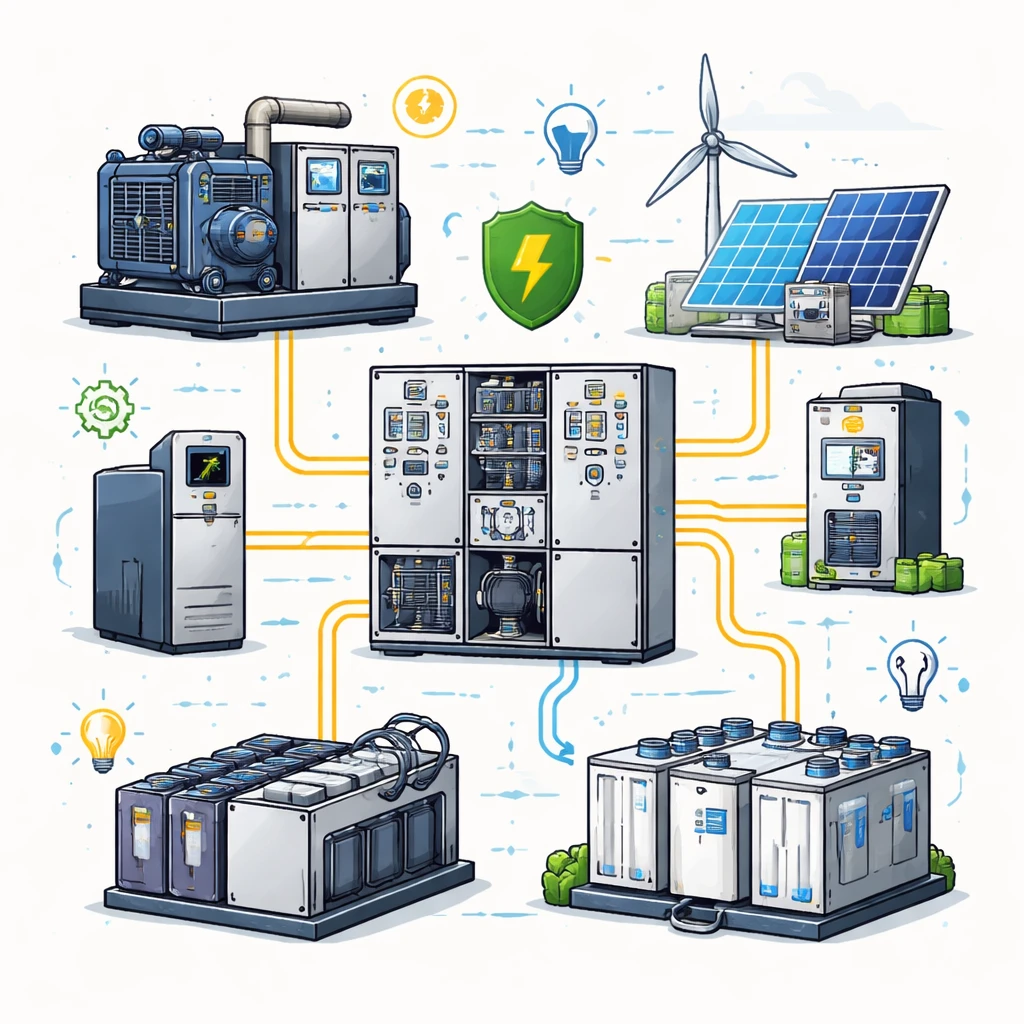
When engineers discuss auxiliary power in substations and industrial power rooms, they usually mean the systems that keep switchgear operable, controllable, and safe during normal operation and during blackouts. For practical product selection, it helps to group auxiliary power systems into four core blocks:
- Substation DC Power Supply Systems (110VDC / 220VDC)
- Intelligent DC Power Systems (DC + monitoring + remote supervision)
- Industrial UPS (uninterruptible AC for automation and communications)
- EPS Emergency Power Supplies (backup AC for life-safety loads)
This classification is short, easy to communicate across engineering and procurement teams, and remains technically accurate for switchgear-based projects.
- 1) Substation DC Power Supply System: the control & protection lifeline
- 2) Intelligent DC Power System: DC supply + battery monitoring + remote supervision
- 3) Industrial UPS: uninterruptible AC for SCADA, PLC, and communications
- 4) EPS Emergency Power Supply: backup AC for life-safety and emergency loads
- Quick selection guide (practical)
- Risentric capability
- FAQ
1) Substation DC Power Supply System: the control & protection lifeline
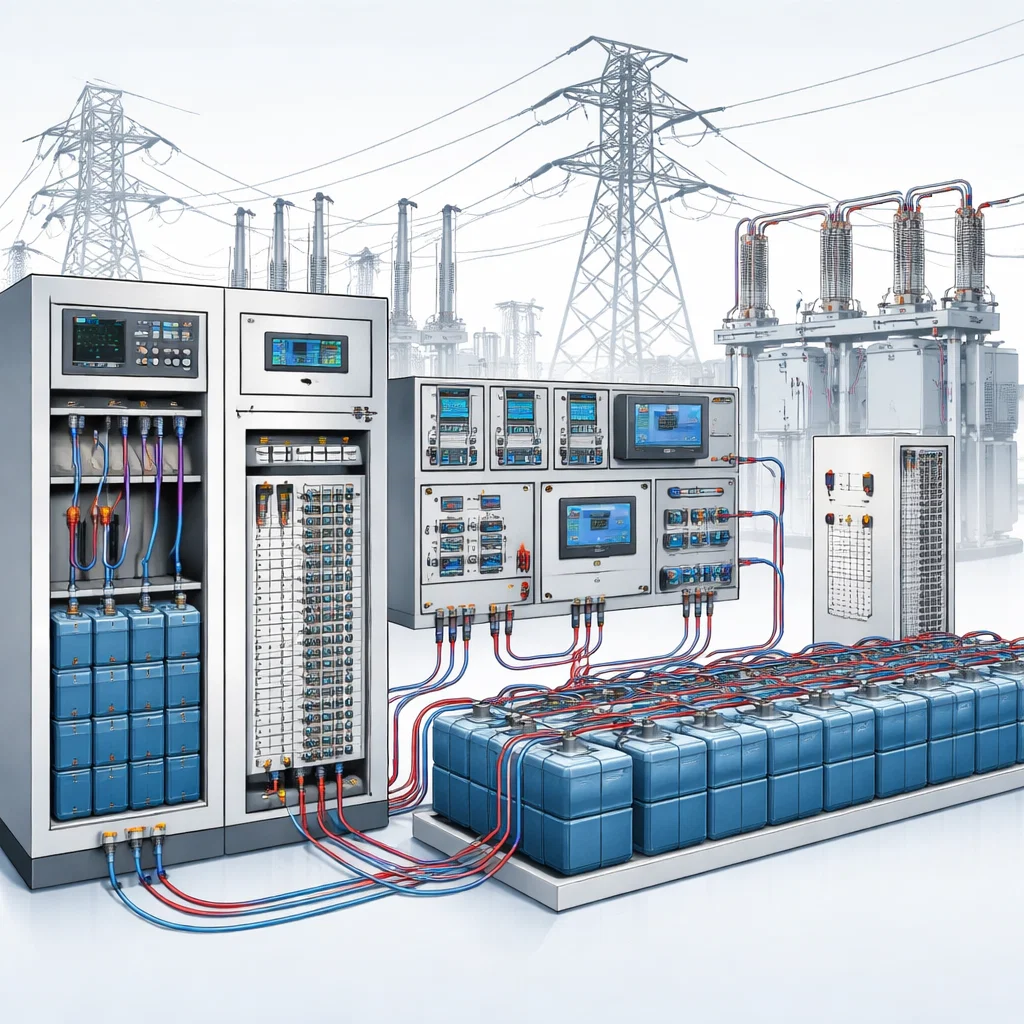
A Substation DC Power Supply System (commonly 110VDC or 220VDC) is the dedicated auxiliary source for switchgear control and protection. It supplies power to circuit breaker trip/close coils, protection relays, interlocking logic, alarms, and essential signaling circuits.
Unlike backup AC systems, a station DC system is designed to remain available during a total AC loss through battery-backed operation (charger/rectifier + battery bank + DC distribution). For medium- and high-voltage switchgear, station DC is not optional—it is the foundation that allows the system to isolate faults and protect the network safely.
2) Intelligent DC Power System: DC supply + battery monitoring + remote supervision
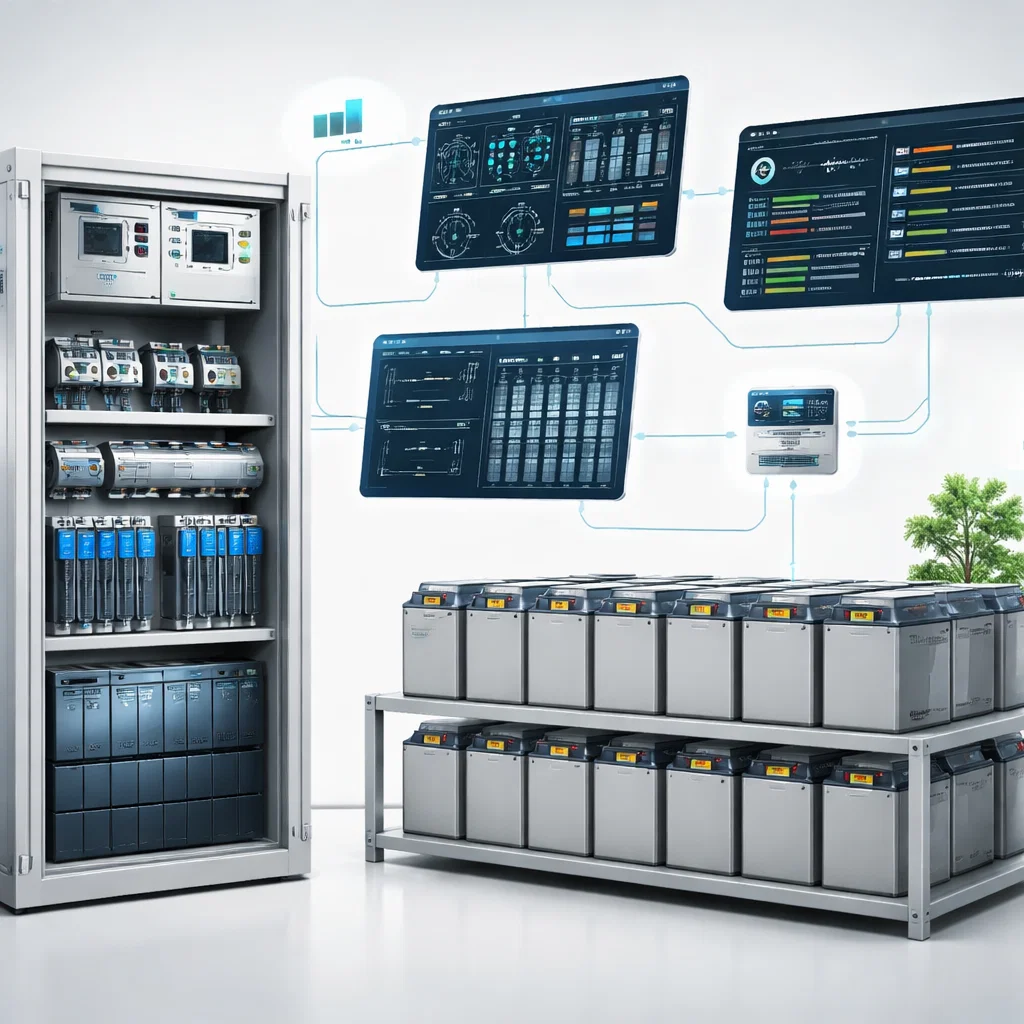
An Intelligent Substation DC Power Supply System is a modern evolution of the traditional DC system. It integrates the same core power functions (rectifiers, batteries, and DC distribution) plus monitoring and supervision, such as battery health monitoring, alarm management, event/data logging, and remote communication (e.g., Modbus/RS485/Ethernet, depending on configuration).
This “intelligent” layer does not change the purpose of station DC—it improves reliability by providing early warning of battery degradation, abnormal cell voltage, insulation issues, and charger faults. In real switchgear projects, intelligent DC systems reduce maintenance uncertainty and help keep protection and control circuits dependable throughout the equipment lifecycle.
3) Industrial UPS: uninterruptible AC for SCADA, PLC, and communications
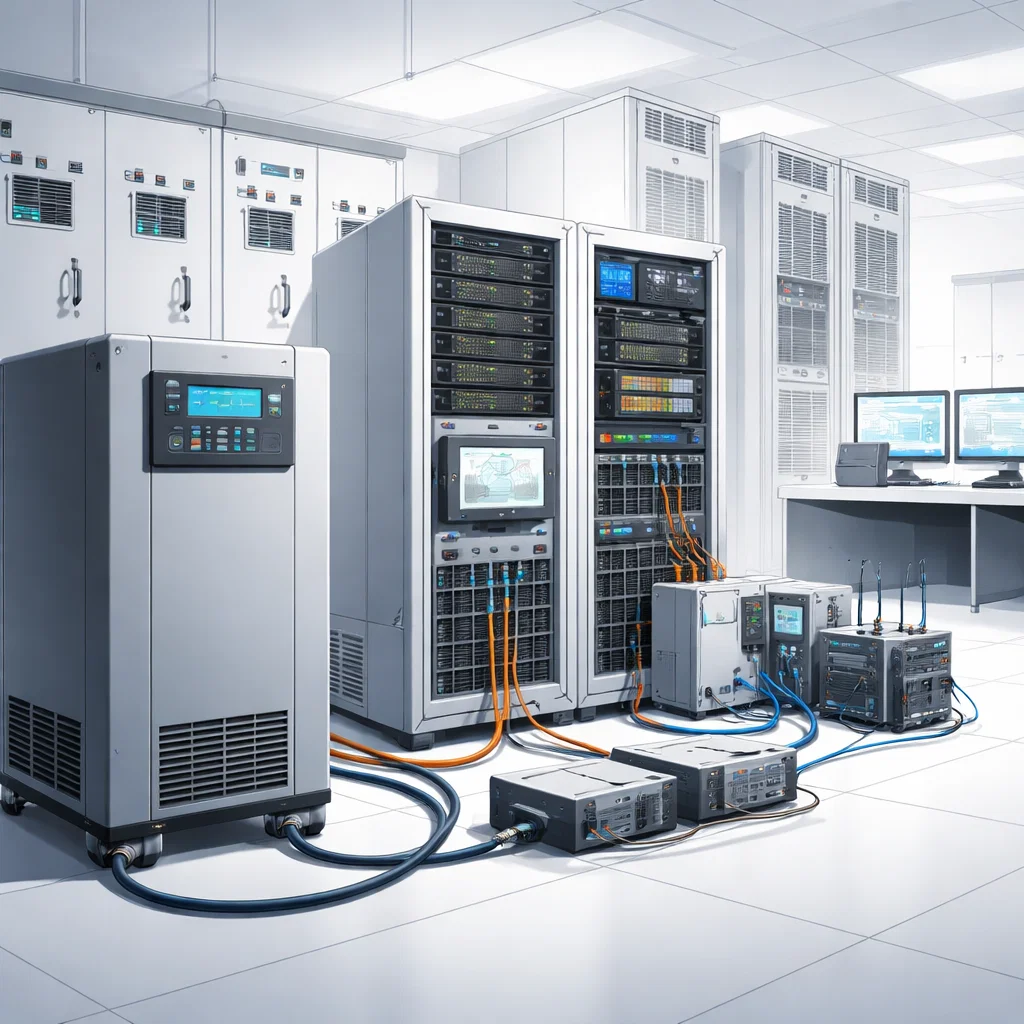
An Industrial UPS (Uninterruptible Power Supply) delivers clean and continuous AC power to selected critical loads such as SCADA servers, PLC panels, network switches, RTUs, communication devices, and control room electronics. A UPS is chosen when the load requires AC and must not experience interruption during voltage dips or outages.
In a switchgear room, a UPS does not replace the station DC system. Instead, it supports the digital and communication layer around switchgear, keeping monitoring and automation functions online when the primary AC supply becomes unstable.
4) EPS Emergency Power Supply: backup AC for life-safety and emergency loads
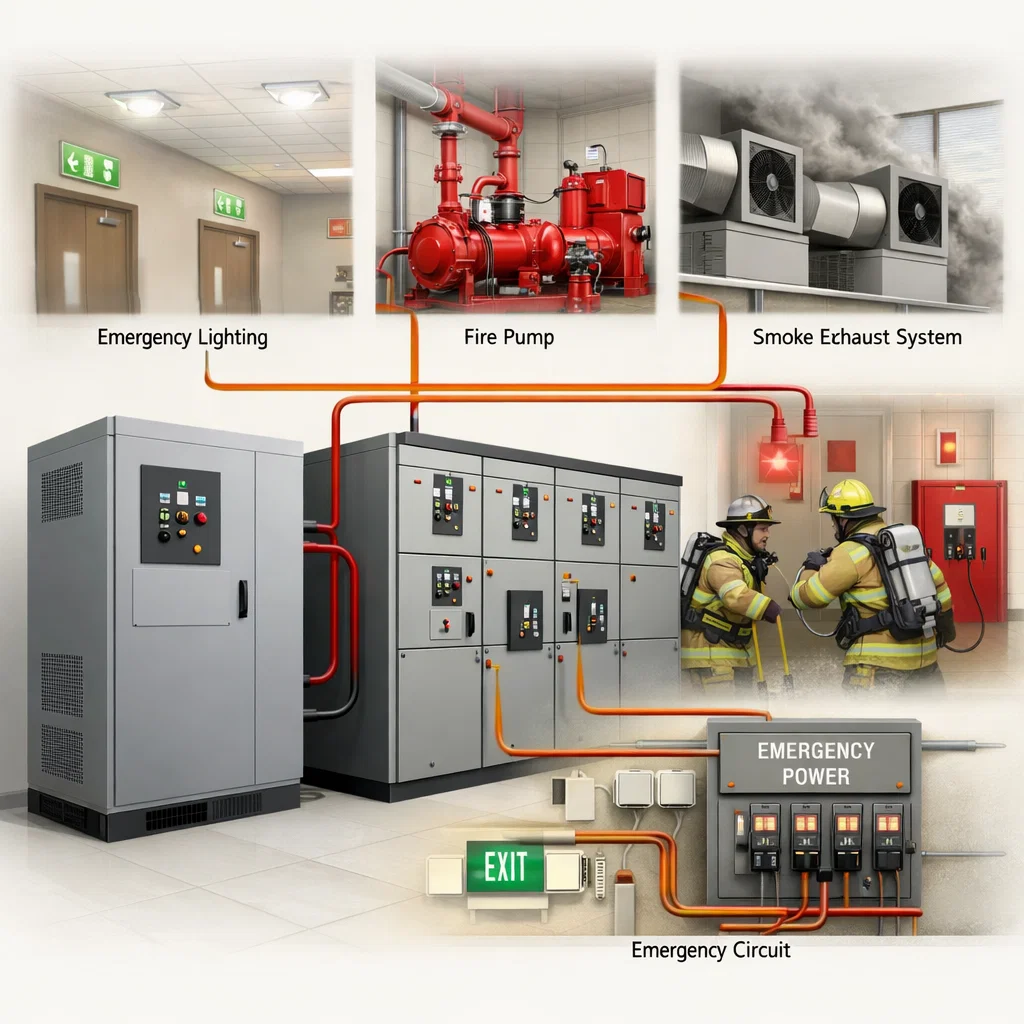
An EPS (Emergency Power Supply) is designed to power life-safety and emergency loads such as emergency lighting, fire pumps, smoke exhaust systems, and other emergency circuits defined by building and safety requirements. Unlike UPS, EPS typically allows a short transfer delay and prioritizes backup duration and safety compliance for emergency operation.
In switchgear projects, EPS is usually part of the facility’s emergency power architecture rather than a control-power solution. Switchgear interfaces with EPS through proper feeder design and protection coordination to ensure emergency circuits remain available during abnormal events.
Quick selection guide (practical)
- Need breaker trip/close + protection + interlocking during blackout → Substation DC (110/220VDC)
- Need battery monitoring + alarms + remote supervision → Intelligent DC
- Need uninterrupted AC for SCADA/PLC/communications → Industrial UPS
- Need backup AC for life-safety emergency loads → EPS
Risentric capability
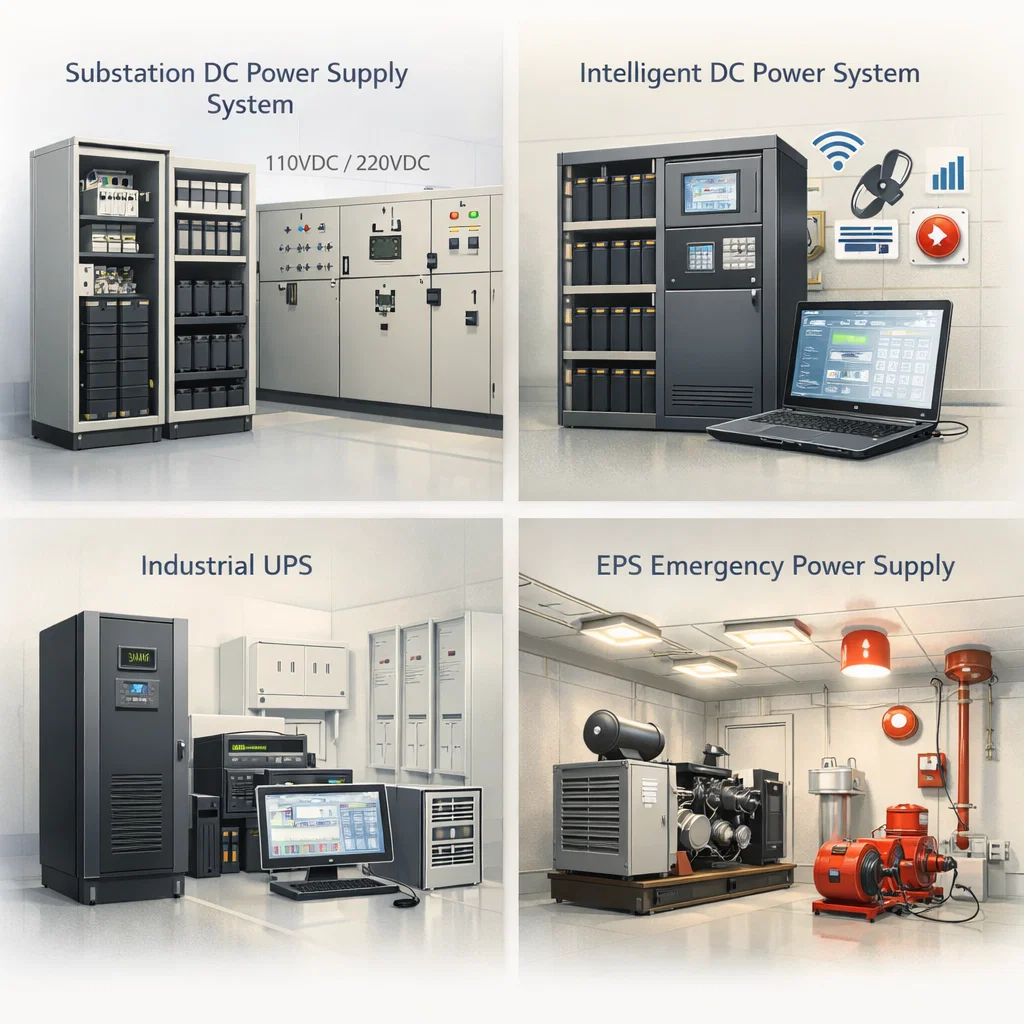
At Risentric, we supply auxiliary power solutions for switchgear projects, including substation DC systems (110VDC/220VDC), intelligent DC systems with monitoring, industrial UPS, and EPS emergency power supplies. Our focus is engineering clarity: correct load classification, protection coordination considerations, and reliable system configuration for substation and industrial power room applications.
FAQ
1) Does UPS replace station DC?
No. Station DC (110/220VDC) powers breaker trip/close and protection/control circuits. UPS powers critical AC loads like SCADA/PLC/communications.
2) 110VDC vs 220VDC — how to choose?
Follow the site/utility standard first, then verify device ratings, voltage drop on DC feeders, and battery/charger configuration compatibility.
3) UPS vs EPS — what’s the key difference?
UPS = no interruption for sensitive electronics. EPS = emergency backup (often with short transfer delay) for life-safety loads like emergency lighting/fire systems.
4) When do I need Intelligent DC?
When you want battery monitoring + alarms + remote supervision to reduce maintenance uncertainty and catch degradation/faults early.


