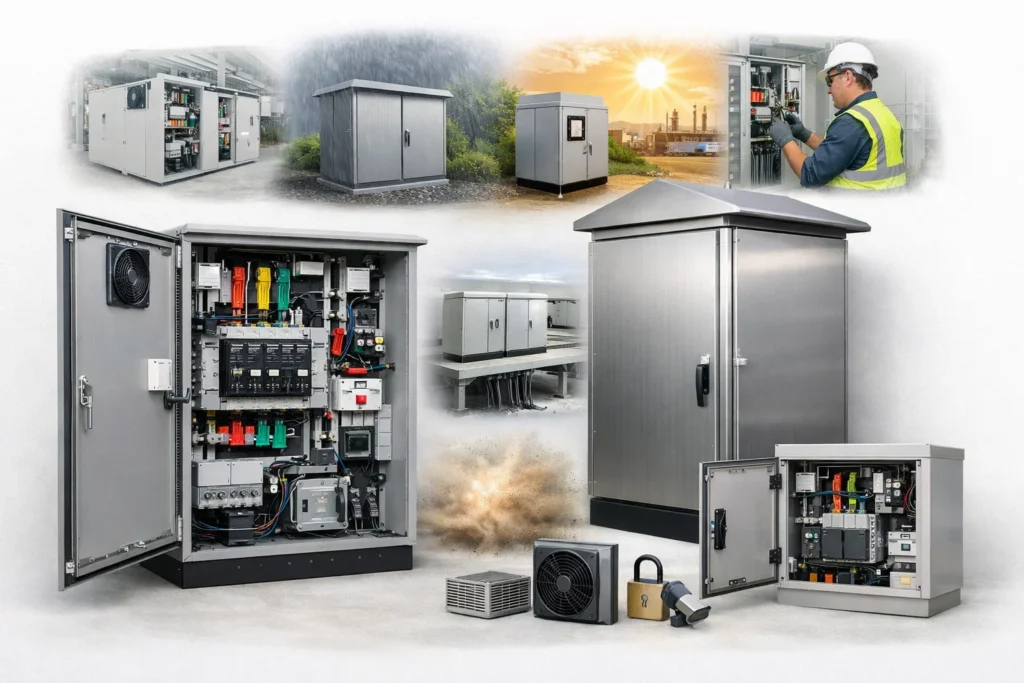

Cabinet and enclosure parameters define the mechanical structure, environmental protection, and installation conditions of electrical switchgear systems.
While switchgear parameters focus on electrical performance, enclosure parameters determine how the equipment is protected, installed, and maintained in real operating environments.
-For IEC-based definitions of electrical parameters related to switchgear, please refer to the detailed explanation here:
Switchgear Parameters Definition
-For practical implementation of the parameters discussed in this article, see Risentric’s switchgear product page:
Switchgear Products
1. Prototype Installation Method
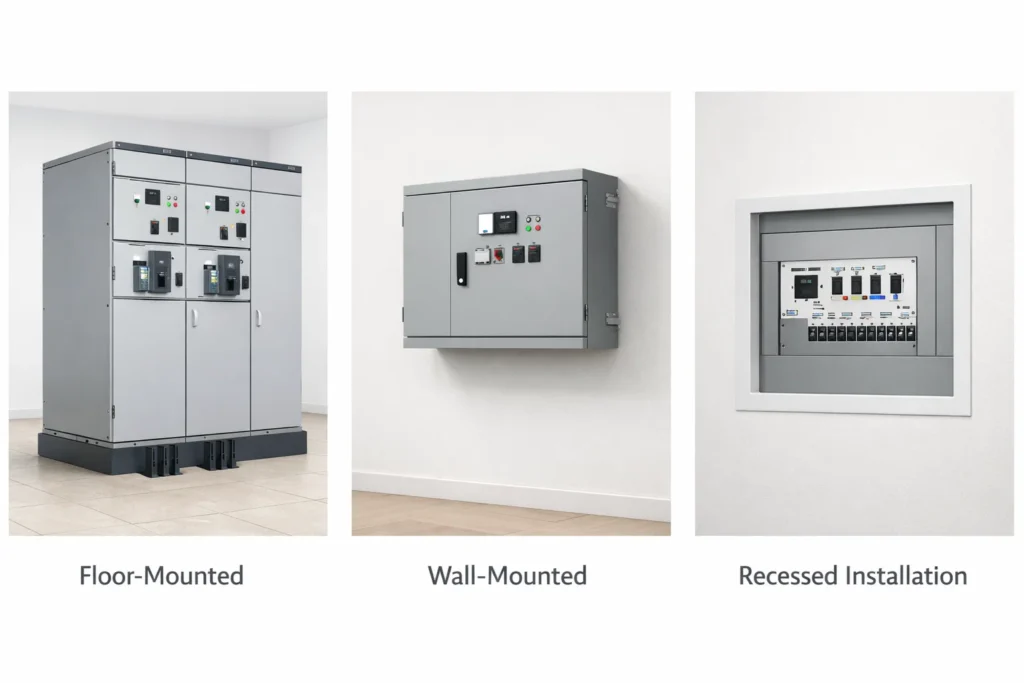
The installation method describes how the cabinet enclosure is mechanically supported and integrated into the building structure. It affects load capacity, space utilization, installation complexity, and maintenance accessibility.
Fixed (Floor-mounted)
Installed directly on the floor, with cabinet weight supported by the ground or foundation.
This is the most common installation method for low-voltage and medium-voltage switchgear, especially for large-capacity systems. It allows higher mechanical strength, flexible cable routing from below, and good vibration resistance.
Wall-mounted
Installed on walls or structural frames, with the load supported by the wall structure.
Wall-mounted cabinets are typically used for small-capacity distribution panels or control cabinets where floor space is limited. Wall strength must be evaluated to ensure safe installation.
Recessed Installation
Embedded into the wall and flush with the wall surface.
This method is often applied in commercial or residential buildings where appearance and space efficiency are important. It requires coordination with civil construction and is usually limited to low-power applications.
2. Prototype Installation Environment
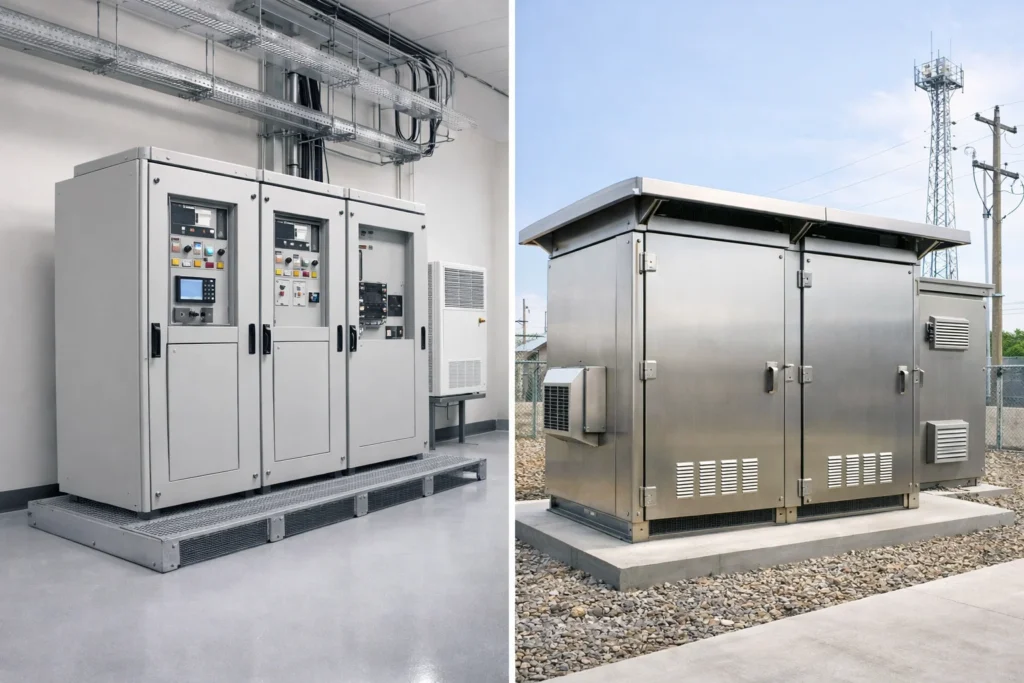
The installation environment defines the external conditions under which the cabinet operates and is one of the most critical factors in enclosure design.
Indoor Cabinets
Designed for controlled environments such as electrical rooms or substations.
Indoor cabinets typically require lower protection levels, standard steel enclosures, and basic surface treatment.
Outdoor Cabinets
Exposed to rain, dust, sunlight, temperature variation, and corrosion risks.
To ensure long-term reliability, outdoor cabinets usually require:
- Higher IP protection rating
- Corrosion-resistant materials (stainless steel or treated carbon steel)
- Sealed structures with gaskets
- Rain hoods or sunshades
- Anti-condensation and ventilation solutions
Due to these requirements, outdoor cabinets generally have higher manufacturing costs than indoor cabinets.
3. Ingress Protection (IP) Rating
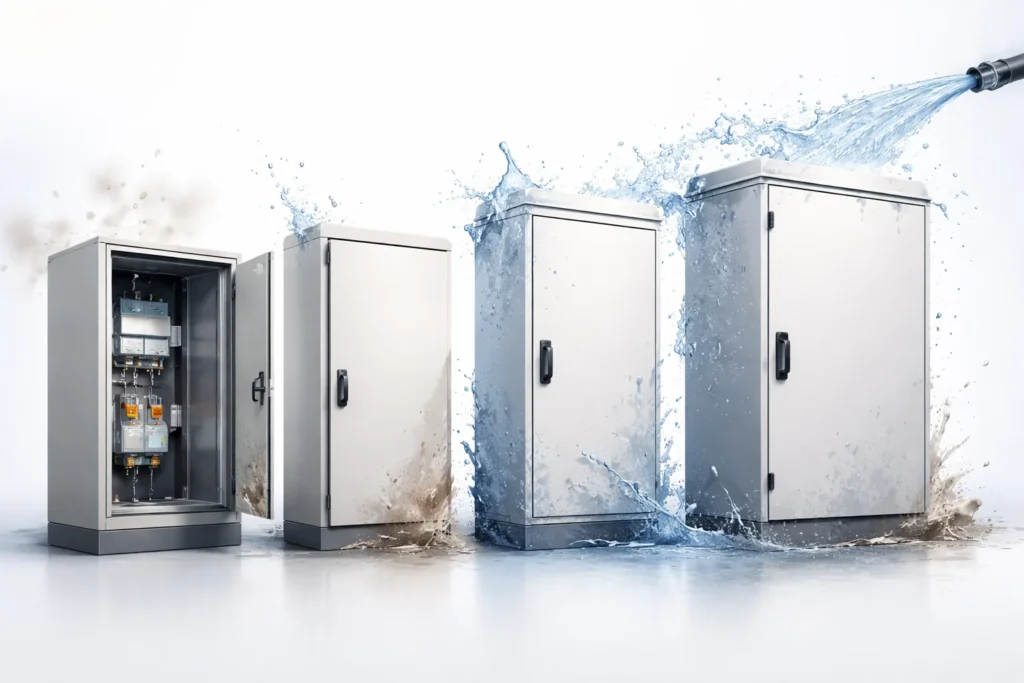
The IP rating (Ingress Protection) defines the degree of protection provided by the cabinet enclosure against solid objects and liquids, in accordance with IEC 60529.
It is a key parameter for determining whether a cabinet is suitable for specific installation environments.
The IP code consists of two digits:
- The first digit indicates protection against solid objects and dust
- The second digit indicates protection against water ingress
Typical IP levels for electrical cabinets include:
- IP30 / IP31
Basic protection for indoor installations in clean, controlled environments. - IP54
Protection against dust and water splashes. Commonly used for industrial indoor cabinets. - IP55
Enhanced dust and water protection, suitable for outdoor or harsh industrial environments. - IP65
Dust-tight and protected against water jets. Often used for outdoor cabinets exposed to heavy rain or dust.
Higher IP ratings require improved sealing and structural design, which may affect cabinet cost and heat dissipation performance.
4. Electrical Connection Type of Functional Units
The electrical connection type defines how main circuits, branch circuits, and auxiliary circuits are connected within the cabinet structure. This classification directly affects system flexibility, maintenance safety, downtime during replacement, and overall system cost.
FFF: Fully Fixed Type
Meaning:
Main circuit: fixed
Branch circuit: fixed
Auxiliary circuit: fixed
WWW: Fully Withdrawable Type
Main circuit: withdrawable
Branch circuit: withdrawable
Auxiliary circuit: withdrawable
DDD: Disconnectable Type
Main circuit: disconnectable
Branch circuit: disconnectable
Auxiliary circuit: disconnectable
FFD / FFW / FDD (Hybrid Type)
Example: FFW
Main circuit: fixed
Branch circuit: fixed
Auxiliary circuit: withdrawable
FAQ
1) Why do cabinet/enclosure parameters matter if the electrical design is correct?
Because enclosure parameters determine whether the switchgear can survive the real site conditions (dust, water, corrosion, temperature, installation constraints) and remain safe and maintainable over its service life.
2) Indoor vs outdoor cabinets: what is the real engineering difference?
Outdoor cabinets typically require:
- Higher IP level (better sealing)
- Better corrosion protection (materials + coating system)
- Sun/rain protection features (hoods, drainage paths)
- Anti-condensation design (heater, ventilation, or dehumidification)
These changes usually increase cost and also affect thermal management.
3) Does a higher IP rating always mean a “better” cabinet?
Not always. Higher IP usually means tighter sealing, which can trap heat and increase internal temperature. If the cabinet contains heat-generating devices (inverters, drives, UPS modules, heavily loaded MCC feeders), you must check temperature rise / ventilation requirements alongside IP.
4) How do I choose between IP54, IP55, and IP65?
A practical selection logic:
- IP30/IP31: clean indoor electrical rooms, low contamination risk
- IP54: typical industrial indoor (dust + splashing)
- IP55: harsher indoor or sheltered outdoor (more water exposure)
- IP65: dust-tight + water jets / heavy dust (outdoor, washdown areas, deserts)
Final selection should match the site exposure (rain, hose cleaning, dust levels) and any project specs.
5) What’s the difference between floor-mounted, wall-mounted, and recessed installation?
- Floor-mounted: best for larger switchgear; strong mechanical support; easier bottom cable entry.
- Wall-mounted: good for small panels where floor space is limited; requires verifying wall load capacity and anchors.
- Recessed: flush appearance; needs civil coordination; typically limited to smaller/low-power panels due to space and service constraints.