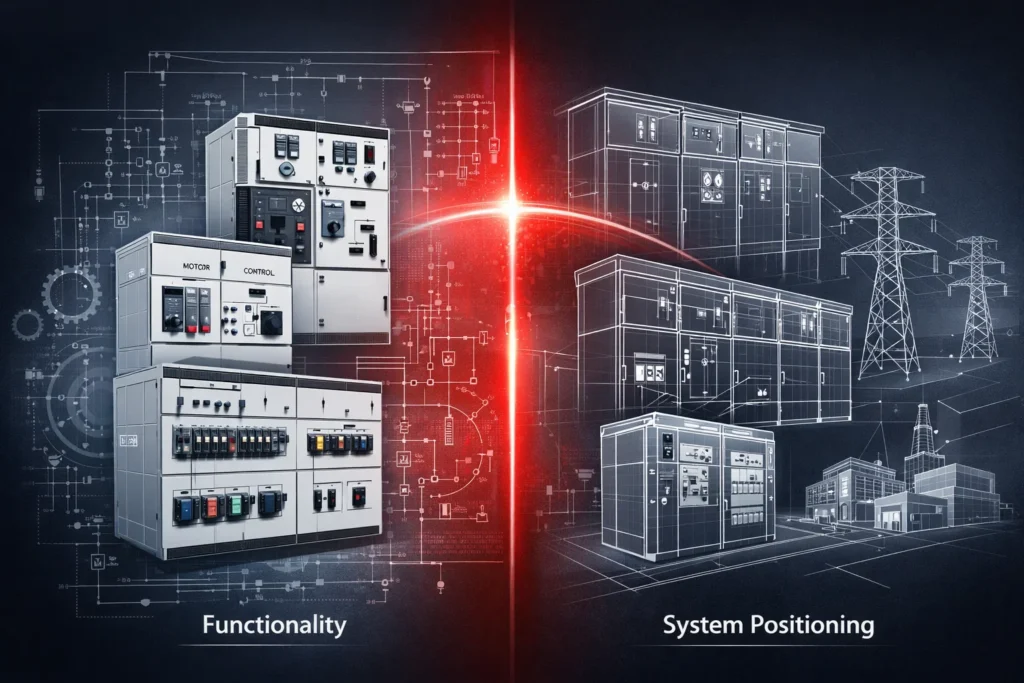
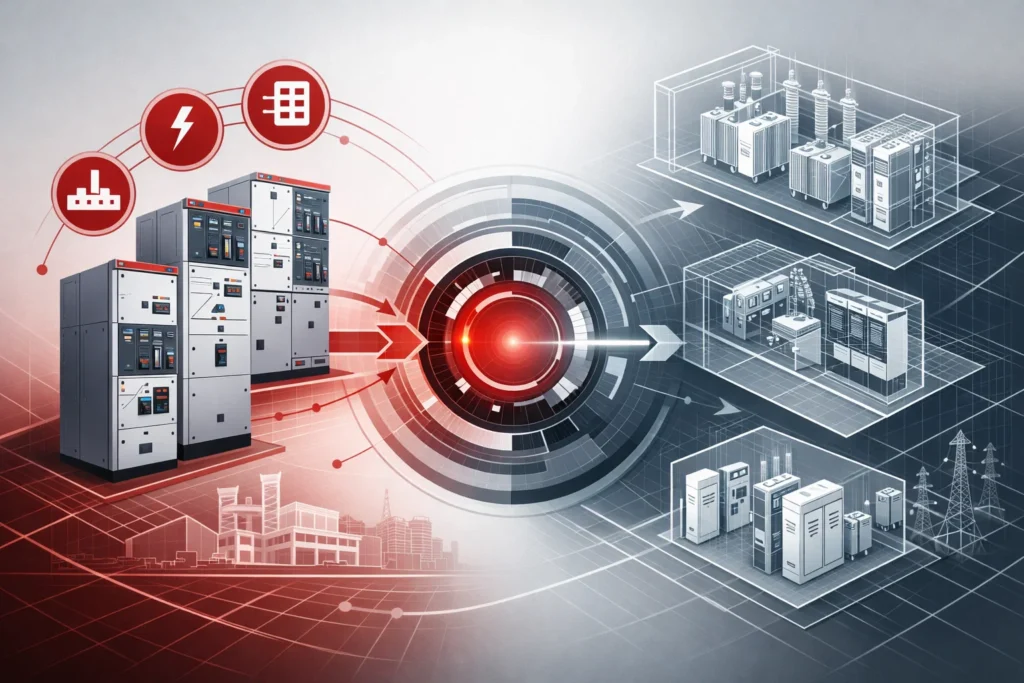
In overseas electrical projects, misunderstandings often arise around terms such as MDB, MCC, MNS, RMU, switchboard, panel, and cabinet.
Although these names are widely used, their functional positioning within a power distribution system is not always clearly distinguished, which may lead to incorrect specifications, quotations, or expectations.
This article provides a systematic classification of electrical switchgear cabinets, based on function and system role, following common international practice (IEC-based projects).
-For practical implementation of the topics discussed in this article, see Risentric’s switchgear product page:
Switchgear Products
1. Functional Classification of Switchgear Cabinets
1.1 Power Distribution Cabinets
(Power Distribution Switchgear)
Typical names:
- MDB (Main Distribution Board)
- MSB (Main Switchboard)
- LV Switchboard
- Main & Sub Distribution Board
Primary functions:
- Incoming main breaker (ACB or MCCB)
- Busbar collection and power distribution
- Outgoing feeder circuits to:
- Sub-distribution boards
- Lighting systems
- Socket outlets
- HVAC terminal units
- Electrical metering (energy meters, multifunction meters)
- Interface with upstream equipment:
- Transformers
- Generators
- UPS systems
Typical applications:
- Commercial buildings
- Industrial plants
- Data centers
- Shopping malls and mixed-use complexes
👉 These cabinets form the backbone of low-voltage power distribution systems.
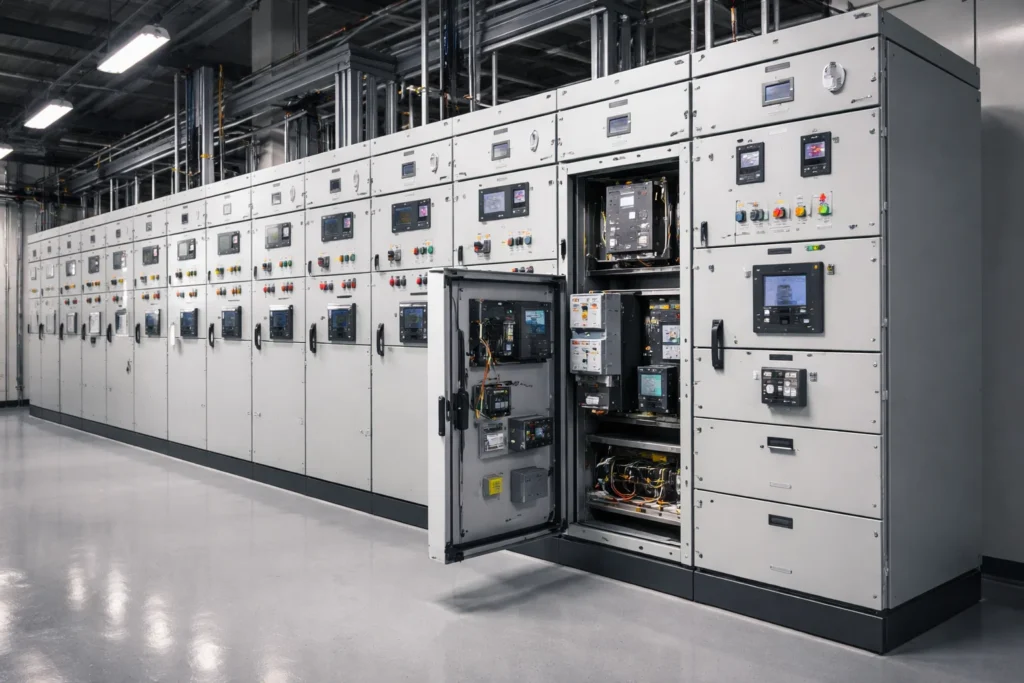
1.2 Motor Control Cabinets
Typical cabinet type:
- MCC (Motor Control Center)
Primary functions:
- Centralized control of a large number of motors:
- Pumps
- Fans
- Compressors
- Conveyors
- Motor starting methods:
- Direct-on-line (DOL)
- Star-delta
- Soft starter
- Variable Frequency Drive (VFD)
- Motor protection:
- Overload
- Phase loss
- Locked rotor
- Drawer-type or plug-in units are commonly used to:
- Reduce downtime
- Enable fast maintenance and replacement
Typical applications:
- Chemical plants
- Pharmaceutical factories
- Mining
- Water treatment plants
- Manufacturing production lines
👉 MCC panels are function-oriented cabinets, optimized for motor-intensive systems.
1.3 Power Transfer and Emergency Power Systems
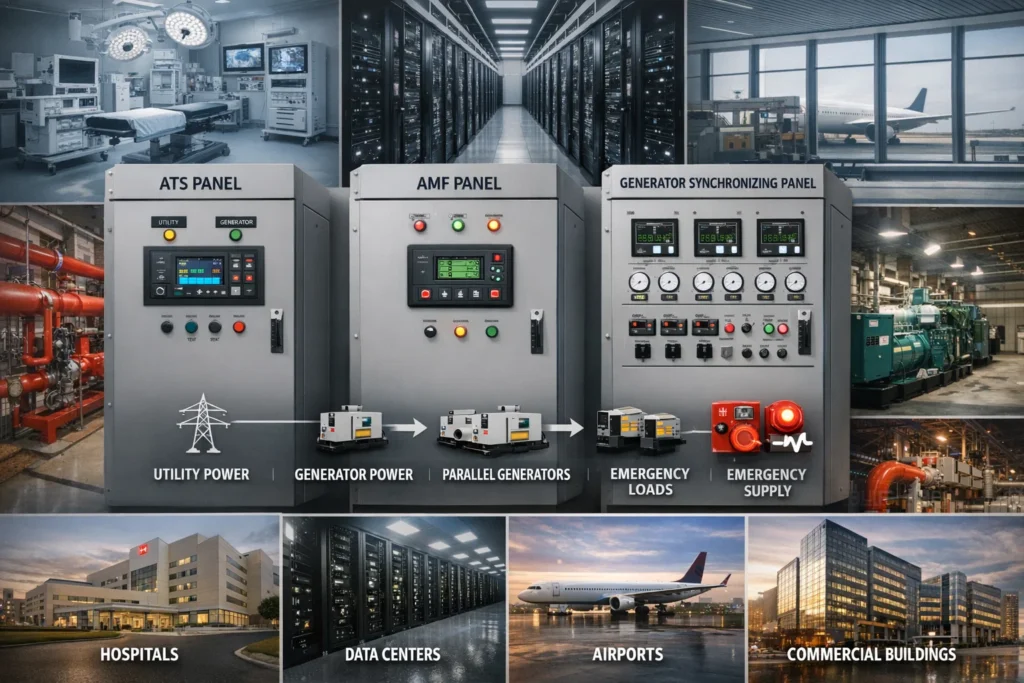
(ATS / AMF / Generator Synchronization Panels)
Typical cabinet types:
- ATS Panel (Automatic Transfer Switch)
- AMF Panel (Automatic Mains Failure)
- Generator Synchronizing Panel
Primary functions:
- Automatic switching between:
- Utility power
- Generator power
- Parallel operation of multiple generators
- Load sharing and synchronization control
- Emergency power supply strategies:
- Fire protection systems
- Critical loads prioritization
Typical applications:
- Hospitals
- Data centers
- Airports
- Commercial buildings with backup power requirements
👉 In overseas markets, this category often generates a high number of inquiries, especially for EPC projects.
1.4 Reactive Power Compensation and Power Quality Cabinets
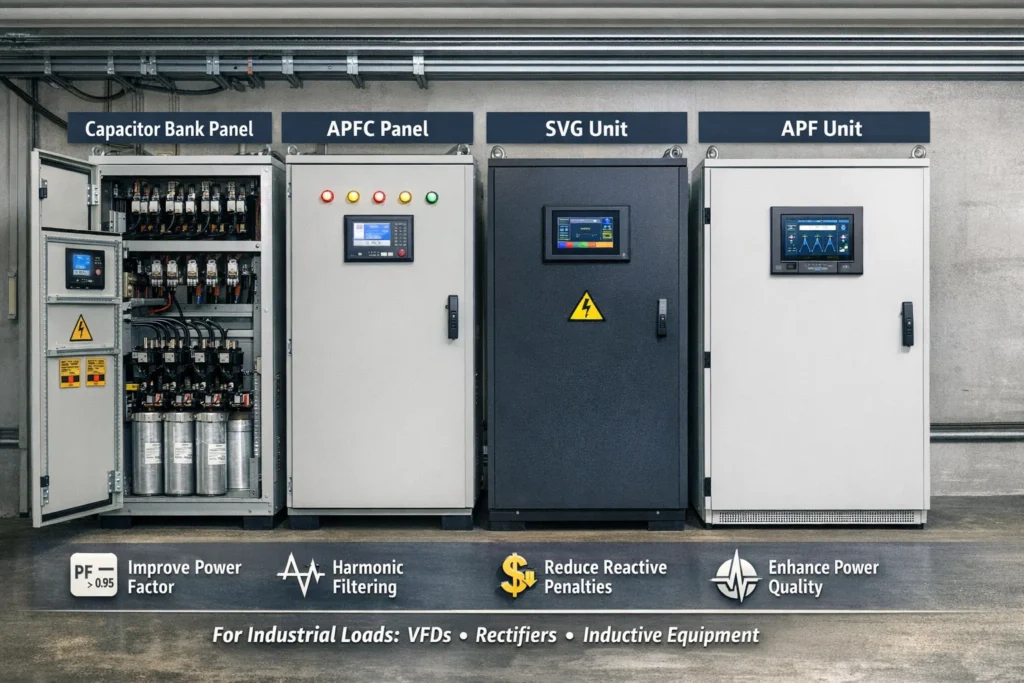
(PFC / APFC / Harmonic Mitigation)
Typical cabinet types:
- Capacitor Bank Panels
- APFC (Automatic Power Factor Correction) Panels
- SVG (Static Var Generator)
- APF (Active Power Filter)
Primary functions:
- Improve power factor
- Reduce utility penalties caused by reactive power
- Suppress harmonics generated by non-linear loads
- Improve voltage stability and power quality
Typical applications:
- Industrial facilities with:
- VFDs
- Rectifiers
- Large inductive loads
👉 These cabinets are often add-ons to existing LV distribution systems, but are critical for compliance and operating cost reduction.
1.5 Special-Purpose Switchgear Cabinets
In addition to standard categories, many switchgear cabinets are designed for specific applications, such as:
- Lighting control and intelligent distribution
(BMS, zoned lighting, DALI, KNX systems) - UPS distribution and bypass cabinets
(data centers, hospitals) - Process control cabinets
(PLC control panels, Local Control Panels – LCP) - DC systems and battery cabinets
(substations, telecom systems, power plants)
These cabinets are typically application-driven rather than current-driven.
2. System Positioning of Switchgear Cabinets
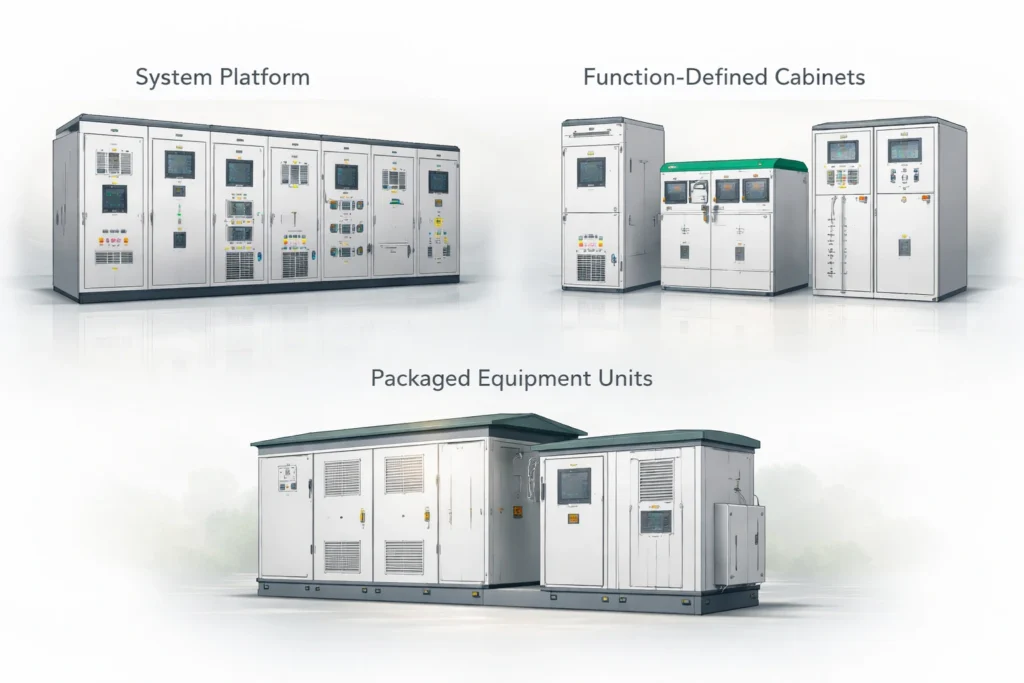
Beyond functional classification, switchgear cabinets can also be understood by their system-level positioning.
2.1 System Platform
(Low Voltage System Platform / Switchgear System)
Definition:
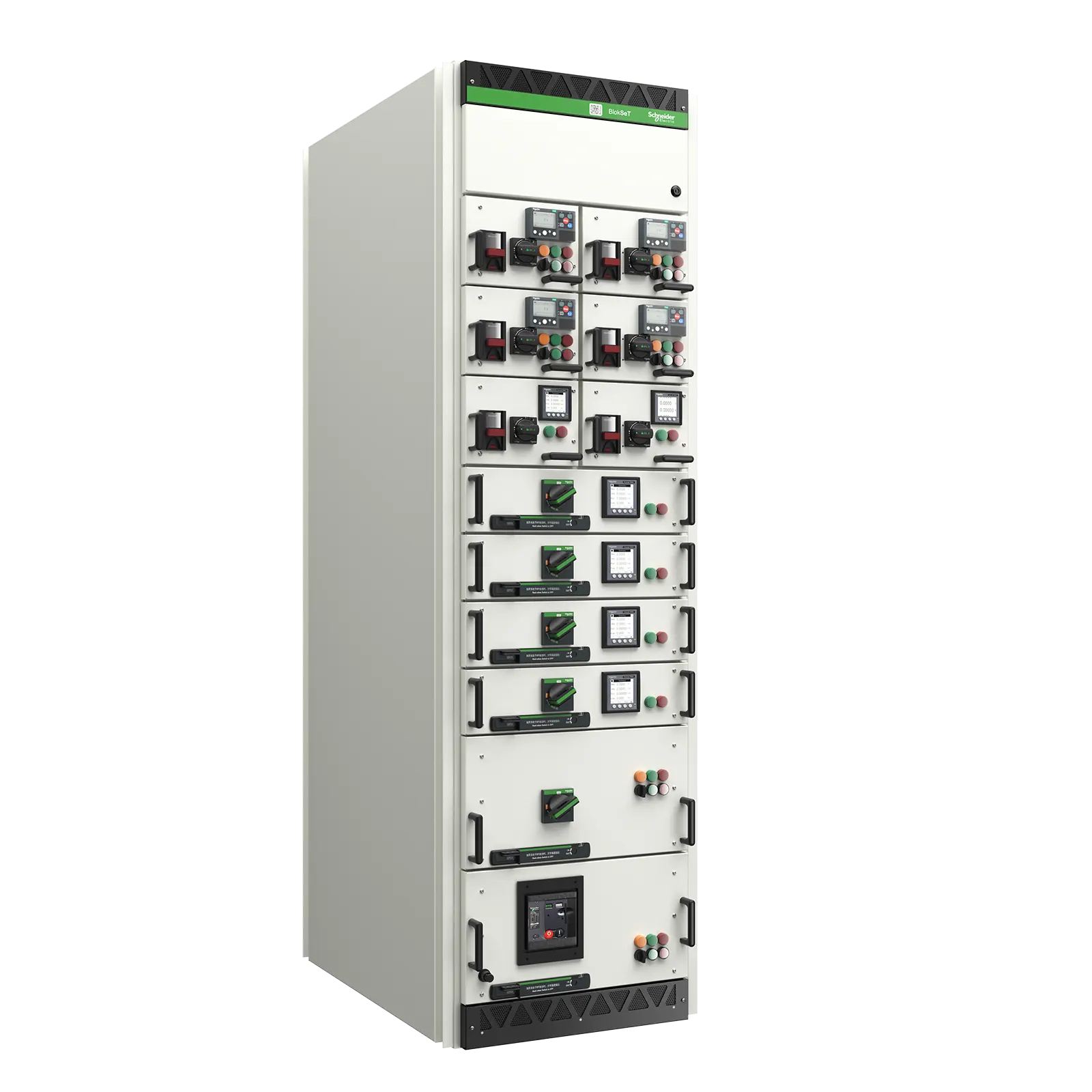
A system platform provides a standardized structural and functional framework—including enclosure design, busbar systems, functional units, separation forms, and rules—upon which various cabinets can be configured.
Key characteristics:
- Application-flexible:
- MDB
- MCC
- PCC
- Hybrid control + distribution
- Emphasis on:
- Modularity
- Repeatability
- Standardization
- System consistency
- Represents a product family, not a single cabinet
Typical examples:
Recommended external description:
2.2 Function-Defined Cabinets
(Application-Specific Switchgear)
Definition:
These cabinets have clearly defined functional boundaries, where structure and circuit configuration inherently limit their application.
Key characteristics:
- Fixed circuit types:
- Incoming
- Outgoing
- Bus coupler
- Transformer protection
- Fixed compartment layout and primary device form
- Configurable within limits, but not suitable for functional reassignment
Typical examples:
- KYN28: Metal-clad withdrawable MV switchgear
- HXGN□-12F: Ring Main Unit (RMU) / Load Break Switchgear
- Low-voltage examples:
- Capacitor panels
- Metering panels
- VFD panels
- Fire pump control panels
Recommended external description:
“12kV RMU / LBS switchgear (HXGN series)”
“Metal-clad withdrawable switchgear (KYN28 series)”
2.3 Packaged Equipment Units
(Integrated Power Distribution Equipment)
Definition:
Packaged units integrate multiple electrical systems into a single deliverable product, supplied as a complete functional unit.
Key characteristics:
- Highly fixed functionality
- Larger delivery scope:
- Structural design
- Ventilation
- Protection level
- Transportation and lifting
- Site foundation considerations
- Purchased as a complete system, not individual cabinets
Typical example:
- YB□-12/0.4 Compact Substation
(Box-type / Prefabricated Substation)
Recommended external description:
“Compact substation / box-type substation (12/0.4 kV)”
3. Why This Classification Matters in Projects
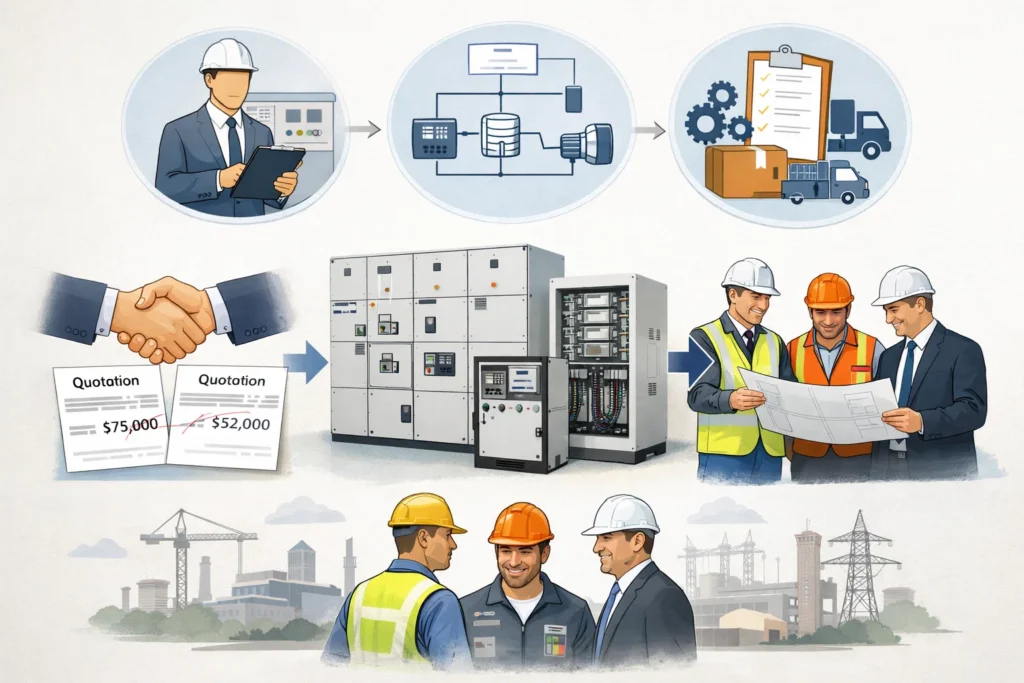
Clear understanding of:
- Functional role
- System positioning
- Delivery scope
helps to:
- Avoid quotation misunderstandings
- Improve technical communication
- Align expectations between EPCs, suppliers, and end users
For projects, correct classification is often more important than cabinet naming itself.
Closing note
This classification framework reflects practical engineering logic, rather than marketing terminology, and can be used as a reference during system design, specification writing, and quotation preparation.
FAQ
What is an RMU in electrical distribution?
An RMU (Ring Main Unit) is a medium-voltage switchgear used in ring distribution networks, typically at 11kV or 12kV.
Its main functions include:
- Connecting distribution feeders in a ring network
- Providing load switching capability
- Protecting transformers or downstream circuits
RMUs are commonly used in urban distribution networks, commercial buildings, and compact substations.
What is the difference between a switchboard, panel, and cabinet?
In practice, these terms are often used interchangeably, but they usually imply different scales:
- Switchboard – A large electrical distribution assembly containing multiple switchgear sections.
- Cabinet – A physical enclosure that houses electrical components.
- Panel – A smaller distribution or control unit mounted inside a cabinet or enclosure.
However, terminology may vary across countries and projects.
Why is switchgear classification important in projects?
Correct classification helps engineers and project teams:
- Avoid quotation and specification mistakes
- Ensure correct equipment selection
- Improve communication between EPC contractors, suppliers, and owners
- Define the scope of supply clearly
In many international projects, understanding the functional role of each cabinet is more important than the cabinet name itself.