
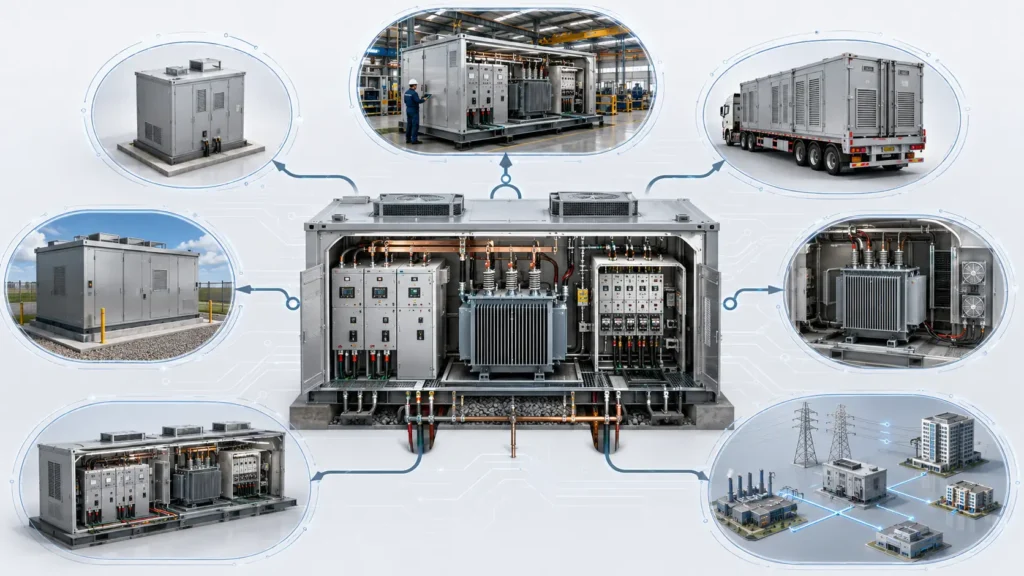
Note: This article is mainly a terminology guide. It explains the differences and overlaps between electrical substation, transformer substation, compact substation, prefabricated substation, package substation, box-type substation, and unit substation. For product specifications, structure, applications, and quotation information, please visit our Compact Substation product page.
If you search for substations online, you may quickly feel confused.
One supplier calls it a compact substation.
Another calls it a prefabricated substation.
A project document may say transformer substation.
Some clients ask for a package substation, unit substation, box-type substation, or simply an electrical substation.
Are they completely different products?
In many cases, they are not. These names often describe the same general function from different angles: receiving power, transforming voltage, protecting the circuit, and distributing electricity safely to downstream loads.
This article explains the “electrical substation family” in simple terms, so you can understand why one substation has so many names and how to choose the right terminology for your project.
- What Is an Electrical Substation?
- Why Does One Substation Have So Many Names?
- Electrical Substation vs Transformer Substation
- Electrical Substation vs Compact Substation
- Electrical Substation vs Prefabricated Substation
- Compact Substation vs Prefabricated Substation: Are They the Same?
- What Is a Package Substation?
- What Is a Box-Type Substation?
- What Is a Unit Substation?
- Quick Comparison of Common Substation Names
- Are These Substations Basically the Same?
- How to Choose the Right Term for Your Project
- Common Misunderstanding: Is a Substation Just Switchgear Plus a Transformer?
- Conclusion
What Is an Electrical Substation?
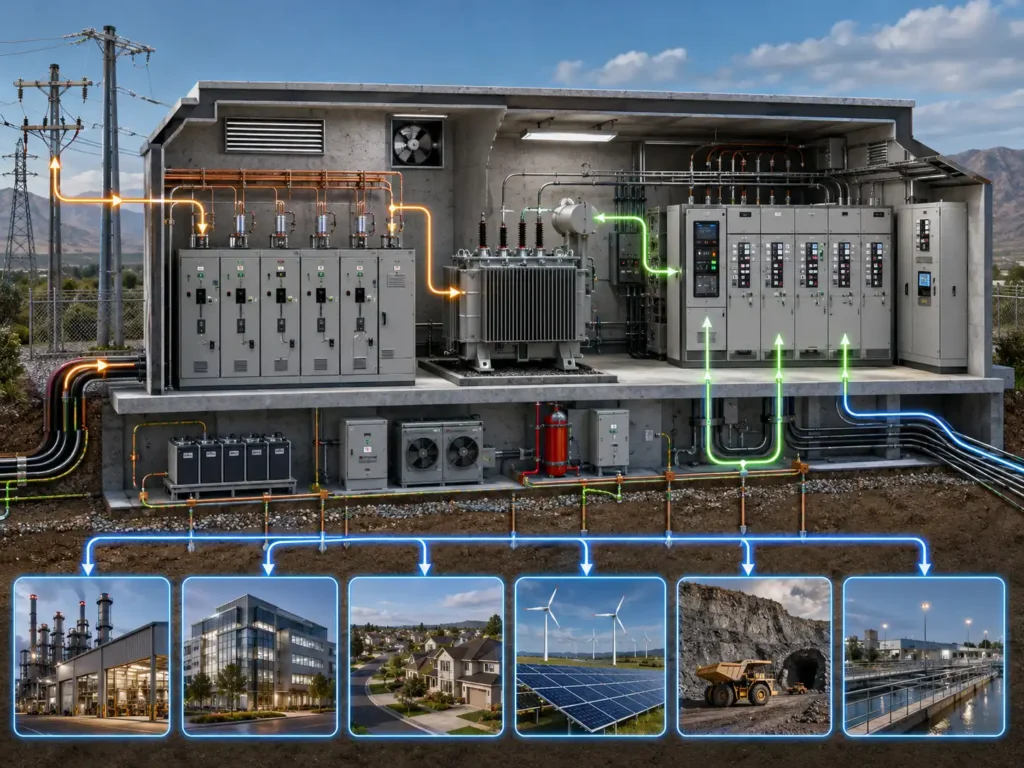
An electrical substation is a power system installation used to control, transform, protect, and distribute electrical energy.
In a typical distribution application, a substation may include:
- Medium-voltage or high-voltage switchgear
- A power transformer or distribution transformer
- Low-voltage switchgear or distribution panels
- Protection, metering, control, and auxiliary equipment
- Cables, busbars, grounding, enclosure, and ventilation systems
The basic purpose is simple:
An electrical substation receives electricity at one voltage level, changes it to another voltage level when required, and distributes it safely to users or equipment.
For example, a distribution substation may receive medium-voltage power, step it down through a transformer, and then supply low-voltage power to factories, buildings, communities, mines, renewable energy projects, or infrastructure facilities.
IEC 61936-1 covers requirements for the design and erection of electrical power installations in AC systems above 1 kV, which includes substation-related power installations.
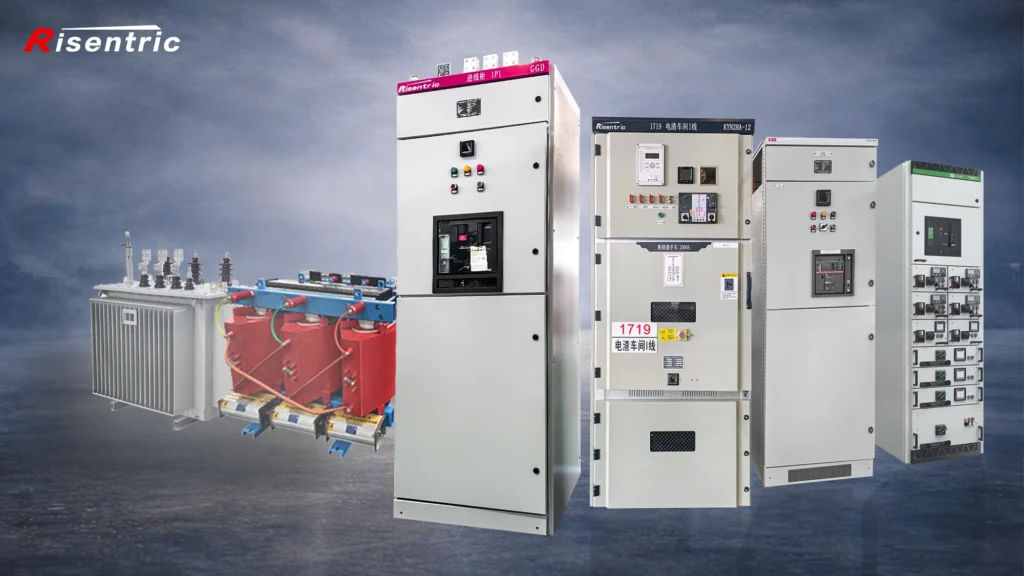
Looking for factory-tested Electrical Substation & Panelboards for your project?
Why Does One Substation Have So Many Names?
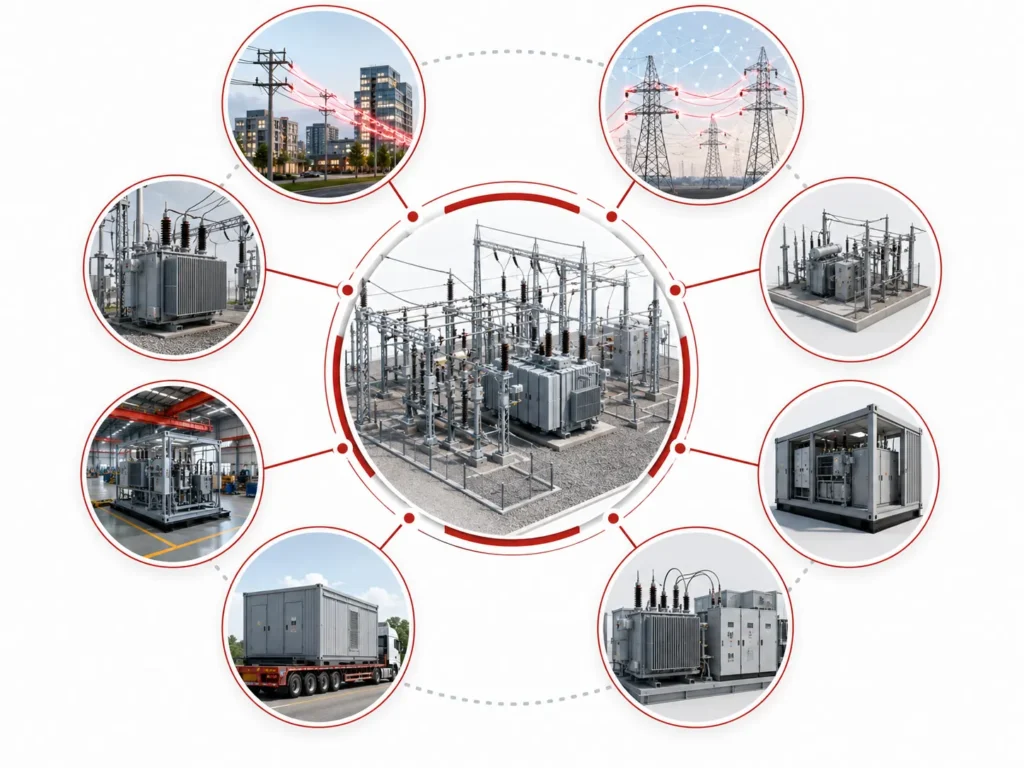
The reason is that different industries, countries, engineers, suppliers, and tender documents describe substations from different perspectives.
Some names focus on function.
Some focus on structure.
Some focus on installation method.
Some focus on equipment inside.
Some are based on regional habits or project language.
For example:
| Name | What the Name Emphasizes |
|---|---|
| Electrical substation | General power distribution function |
| Power substation | Role in the power system |
| Transformer substation | The transformer as the core equipment |
| Compact substation | Small footprint and integrated design |
| Prefabricated substation | Factory-built and pre-assembled structure |
| Package substation | Complete packaged solution |
| Box-type substation | Enclosed outdoor box structure |
| Unit substation | Coordinated transformer and switchgear unit |
So instead of thinking of them as totally separate products, it is more useful to see them as members of the same electrical substation family.
Electrical Substation vs Transformer Substation
A transformer substation is a type of electrical substation where the transformer is the key component.
The name is commonly used when the main purpose is voltage transformation, such as stepping down medium voltage to low voltage for final distribution.
A typical transformer substation may include:
- Incoming medium-voltage switchgear
- Transformer
- Outgoing low-voltage switchgear
- Protection and metering devices
- Cables, busbar connections, and grounding system
So yes, in many distribution projects, a transformer substation can be understood as an electrical substation centered around a transformer.
However, not every electrical substation is only a transformer substation. Some substations focus on switching, protection, grid connection, compensation, or power transmission without necessarily being described mainly by the transformer.
Simple explanation:
All transformer substations are electrical substations, but not all electrical substations are described only as transformer substations.
Electrical Substation vs Compact Substation
A compact substation is usually an integrated substation designed to save space.
It commonly combines medium-voltage switchgear, transformer, and low-voltage switchgear into one compact arrangement. This makes it suitable for places where space, installation time, and site work need to be reduced.
Compact substations are widely used in:
- Industrial plants
- Commercial buildings
- Residential communities
- Solar and wind power projects
- Mining sites
- Construction sites
- Utilities and distribution networks
Compared with a traditional civil-built substation, a compact substation normally has a smaller footprint and faster installation.
Simple explanation:
A compact substation is an electrical substation designed in a smaller, integrated form.
Electrical Substation vs Prefabricated Substation
A prefabricated substation emphasizes the manufacturing and installation method.
Instead of building most parts on site, a prefabricated substation is assembled and tested in the factory before delivery. This can reduce installation time, improve quality control, and simplify project execution.
IEC 62271-202:2022 specifies requirements and test methods for enclosed high-voltage prefabricated substations connected to AC high-voltage networks up to and including 52 kV. It also notes that these substations may be walk-in or non-walk-in types.
In practical use, many compact substations are also prefabricated substations because they are factory-built and delivered as integrated equipment.
Simple explanation:
A prefabricated substation is an electrical substation built and assembled before arriving at the project site.
Compact Substation vs Prefabricated Substation: Are They the Same?
In many commercial and project contexts, compact substation and prefabricated substation are used to describe very similar products.
The difference is mainly in emphasis:
- Compact substation emphasizes size and integration.
- Prefabricated substation emphasizes factory assembly and pre-built construction.
What Is a Package Substation?
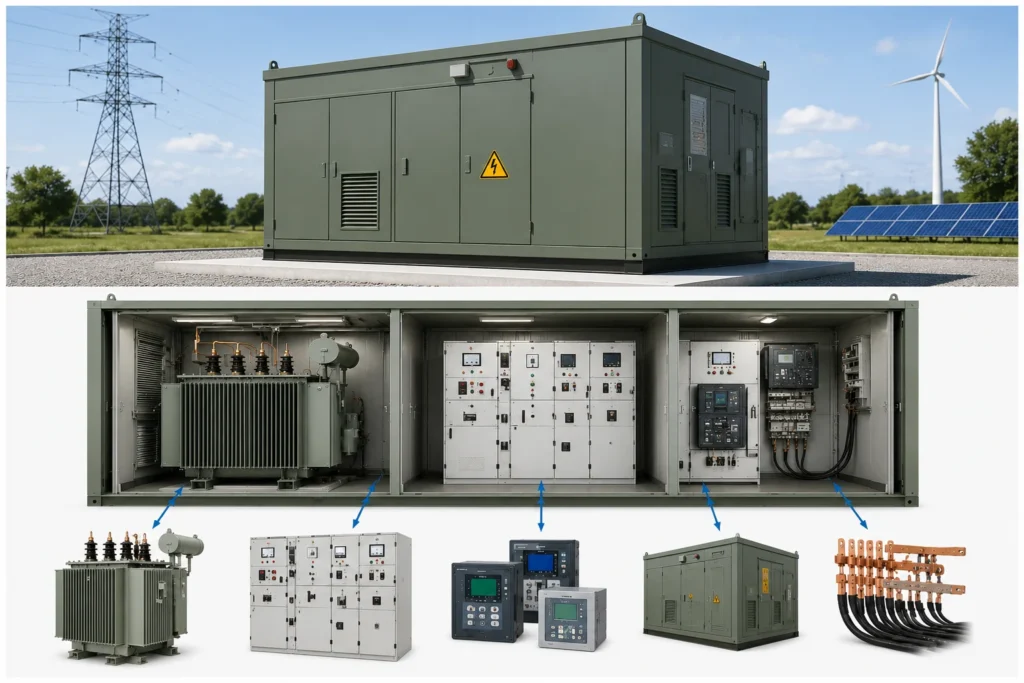
A package substation is another common name for a complete, integrated substation solution.
The word “package” means that the main equipment is supplied together as a set. A package substation usually includes the transformer, switchgear, protection devices, enclosure, and internal connections.
This term is common in tenders, export projects, utility specifications, and supplier catalogs.
Simple explanation:
A package substation is a complete substation package supplied as one coordinated solution.
What Is a Box-Type Substation?
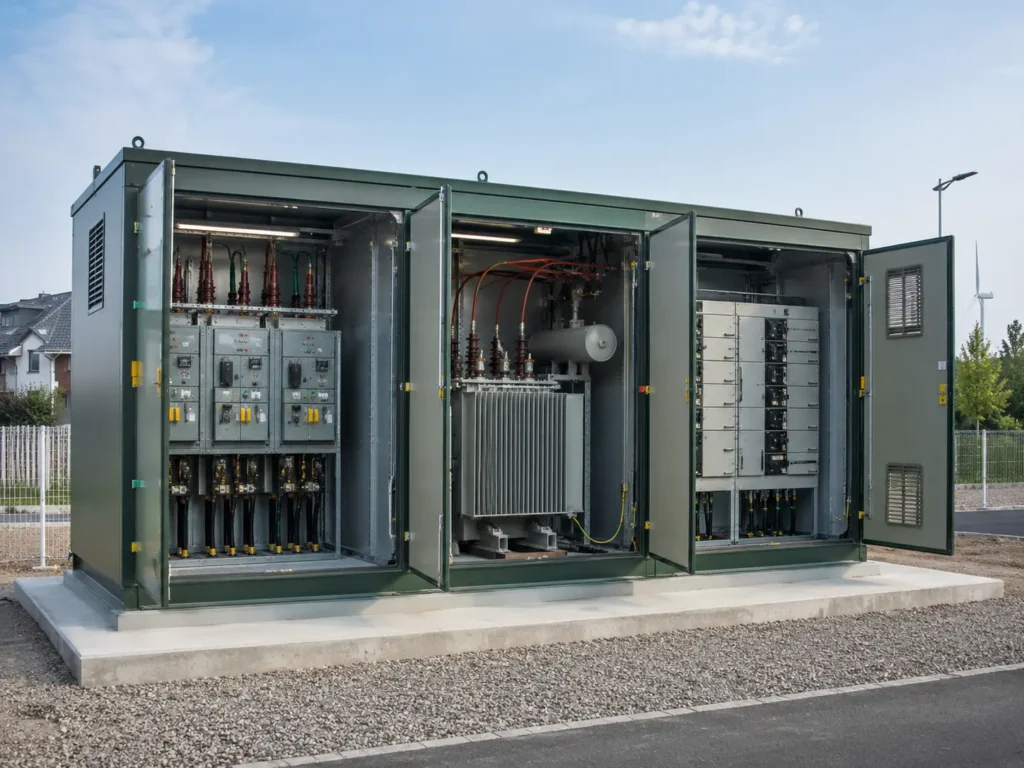
A box-type substation usually refers to an enclosed substation installed inside a metal or non-metallic outdoor enclosure.
This term is especially common in some Asian markets and export documents. It often describes a compact outdoor substation where the medium-voltage room, transformer room, and low-voltage room are arranged inside one box-like enclosure.
A box-type substation is commonly used for:
- Outdoor power distribution
- Residential communities
- Factories
- Temporary construction power
- Renewable energy projects
- Public infrastructure
Simple explanation:
A box-type substation is usually a compact or prefabricated substation installed inside an outdoor enclosure.
What Is a Unit Substation?
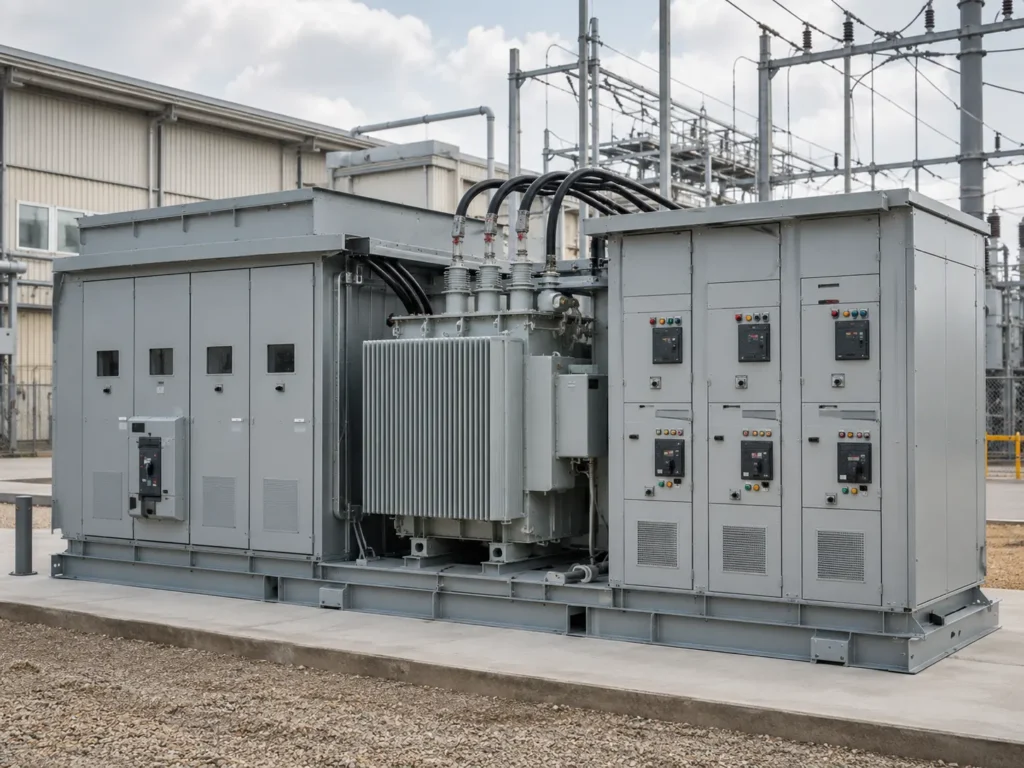
A unit substation is a term often used when the transformer and switchgear are designed as a coordinated unit.
IEEE C37.121 covers three-phase unit substations for step-down operation, with primary voltages from 601 V through 52 kV, and discusses combinations such as incoming sections, transformer sections, outgoing sections, and transition sections.
This term is common in North American engineering language and some industrial projects.
Simple explanation:
A unit substation is a coordinated transformer-and-switchgear substation used for step-down power distribution.
Quick Comparison of Common Substation Names
| Term | Main Meaning | Common Usage |
|---|---|---|
| Electrical substation | General power installation for transformation, switching, protection, and distribution | Broad technical term |
| Power substation | Substation in a power system | Utility and engineering language |
| Transformer substation | Substation centered around a transformer | Distribution projects |
| Compact substation | Integrated substation with small footprint | Industrial, commercial, utility projects |
| Prefabricated substation | Factory-built enclosed substation | IEC-related and project specifications |
| Package substation | Complete packaged substation solution | Tender and export language |
| Box-type substation | Enclosed outdoor substation | Common in Asia and export markets |
| Unit substation | Coordinated transformer and switchgear unit | Industrial and North American usage |
Looking for factory-tested Electrical Substation & Panelboards for your project?
Are These Substations Basically the Same?
In many medium-voltage to low-voltage distribution projects, yes, these terms can overlap.
For example, one product may be described as:
- An electrical substation because it distributes power
- A transformer substation because it includes a transformer
- A compact substation because it has an integrated design
- A prefabricated substation because it is factory-built
- A package substation because it is supplied as a complete set
- A box-type substation because it is installed in an enclosure
The same physical product can therefore have several names.
However, the exact meaning still depends on the project specification, voltage level, layout, installation environment, and applicable standard.
That is why it is important not only to ask “What is the name?” but also:
- What is the voltage level?
- What is the transformer capacity?
- Is it indoor or outdoor?
- Is it walk-in or non-walk-in?
- What switchgear is required?
- What protection and metering are required?
- Which standard should be followed?
- Is the project for utility, industrial, commercial, or renewable energy use?
How to Choose the Right Term for Your Project
When communicating with suppliers, engineers, or clients, the best term depends on the situation.
- Use electrical substation when you want a broad, general term.
- Use transformer substation when the transformer is the key part of the system.
- Use compact substation when you want to emphasize small footprint and integrated design.
- Use prefabricated substation when you want to emphasize factory assembly, testing, and faster site installation.
- Use package substation when you want to describe a complete solution supplied as one package.
- Use box-type substation when the substation is installed inside an outdoor enclosure.
- Use unit substation when the project specification uses this term for a coordinated transformer and switchgear assembly.
Common Misunderstanding: Is a Substation Just Switchgear Plus a Transformer?
For many compact distribution substations, the main parts are indeed medium-voltage switchgear, transformer, and low-voltage switchgear.
But a complete substation is more than just “two switchgear plus one transformer.”
It may also include:
- Protection relays
- CTs and PTs
- Energy meters
- Surge arresters
- Busbars and cable connections
- Grounding system
- Ventilation or temperature control
- Enclosure and partitions
- Lighting and auxiliary power
- Safety interlocking
- Fire protection design, depending on project requirements
So a simple way to understand it is:
Switchgear controls and protects the power.
The transformer changes the voltage.
The substation integrates everything into a safe power distribution system.
Conclusion
The reason one substation has so many names is simple: each name describes the same power distribution concept from a different angle.
An electrical substation is the broad family name.
A transformer substation highlights the transformer.
A compact substation highlights the integrated and space-saving design.
A prefabricated substation highlights factory assembly.
A package substation highlights complete supply.
A box-type substation highlights the enclosed structure.
A unit substation highlights coordinated transformer and switchgear sections.
In real projects, these terms often overlap. The most important thing is not only the name, but the technical configuration behind it: voltage level, transformer capacity, switchgear type, protection system, enclosure design, standard, and application.
For buyers, engineers, and project contractors, understanding this substation family makes communication easier and helps avoid confusion during quotation, tendering, and technical discussion.
FAQ
1. Is a transformer substation the same as a compact substation?
Not always, but they often overlap. A transformer substation focuses on voltage transformation, while a compact substation focuses on integrated and space-saving design. Many compact substations are also transformer substations.
2. Is a compact substation the same as a prefabricated substation?
In many projects, yes, the terms are used for very similar equipment. “Compact” emphasizes small size, while “prefabricated” emphasizes factory-built construction.
3. What is another name for a compact substation?
Common alternative names include prefabricated substation, package substation, box-type substation, transformer substation, and electrical distribution substation.
4. What equipment is inside a compact substation?
A typical compact substation includes medium-voltage switchgear, transformer, low-voltage switchgear, protection devices, metering equipment, internal connections, grounding, and enclosure.
5. Which standard applies to prefabricated substations?
IEC 62271-202 is commonly referenced for enclosed high-voltage prefabricated substations. Project requirements may also involve other IEC, IEEE, local utility, or national standards depending on the country and application.
Reference:
https://webstore.iec.ch/en/publication/66264
https://webstore.iec.ch/en/publication/64490


