
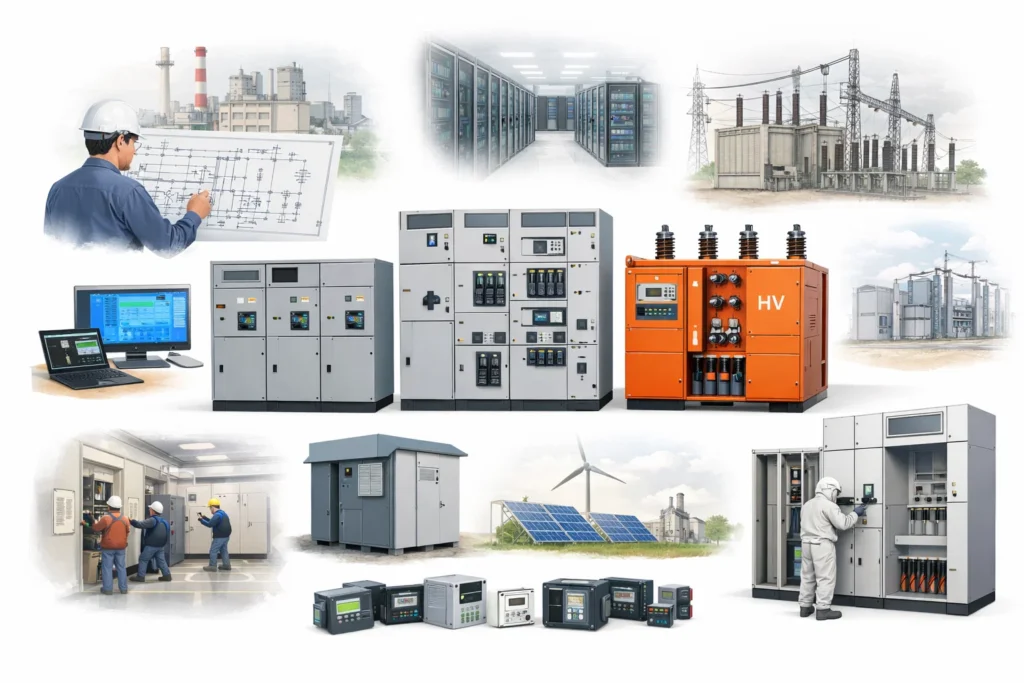
Standard switchgear works well when the electrical system is simple and the installation conditions are predictable. But many real projects are not simple. Industrial plants, utilities, data centers, commercial facilities, and infrastructure projects often need equipment built around a specific single-line diagram, protection philosophy, room layout, and maintenance strategy.
That is where custom switchgear becomes valuable. Instead of forcing the project to fit a fixed catalog lineup, custom switchgear is engineered around the actual electrical, mechanical, environmental, and operational needs of the site.
What is custom switchgear?
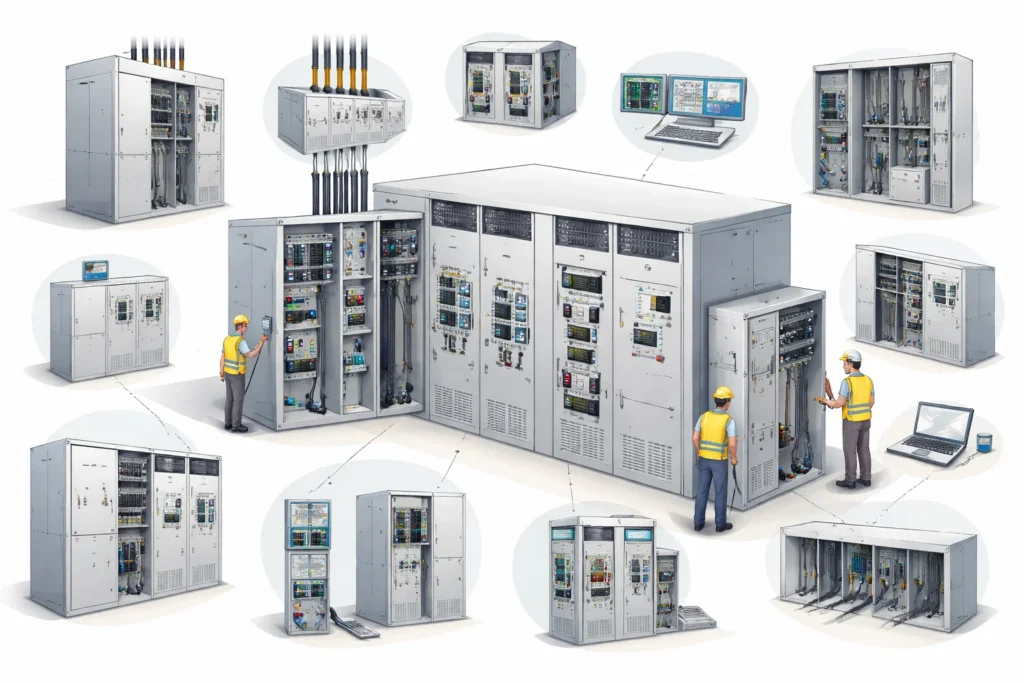
At its core, custom switchgear is not about making equipment more complicated. It is about removing compromise.
A standard lineup is designed for common applications. A custom lineup is designed for your application. It is built around the way the power system actually operates, how the installation space is arranged, how the equipment will be maintained, and what the project requires for safety, control, and documentation.
In practice, custom switchgear may involve:
- customized incoming and outgoing feeder arrangements
- bus couplers or source transfer logic
- tailored breaker and relay selection
- specific metering, monitoring, or communication functions
- indoor or outdoor enclosure requirements
- top or bottom cable entry
- special dimensions to fit an electrical room
- provisions for future extension or retrofit
When standard switchgear is not enough
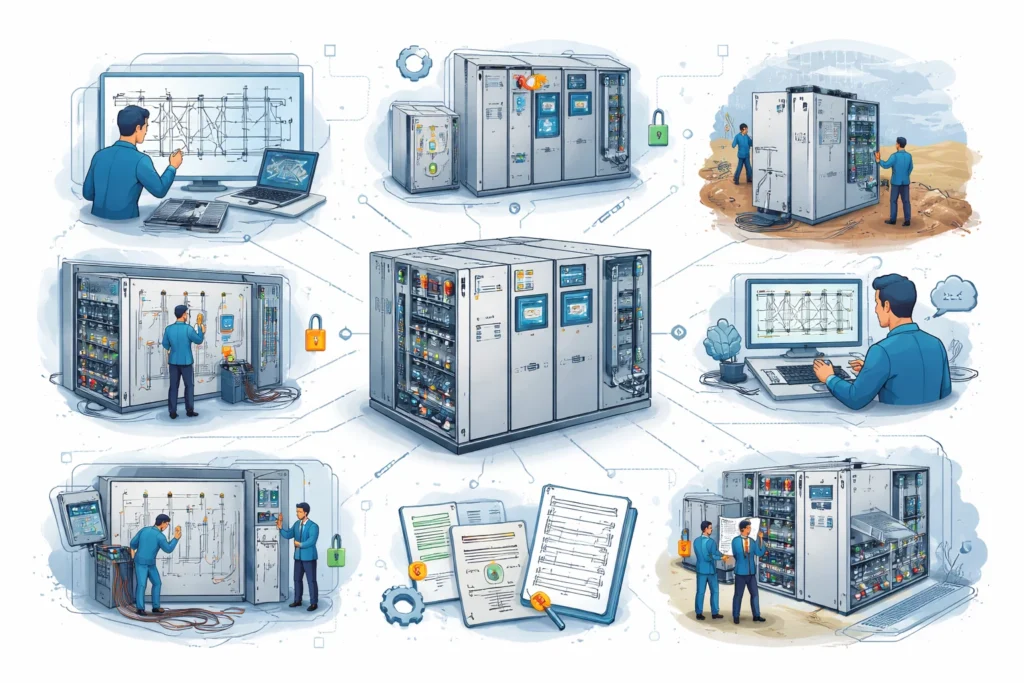
A standard product may stop being practical when one or more of these conditions appear:
- the single-line diagram is not a typical arrangement
- fault level or protection requirements are higher than usual
- the project needs special interlocks, control logic, or redundancy
- the room has tight width, depth, or access limits
- the site requires a higher IP rating or unusual environmental protection
- the system must communicate with BMS, SCADA, PLC, or energy-management platforms
- the specification requires certain documentation, testing, or compliance targets
- future expansion needs must be reserved from day one
When these issues are ignored early, the result is often site rework, delayed approvals, awkward cable routing, or difficult maintenance later.
What can be customized in a switchgear lineup?
A good custom switchgear design usually addresses five areas.
1. Electrical ratings and system architecture
This includes the technical foundation of the lineup: voltage level, current rating, short-circuit duty, frequency, number of feeders, bus arrangement, source transfer logic, and load characteristics.
2. Protection, metering, and control
Every project has a different protection philosophy. Some need straightforward feeder protection. Others need more detailed relay coordination, advanced metering, remote status signals, event logging, or integration with plant control systems.
3. Mechanical layout and installation
The cabinet arrangement should fit the room, not fight it. That means thinking about front or rear access, cable entry direction, maintenance clearance, panel width, compartment layout, and transport or installation limits.
4. Environment and enclosure requirements
Indoor and outdoor installations behave differently. So do coastal sites, dusty plants, humid rooms, high-temperature areas, and locations with altitude or corrosion concerns. The enclosure and internal design should reflect those conditions.
5. Maintainability and future growth
Custom switchgear should not only solve today’s problem. It should make future maintenance, modifications, and expansion easier. That may include spare ways, reserved compartments, extra control capacity, or a lineup arrangement that simplifies future extensions.
Main benefits of custom switchgear
The biggest advantage of custom switchgear is fit. A better fit usually creates several practical benefits at the same time.
Better system coordination
When the lineup matches the real single-line diagram and protection philosophy, the system is easier to understand, install, test, and operate.
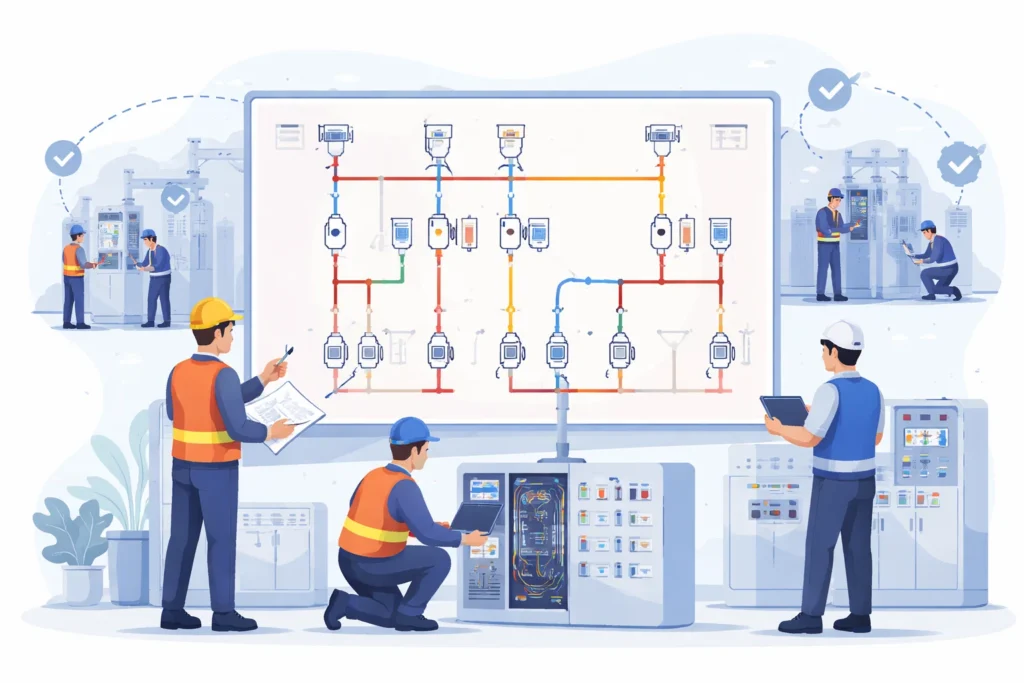
Safer operation and maintenance
A thoughtful layout can improve isolation, access, compartment arrangement, and operating logic, which makes day-to-day operation safer and maintenance more controlled.

More efficient use of space
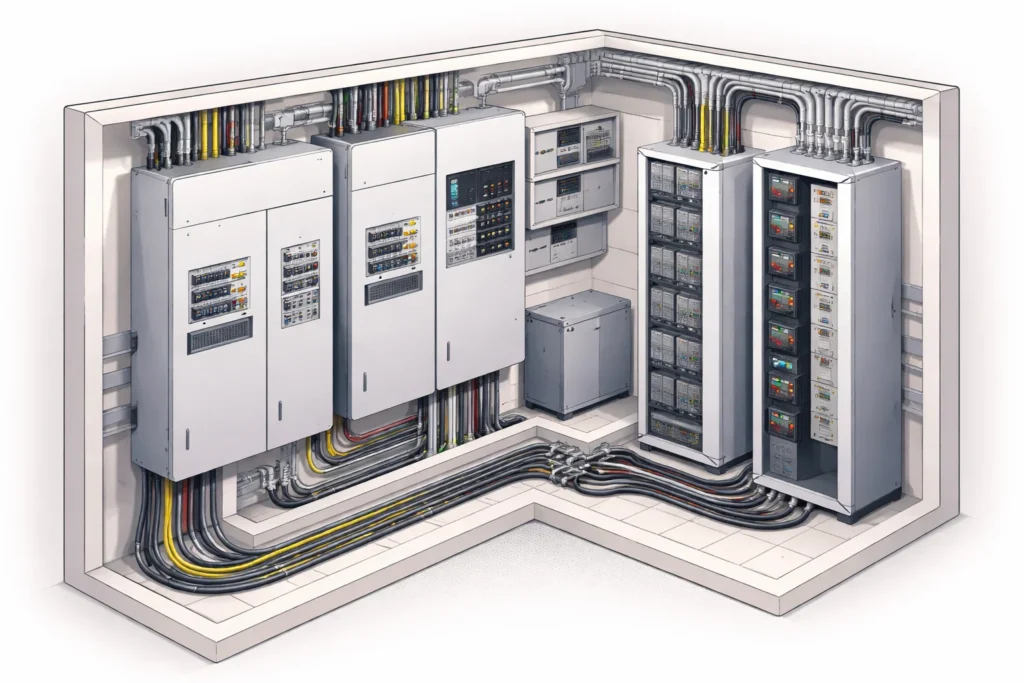
Electrical rooms are rarely generous. Custom dimensions and cable-entry planning can make a major difference when the space is tight.
Easier integration with the rest of the project
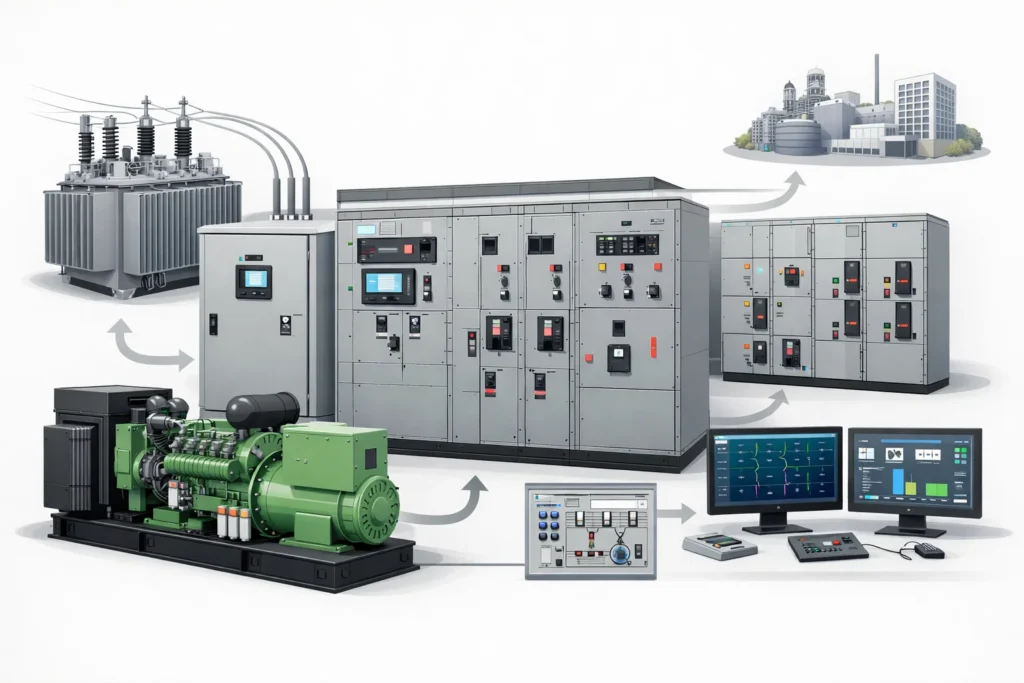
Custom switchgear can be coordinated with transformers, ATS systems, MCCs, backup power, monitoring systems, and building or plant controls from the beginning.
Lower lifecycle risk
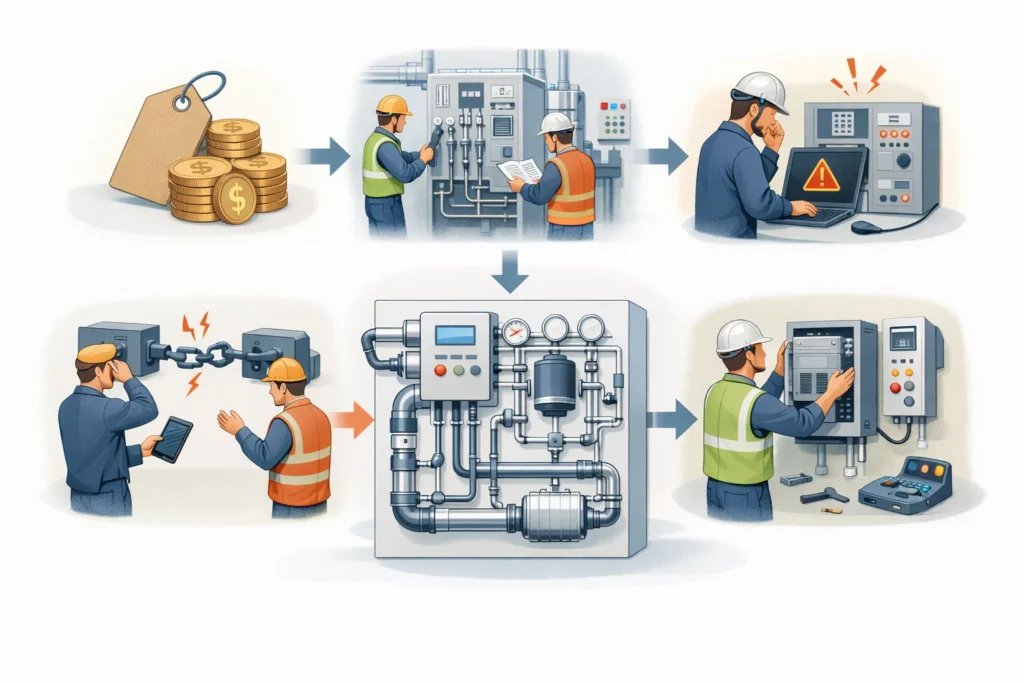
The initial equipment price is only one part of the real cost. A well-designed custom solution can reduce installation changes, commissioning issues, interface problems, and future retrofit pain.
Custom switchgear for LV, MV, and HV applications
Custom switchgear can be used across low-voltage, medium-voltage, and high-voltage systems, but the design focus changes with the application.
Low-voltage custom switchgear
At low voltage, customization often focuses on distribution topology, incomer and feeder arrangement, metering, control integration, compartment layout, and space efficiency. These projects are common in commercial buildings, factories, hospitals, data centers, and infrastructure facilities.
Medium-voltage custom switchgear
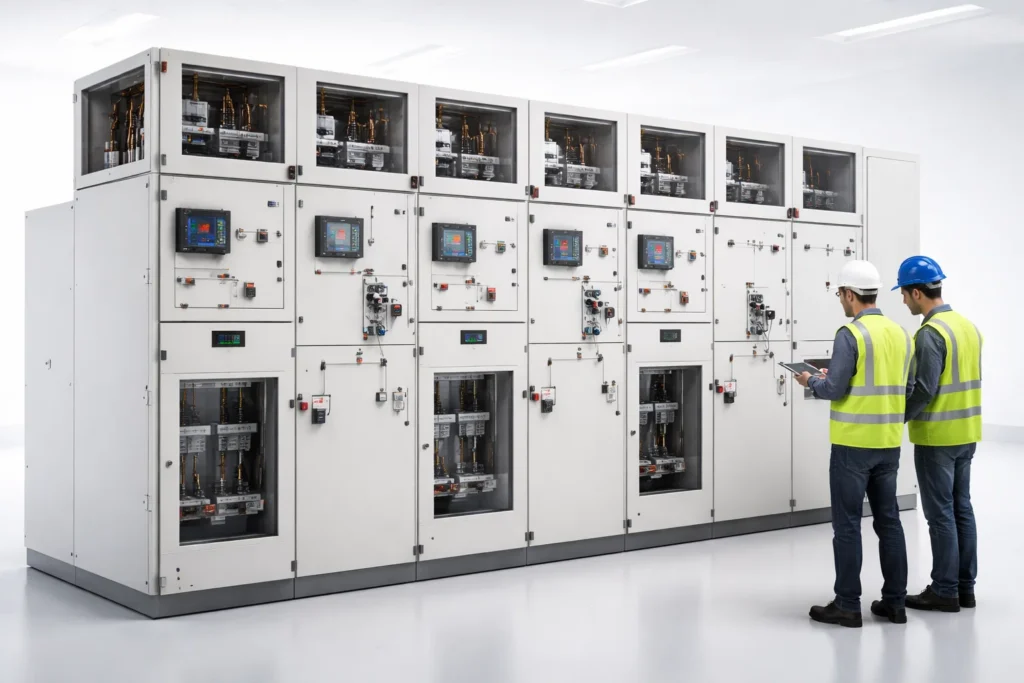
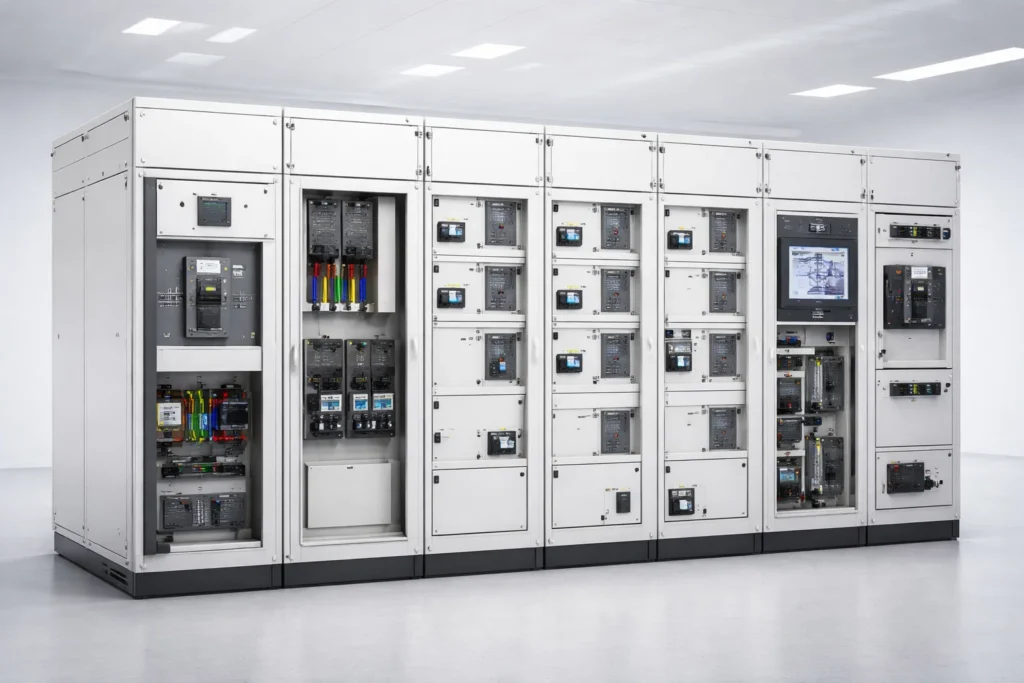
At medium voltage, the design usually becomes more protection- and application-driven. Feeder schemes, breaker configuration, relay logic, operational safety, and interface to the broader distribution network become more important.
High-voltage custom switchgear
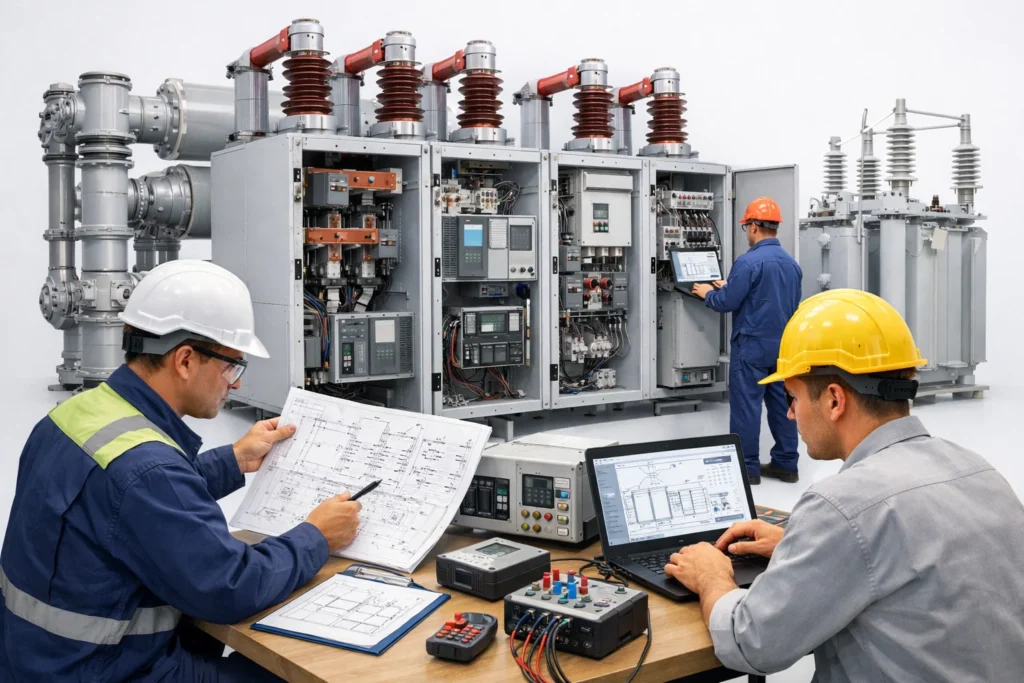
At high voltage, customization becomes even more project-specific. System studies, protection logic, equipment interfaces, installation conditions, and verification requirements carry more weight, so early engineering coordination matters even more.
What to prepare before requesting a quotation
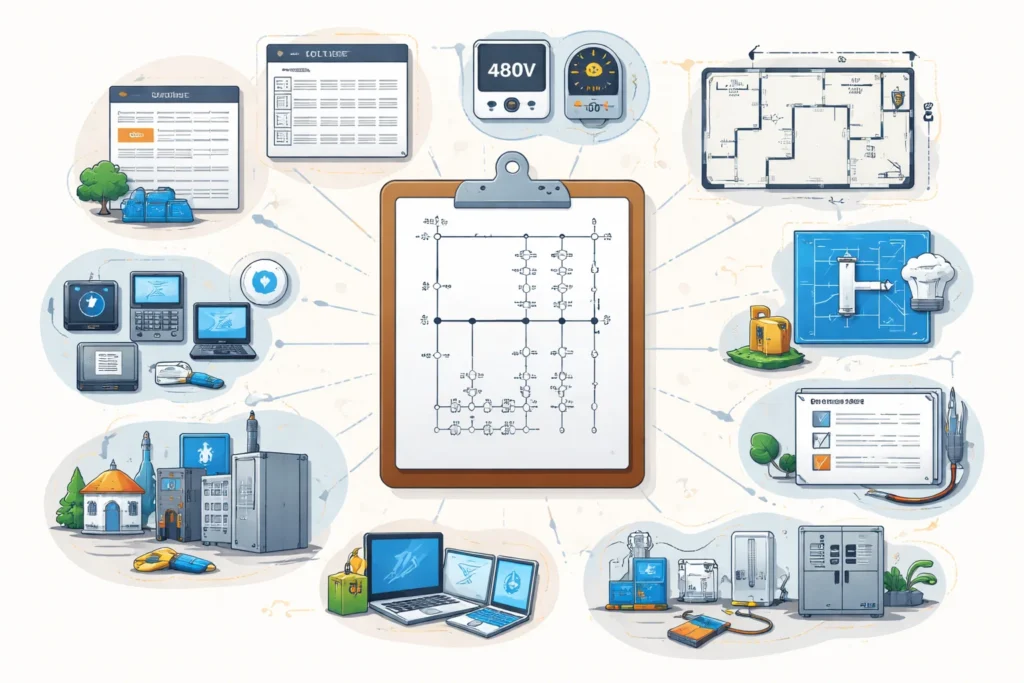
The fastest way to move a custom switchgear project forward is to prepare the right information early. A useful quotation package usually includes:
- single-line diagram
- load list or motor list
- required voltage, current, and frequency
- available short-circuit level
- preferred incomer and feeder arrangement
- protection relay or metering requirements
- communication requirements
- installation location and environmental conditions
- room dimensions and layout limits
- cable entry direction
- required standards or consultant specifications
- expansion plan, if any
The clearer these inputs are, the faster the technical review becomes and the fewer design revisions you will need later.
How to choose the right custom switchgear manufacturer

Not every supplier handles custom work with the same depth. When comparing options, look for a team that can do more than quote a catalog lineup.
A strong custom switchgear manufacturer should be able to:
- review your single-line diagram and identify missing inputs early
- discuss ratings, interfaces, and compliance targets in practical engineering terms
- recommend a realistic configuration instead of overselling
- support testing, documentation, and project coordination
- balance performance, maintainability, delivery, and cost
- communicate clearly during design, production, factory testing, and after-sales support
The best partner is usually the one that reduces uncertainty, not the one that only promises the lowest number on the first quotation.
Conclusion
Custom switchgear is not about adding complexity for its own sake. It is about building a lineup that actually fits the project.
When the electrical system, site conditions, layout constraints, or compliance targets are important, a custom switchgear solution can improve safety, reliability, maintainability, and project coordination from the start.
If you are planning a new installation, retrofit, or expansion, start with clear project inputs. That simple step usually does more to improve the final result than any late-stage adjustment.
FAQ
What is custom switchgear?
Custom switchgear is switchgear designed around a project’s exact electrical, mechanical, environmental, and operational requirements instead of a fixed standard configuration.
When should I choose custom switchgear instead of standard switchgear?
Choose custom switchgear when the project has non-standard feeder arrangements, space limits, critical loads, communication requirements, environmental challenges, or detailed compliance requirements.
Can custom switchgear be used in low-, medium-, and high-voltage systems?
Yes. Custom switchgear can be applied in low-, medium-, and high-voltage systems. The difference is not whether customization is possible, but which technical issues drive the design.
What documents should I send to a supplier first?
Start with the single-line diagram, load list, required ratings, installation conditions, layout constraints, and target standards or consultant specifications.
Does custom switchgear always cost more?
Not necessarily. The initial equipment price may differ from a standard lineup, but the better comparison is total project value. A well-matched custom solution can reduce rework, delays, interface problems, and future modification costs.
Planning a custom switchgear project? Click here to share your single-line diagram, load list, layout limits, and compliance targets with Risentric so the engineering team can review the requirements and recommend a practical solution.


