
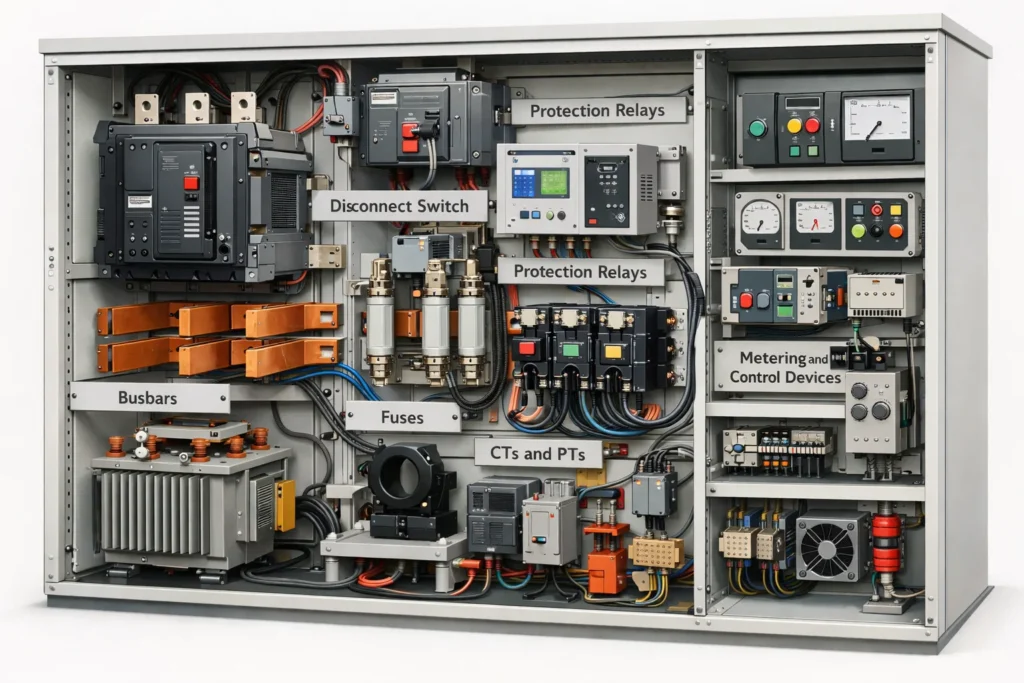
Switchgear components are the parts inside an electrical assembly that control, protect, isolate, and distribute power. In common industry guidance, switchgear is a metal-enclosed assembly built around circuit breakers, fuses, or switches, and many systems also include relays, transformers, bus work, instrumentation, control equipment, wiring, and other supporting parts.
If you are preparing an RFQ, comparing technical quotations, or selecting equipment for a low-voltage or medium-voltage project, understanding the role of each component makes specification much easier. It also helps prevent common problems such as incomplete protection, poor maintainability, unnecessary cost, and future expansion limits.
The main switchgear components and what they do
1) Circuit breakers
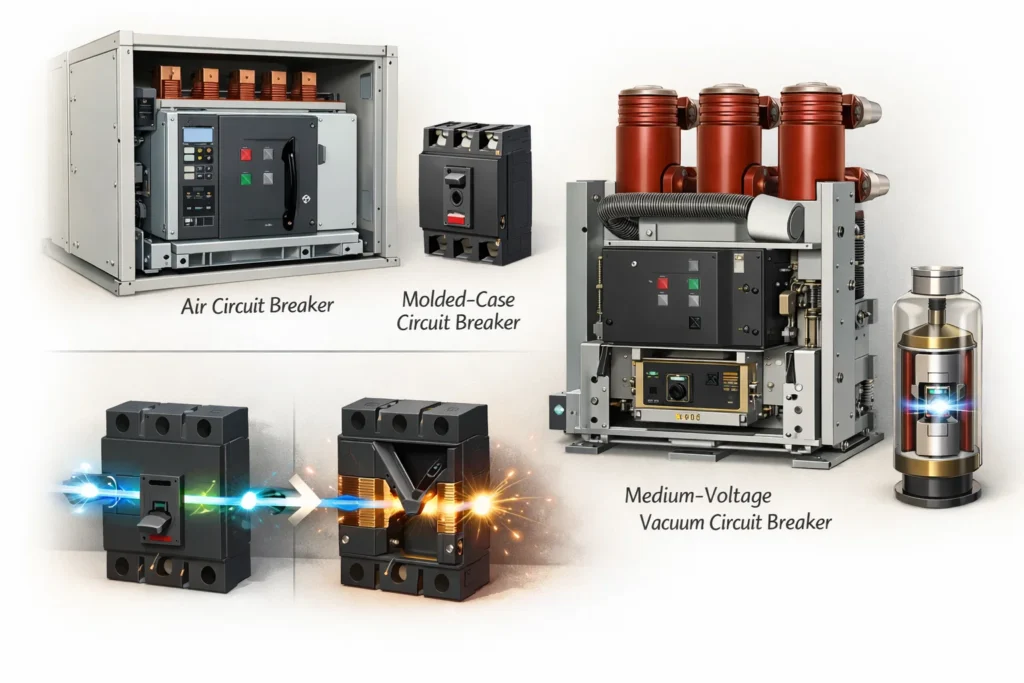
Circuit breakers are usually the primary protective devices in switchgear. Their job is to make, carry, and interrupt current under normal operation, and to open quickly under fault conditions such as overloads or short circuits. In low-voltage systems, air circuit breakers and molded-case circuit breakers are common. In medium-voltage systems, vacuum circuit breakers are widely used.
2) Busbars
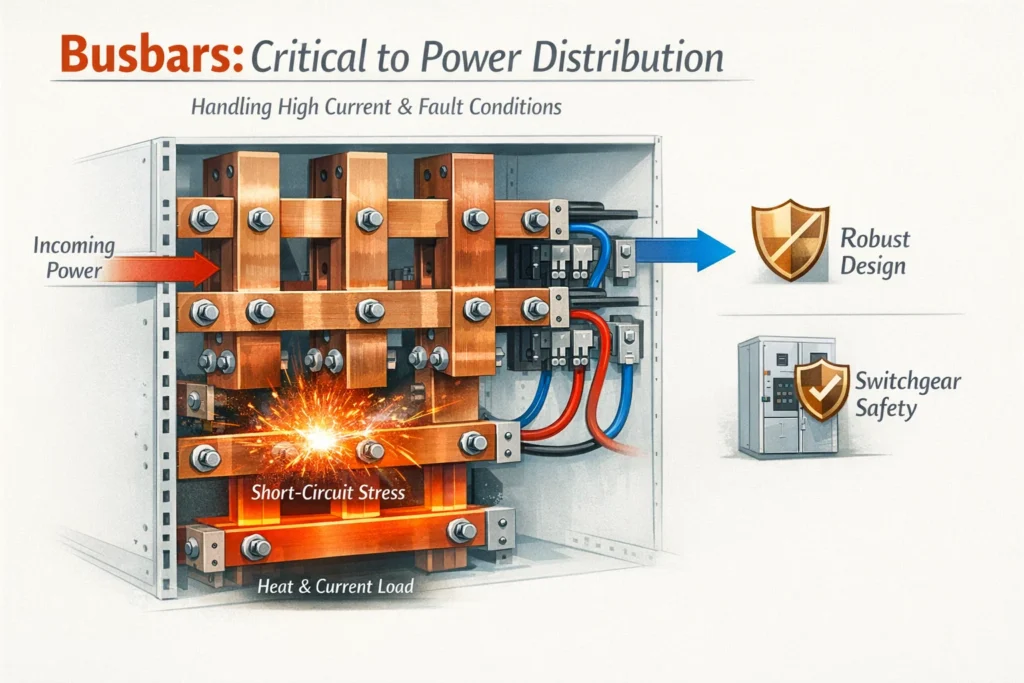
Busbars are the internal conductors that collect incoming power and distribute it to outgoing feeders. They are critical to the overall performance of the assembly because they must handle continuous current, temperature rise, and short-circuit stresses. Strong busbar design is one reason switchgear can remain safe even when severe downstream faults occur.
3) Disconnect switches and isolators
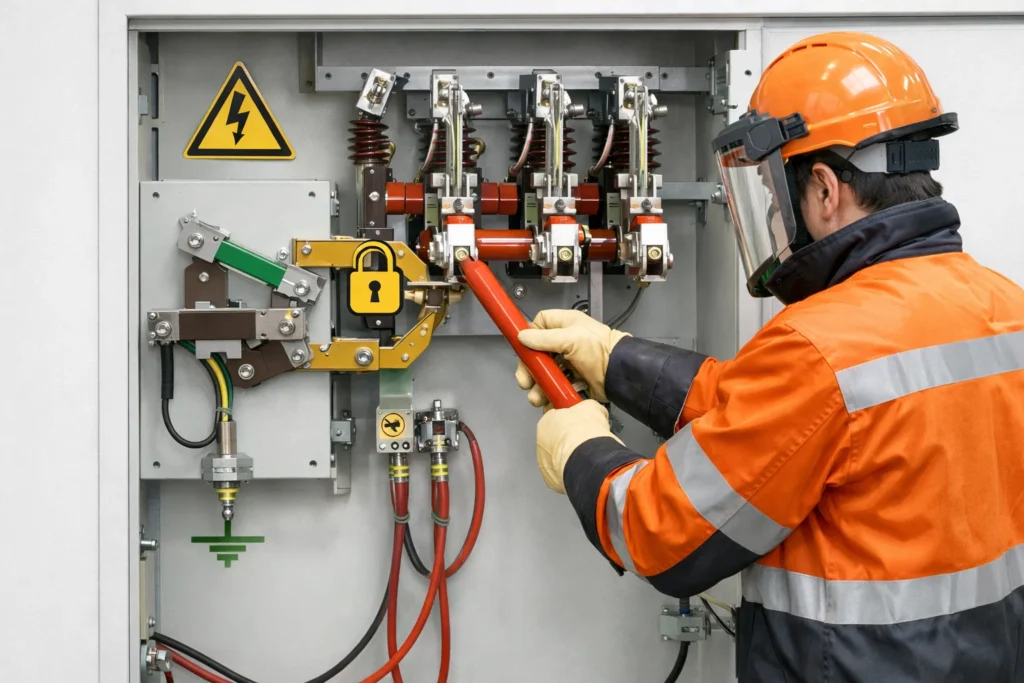
Disconnect switches are used to isolate equipment so maintenance can be performed safely. Unlike protective breakers, isolators are mainly about visible disconnection and safe working conditions. In many medium-voltage designs, disconnecting and earthing functions are supported by interlocking to reduce the risk of operator error.
4) Fuses
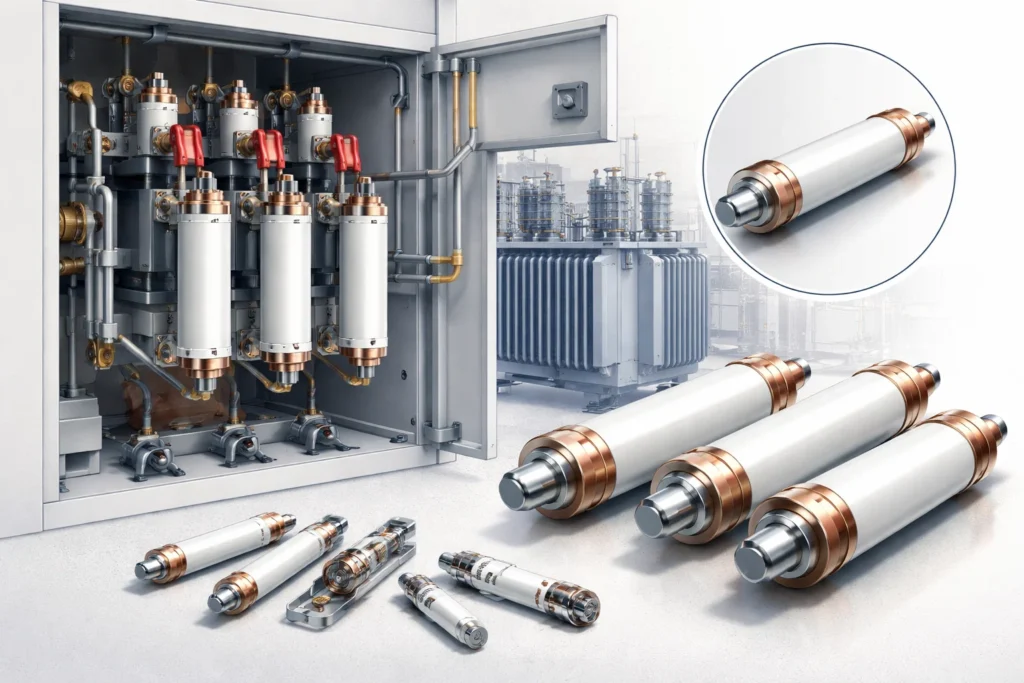
Fuses are simple, cost-effective protective components used in many switchgear applications. They are especially common for transformer protection, control circuits, and backup protection schemes. In some medium-voltage arrangements, fuses are paired with switches so the system can both interrupt fault current and provide switching capability.
5) Contactors and motor starters
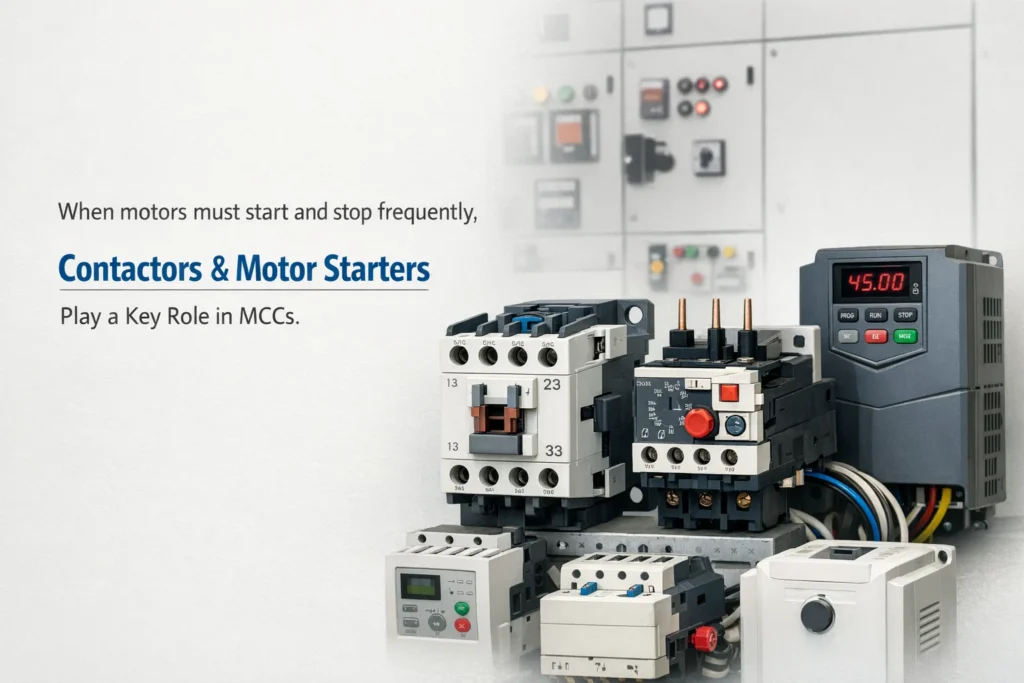
When motors must start and stop frequently, contactors and motor starters become important. These parts are common in MCC assemblies, where motors, pumps, fans, compressors, and conveyors need centralized control and protection. Depending on the project, they may be combined with overload relays, soft starters, or variable frequency drives. Please check Risentric’s MCC page for more information about motor-control.
6) Protection relays
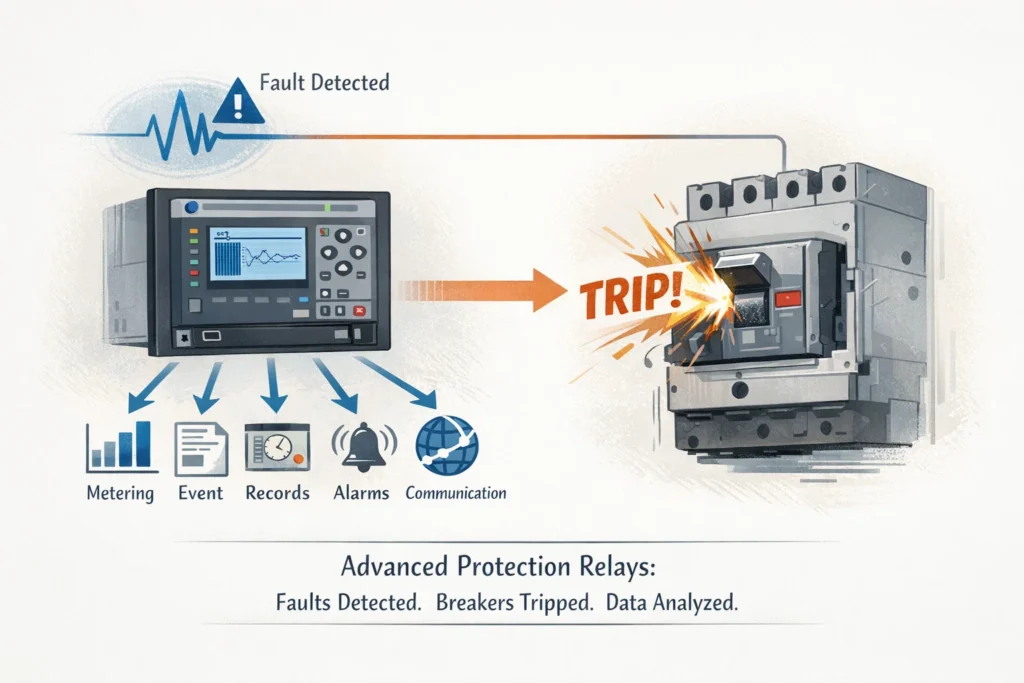
Protection relays detect abnormal electrical conditions and command the breaker to trip. Modern relays can handle much more than basic overload protection. They often provide fault indication, event records, metering, alarms, and communication for more intelligent operation. In practical terms, relays are what make switchgear selective, coordinated, and easier to diagnose.
7) Current transformers and potential transformers
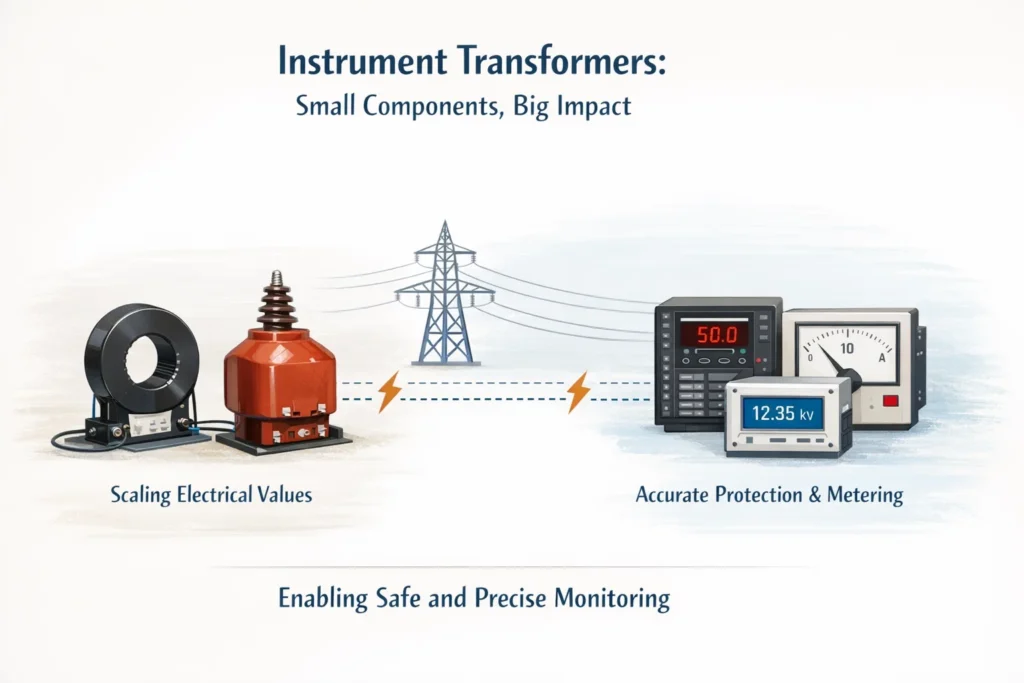
CTs and PTs scale electrical values to safe levels so relays and meters can read them accurately. Without these instrument transformers, protection, metering, and automation would be limited in larger or medium-voltage systems. They are small components, but they have a major influence on measurement accuracy and protection performance.
8) Metering, indication, and control devices
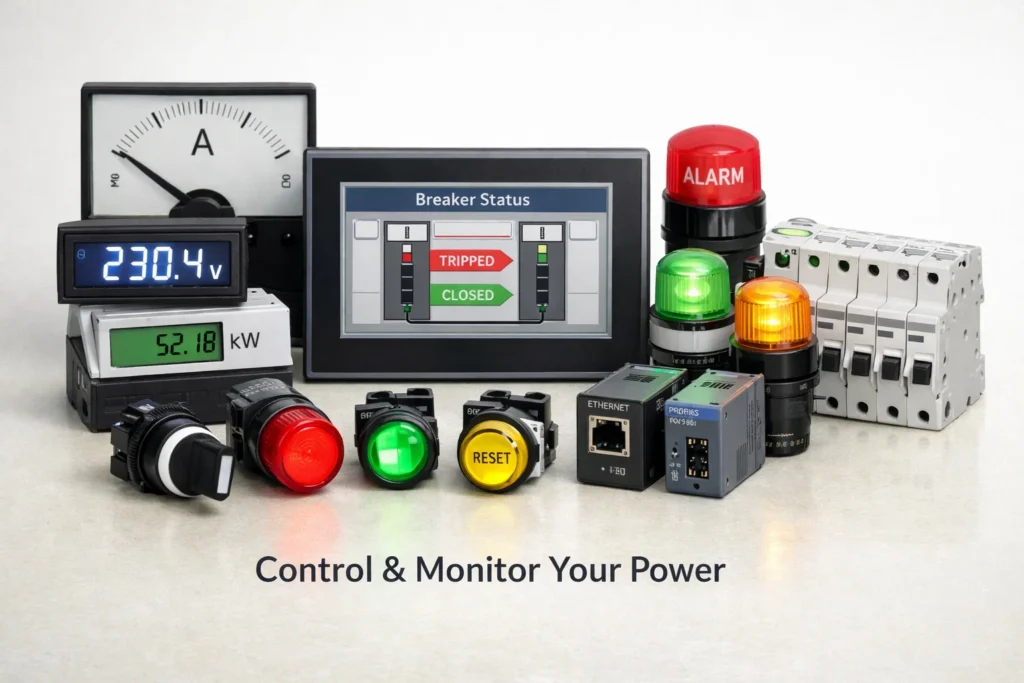
Meters, pilot lamps, selector switches, push buttons, HMIs, and communication modules give operators visibility and control. These switchgear panel components help teams monitor energy, see breaker status, acknowledge alarms, and connect the assembly to building or plant systems. As more facilities look for smarter power management, these devices are becoming standard rather than optional.
9) Enclosure, compartments, and interlocks
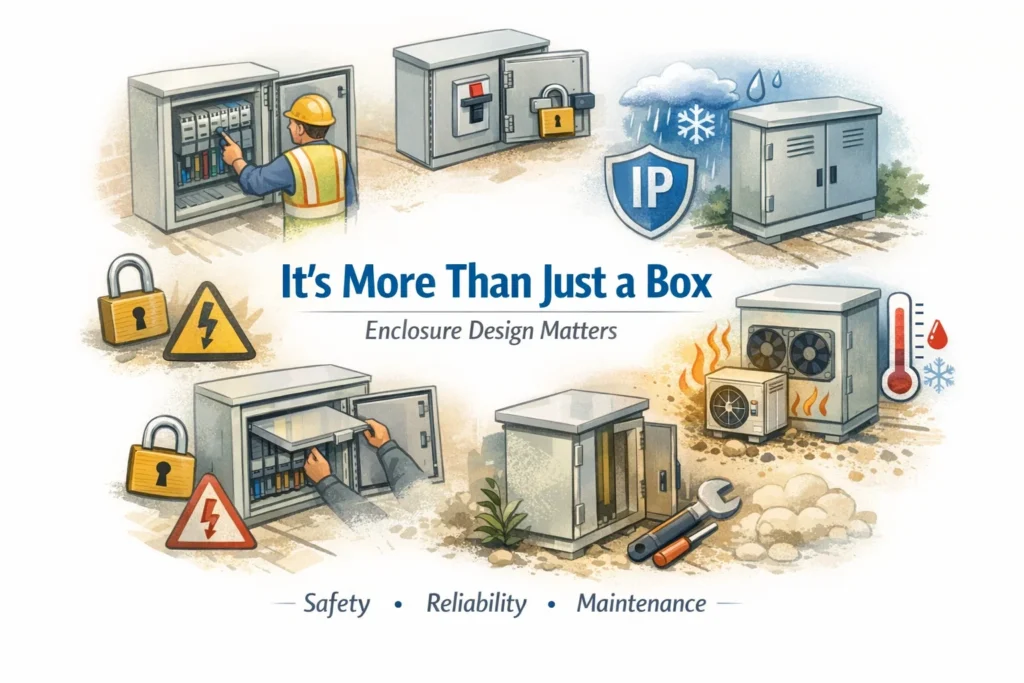
The enclosure is not just a box around the equipment. Compartmentation, access arrangement, shutters, interlocks, and ingress protection all affect safety, maintainability, and operating reliability. For indoor and outdoor projects, enclosure design can be just as important as the electrical design, especially where dust, water, temperature changes, or limited maintenance space are factors. Please check this blog for more content on enclosure parameters.
10) Auxiliary wiring and supporting parts
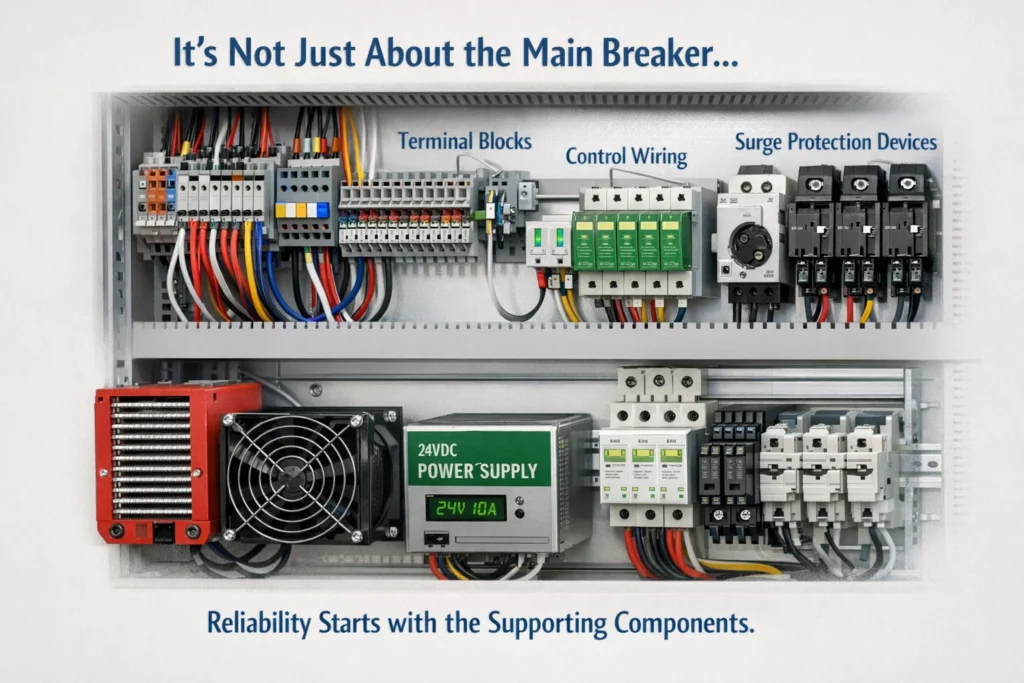
Terminal blocks, control wiring, heaters, fans, surge protection devices, auxiliary power supplies, and internal connectors are the parts people often overlook. However, many day-to-day reliability issues come from these supporting elements rather than the main breaker itself. Good switchgear design treats them as core components, not as afterthoughts.
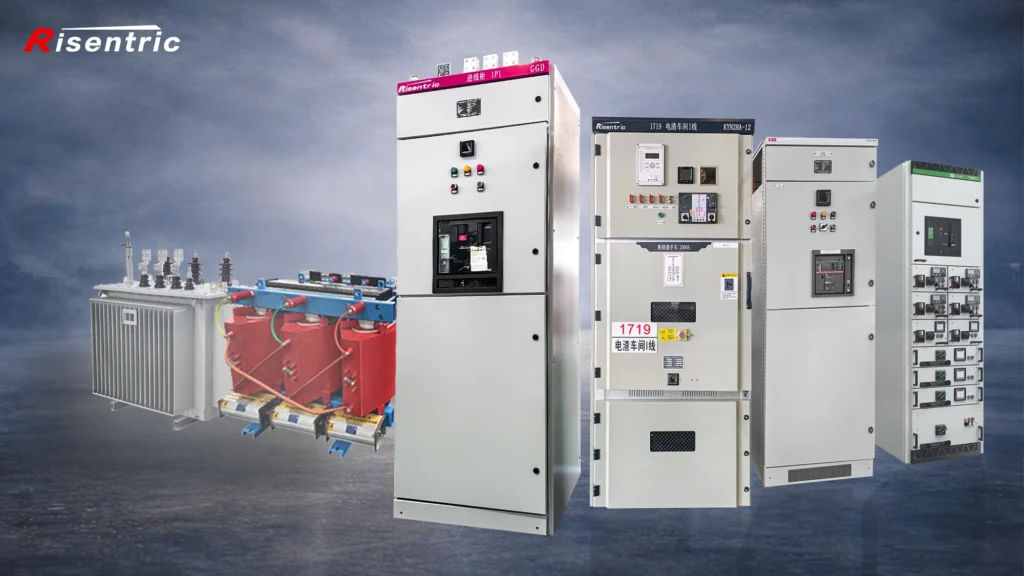
Looking for factory-tested switchgear & Panel boards for your project?
How switchgear components work together
A switchgear assembly works as a system, not as a collection of unrelated parts. Power enters through an incoming protective device, flows through the busbar system, and leaves through outgoing feeders. CTs and PTs provide measurement data, relays evaluate that data, and breakers respond when abnormal conditions appear. In MCC projects, contactors and motor-protection devices manage motor loads. In ATS systems, transfer logic monitors the normal source and switches to standby power when supply conditions fall outside acceptable limits.
Low-voltage vs medium-voltage switchgear components
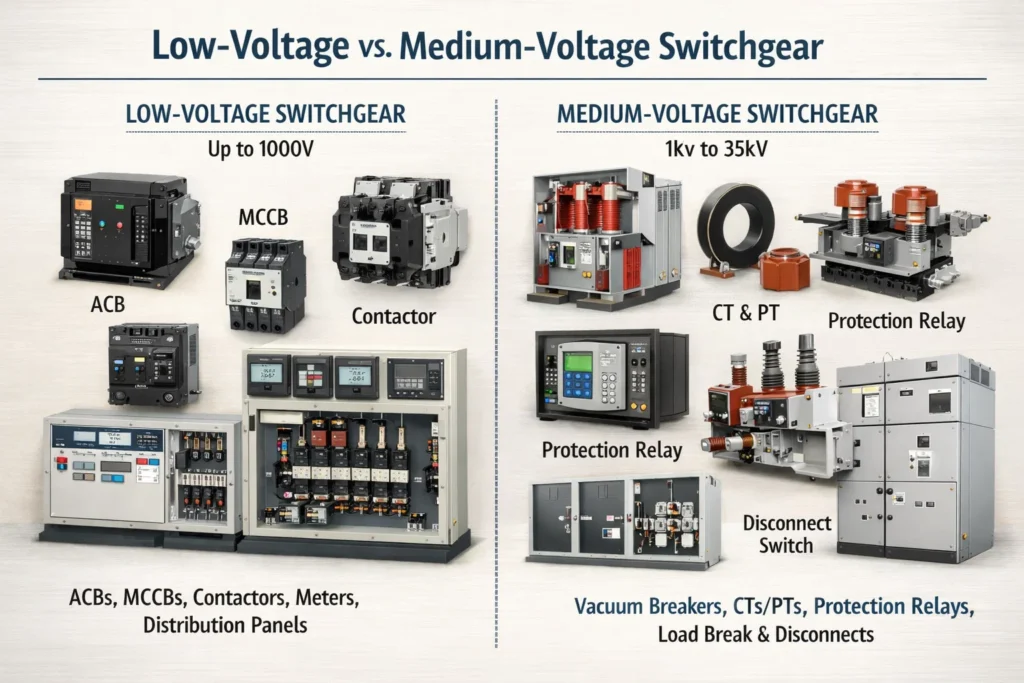
The same basic logic applies in both LV and MV systems, but the component mix changes with voltage class and application. Low-voltage assemblies often emphasize ACBs, MCCBs, contactors, meters, and feeder distribution for building and industrial loads. Medium-voltage assemblies place more emphasis on vacuum breakers, CT/PT sets, protection relays, load-break or disconnect devices, and stricter compartmentation.
What to check before choosing switchgear components
Before placing an order, check the full application instead of focusing on one headline rating.
- System voltage and frequency
- Rated current
- Short-circuit interrupting or withstand level
- Indoor or outdoor installation
- Required IP rating and environmental protection
- Fixed or withdrawable design
- Metering, communication, and automation needs
- Spare parts, maintainability, and future expansion
Common mistakes buyers make
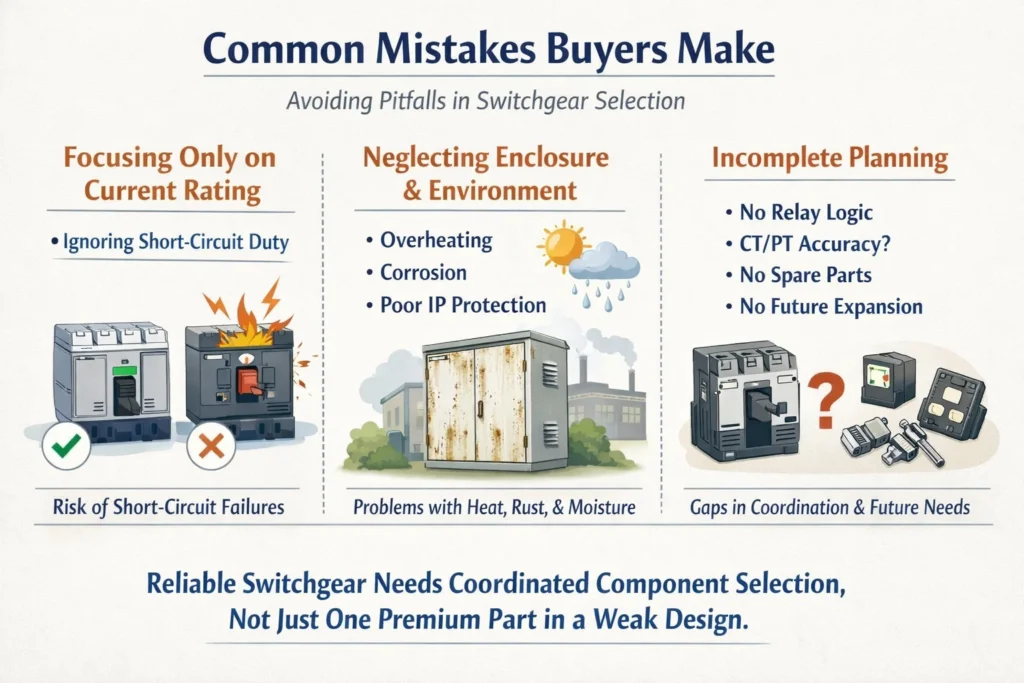
One common mistake is choosing components by current rating alone and ignoring short-circuit duty. Another is overlooking the enclosure and site environment, which can lead to overheating, corrosion, or insufficient IP protection. A third is specifying the main breaker but not thinking through relay logic, CT/PT accuracy, spare parts, or future expansion. In real projects, reliable switchgear comes from coordinated component selection, not from one premium part installed in an otherwise weak design.
Final thoughts
Understanding switchgear components makes it easier to write better specifications, compare quotations more confidently, and select equipment that will stay safe and maintainable over the long term. Whether the project involves LV distribution, MV switchgear, ATS panels, or MCC systems, the goal is the same: every component should support the overall protection, control, and continuity of the system. Need help matching components to a BOM, single-line diagram, or project drawing? Contact us now!
FAQ
What are the main switchgear components?
The main switchgear components usually include circuit breakers, busbars, disconnect switches, fuses, protection relays, CTs, PTs, meters, control devices, auxiliary wiring, and the enclosure system. The exact arrangement depends on whether the assembly is designed for LV, MV, ATS, or MCC service.
What is the difference between a circuit breaker and an isolator?
A circuit breaker is designed to interrupt load and fault current. An isolator is mainly used to provide safe visible separation for maintenance. In other words, breakers protect and switch under electrical duty, while isolators create safe working conditions.
Are switchgear components different in ATS and MCC panels?
Yes. ATS panels focus on source monitoring, transfer logic, and safe switching between normal and standby power. MCC panels focus on motor starting, motor protection, and control of multiple motor loads. Both are part of broader low-voltage distribution, but their component priorities are different.
Which standards matter when selecting switchgear components?
That depends on the project and voltage level. Risentric’s compliance page highlights IEC 61439 for low-voltage assemblies and the IEC 62271 series for medium- and high-voltage switchgear and controlgear. Buyers should always match component selection to the standards named in the project specification.
Reference:
https://www.eaton.com/us/en-us/products/medium-voltage-power-distribution-control-systems/switchgear/fundamentals-of-medium-voltage-switchgear.html
https://www.se.com/us/en/product-category/88025-switchgear-components/?utm_source=chatgpt.com


