
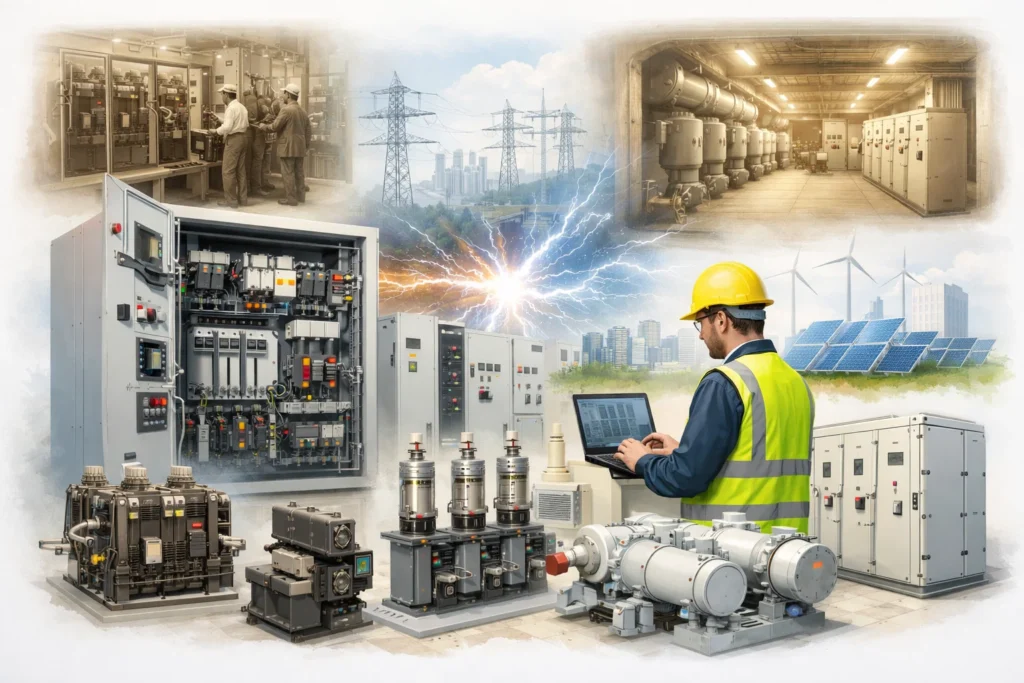
In practical terms, switchgear is where electrical power becomes controllable. It allows operators to energize or isolate circuits, protects equipment under abnormal conditions, and helps stop a fault in one part of the system from affecting the wider installation.
You may also find these related articles helpful:
- Custom Switchgear — for project selection and solution planning
- Switchgear Components Explained — for understanding internal structure and major parts
- Switchgear Maintenance and Testing — for inspection, lifecycle management, and long-term reliability
- Types of Electrical Switchgear Cabinets — for understanding the main types and categories of switchgear and where they fit in the system
This article focuses on the bigger picture of what is a switchgear, including its role in the overall electrical system, its historical development, and why it continues to matter in modern power systems.
What does switchgear do?
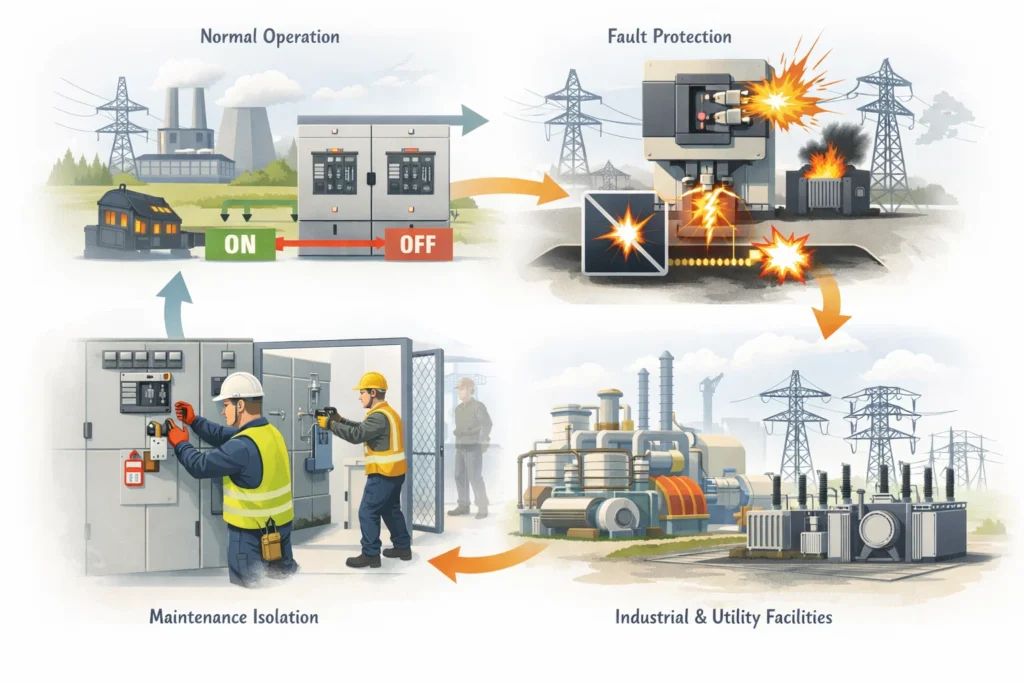
The essential function of switchgear is to control normal switching operations and respond to abnormal electrical conditions. Under normal conditions, it allows circuits to be energized, de-energized, sectionalized, and isolated. Under fault conditions, it works with protective devices to interrupt current quickly enough to limit damage and protect the wider system.
This makes switchgear important for more than just fault clearing. It also supports safe maintenance. If equipment must be inspected, repaired, or replaced, the system needs a reliable way to isolate that section without creating unnecessary danger for operators or shutting down more of the plant than necessary. That maintenance-oriented role is one reason switchgear is especially important in utilities, industrial plants, and other facilities where electrical continuity and safe access both matter.
Why switchgear matters in the bigger picture
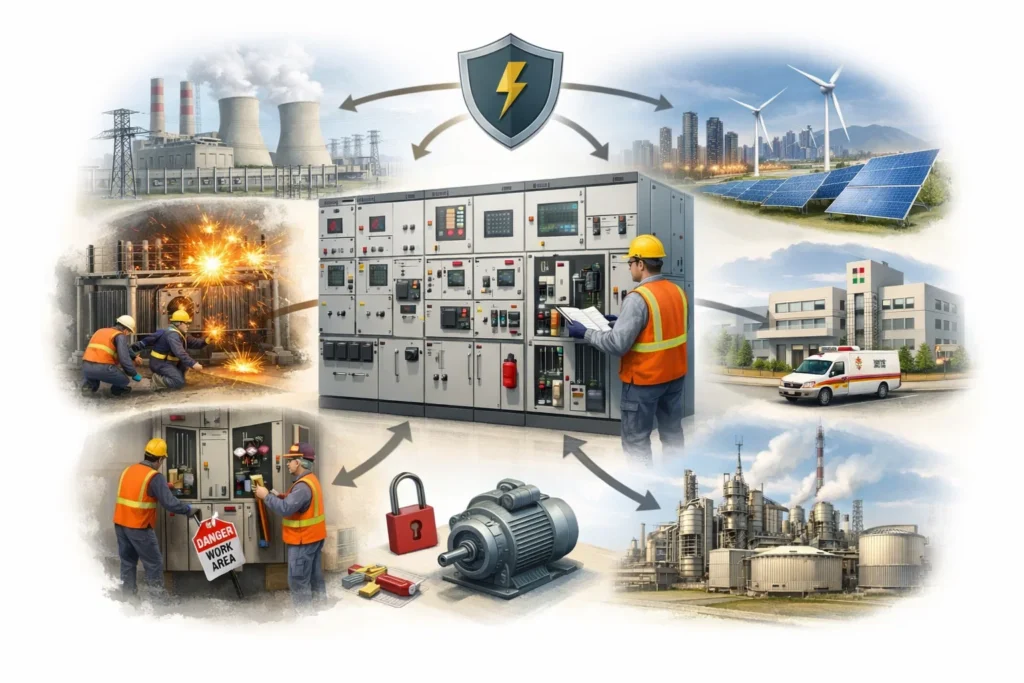
In a real power system, the question is rarely just whether electricity is present. The bigger question is whether power can be controlled, protected, and restored in an orderly way. That is where switchgear becomes critical. It sits at the point where electrical infrastructure must do more than simply distribute current: it must also handle fault duty, support protection coordination, and allow the safe isolation of equipment.
This is also why switchgear has such a strong connection to system reliability. When properly specified, it helps contain faults, reduce equipment damage, maintain service continuity for unaffected circuits, and make maintenance more predictable.
A short history of switchgear: how switchgear became important
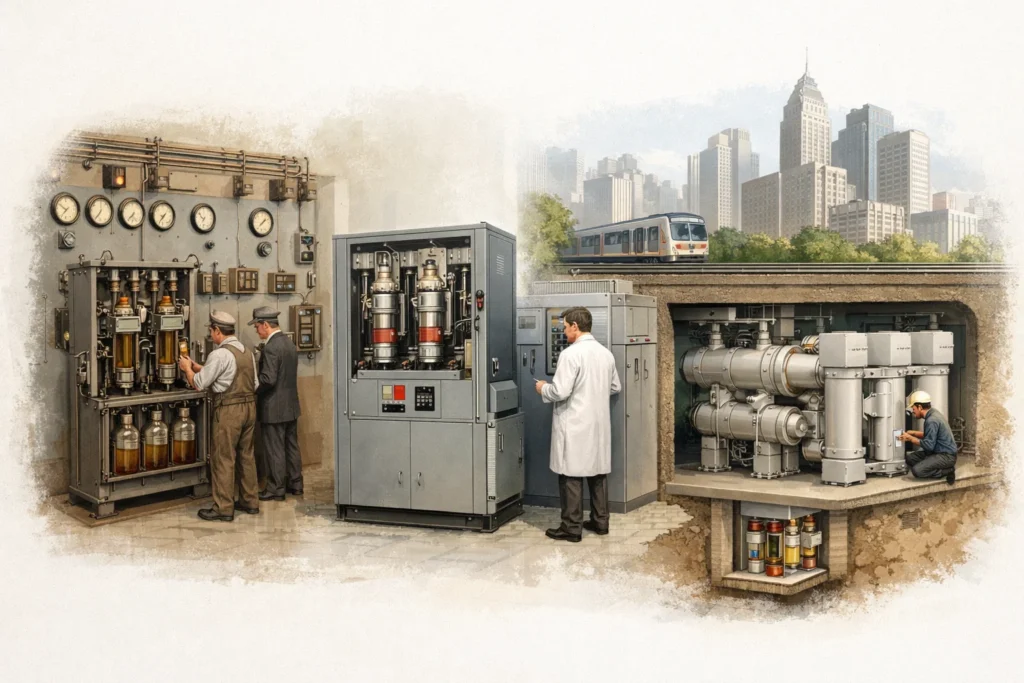
Switchgear became important as electrical systems grew larger, more interconnected, and more dependent on controlled operation. In the early development of power systems, the main challenge was simply delivering electricity. But as networks expanded, the challenge changed. Engineers also needed a reliable way to switch circuits, isolate equipment for maintenance, and interrupt faults before damage could spread through the wider system.
Several historical milestones show how that need evolved.
By the early 20th century, switchgear lineups were already developing into metal-enclosed structures using electrically operated switching elements, often with oil circuit breakers. This marked an important step away from simpler, more exposed arrangements and toward safer, more organized system control.
A major later milestone was the development of vacuum switching technology. The history of vacuum switchgear began in the mid-1920s, although commercially important vacuum switching equipment did not appear until the late 1950s. That transition mattered because it opened the way to lower-maintenance and more reliable medium-voltage switching technology.
Another major milestone came with the rise of gas-insulated switchgear (GIS). Around 1968, the first GIS installation in an underground substation in Zurich marked a breakthrough that made switchgear far more compact and better suited to dense urban environments. Compared with traditional air-insulated substations, GIS required far less space, which made it a major enabler for urban power infrastructure.
Why switchgear is even more important today
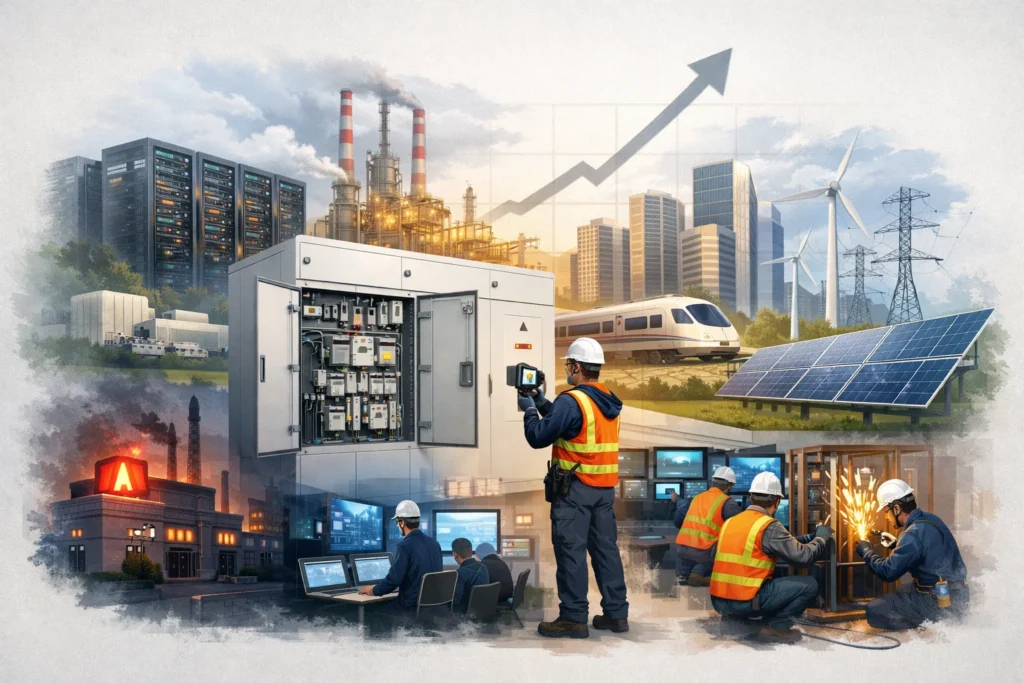
Taken together, these milestones show a deeper pattern in the history of switchgear: as electricity demand increased, switchgear had to become safer, more compact, more reliable, and more specialized.
Switchgear remains important today for the same basic reason, but on a much larger scale: the demand for electricity continues to increase.
Modern buildings, industrial plants, data centers, infrastructure systems, and energy networks all depend on larger amounts of electrical power than before. At the same time, these systems are expected to deliver higher reliability, safer maintenance conditions, better continuity of service, and faster recovery from abnormal events. As electricity demand rises, the consequences of poor protection and inadequate isolation also increase. That is one of the core reasons switchgear is needed more than ever.
The issue is not only that more electricity is being used. It is also that more processes now depend on electrical continuity. A fault is no longer just an electrical event; it can become an operational, financial, and safety problem. This is why switchgear matters so much in modern systems. It helps electrical infrastructure behave properly under normal conditions and behave safely under abnormal ones.
That is the bigger-picture value of switchgear. It is not just a collection of components inside a metal enclosure. It is one of the assemblies that makes modern electrical systems controllable, protectable, and dependable as power demand continues to grow.
Where switchgear is used
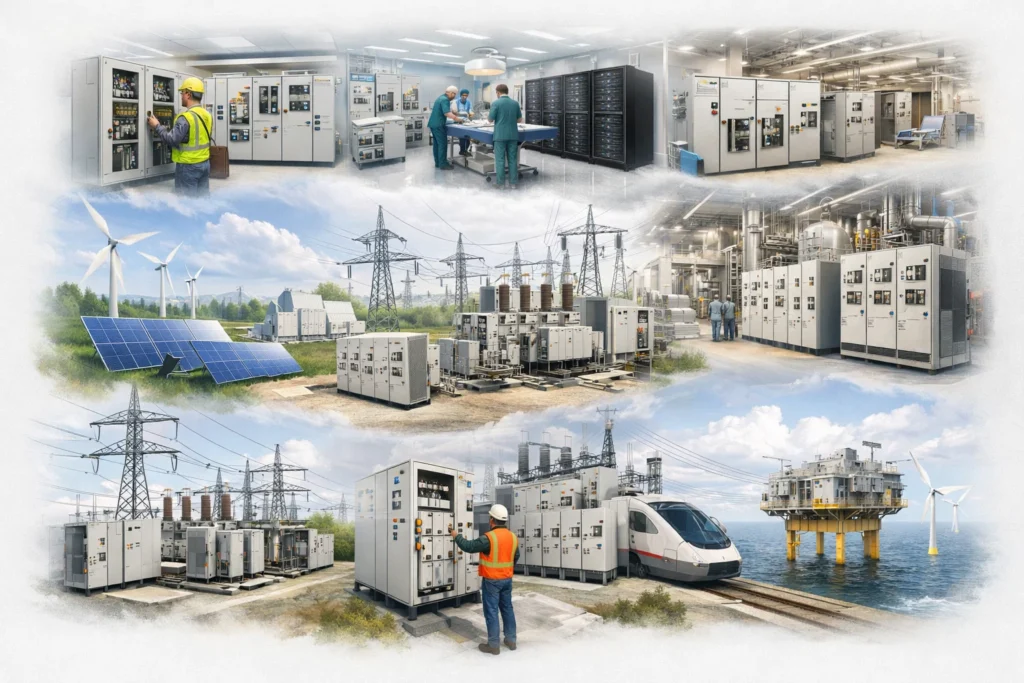
Switchgear is used across a wide range of power systems, from low-voltage installations in commercial and industrial facilities to medium– and high-voltage applications in utilities, infrastructure, and large-scale energy networks. Its exact form depends on the voltage level, the operating environment, the required protection performance, and the importance of the loads it serves.
In low-voltage systems, switchgear is commonly used in commercial buildings, factories, data centers, hospitals, water treatment facilities, and other installations where power must be controlled and protected in an organized way. In medium- and high-voltage systems, it is widely used in substations, utility networks, industrial plants, renewable energy projects, transportation infrastructure, and other applications where system reliability and fault control are especially important.
This wide range of use shows that switchgear is not a vague market term. It is a recognized class of engineered equipment designed for specific applications, voltage classes, and protection requirements. Although its form changes from one system to another, its core role remains the same: to help electrical systems operate safely, reliably, and in a controlled manner.
What makes switchgear different from a simple distribution assembly?
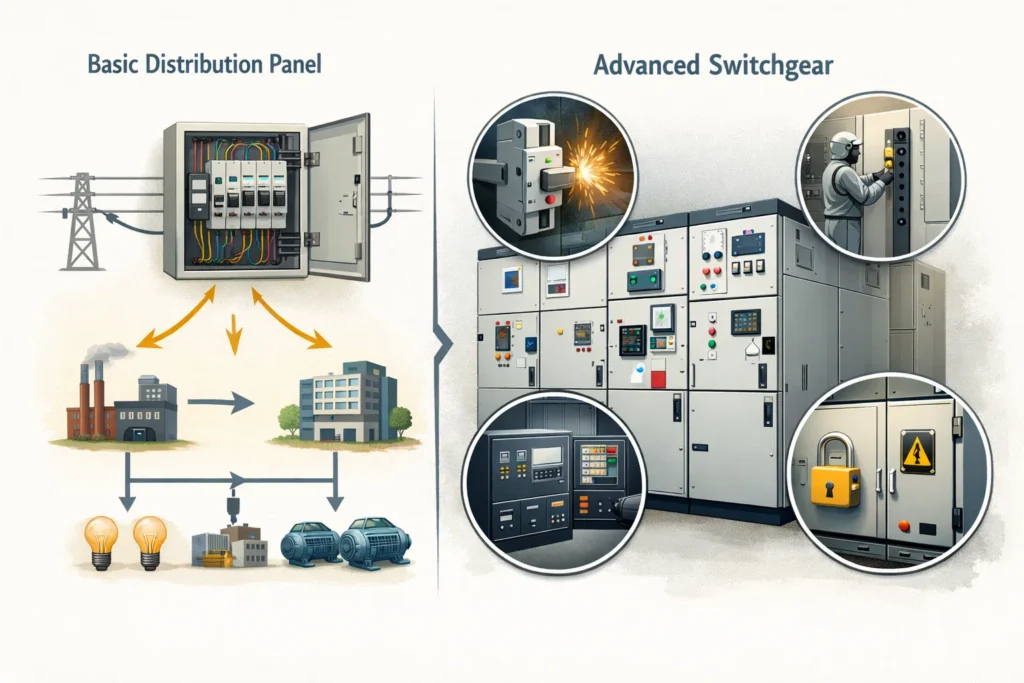
A simple way to think about it is this: a basic distribution assembly mainly sends power where it needs to go, while switchgear is designed to do much more than route electricity. It is built to switch circuits intentionally, interrupt faults, isolate equipment safely, and support the protection logic of the wider system.
That does not mean switchgear cannot distribute power. In many systems, it does. The difference is that its design emphasis is much stronger on protection, isolation, fault performance, and operational control. This is why switchgear is often specified in projects where equipment safety, service continuity, compartmentalization, and maintainability matter more than a basic feeder arrangement.
In other words, the real difference is not whether both assemblies can distribute power. The real difference is what they are expected to do when the system is under stress, when maintenance is required, or when a fault must be contained quickly and safely.
Want to understand how switchgear differs from switchboards? Read our guide on Switchgear vs Switchboard: Key Differences.
What should buyers and engineers pay attention to?
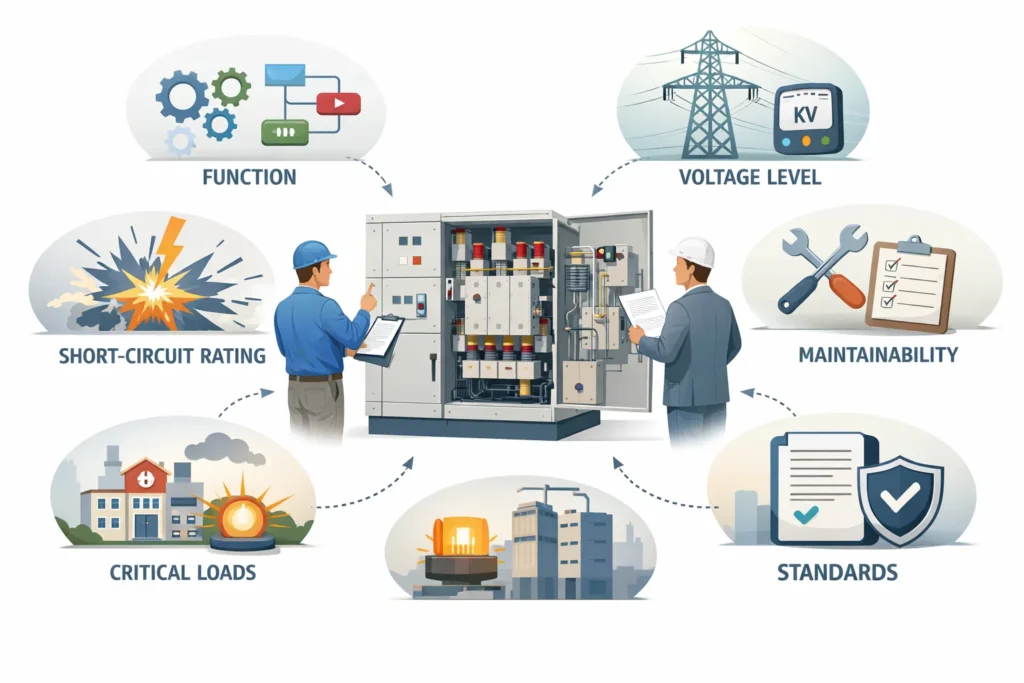
The most common mistake is to choose switchgear only by headline current or by a familiar label. In practice, a better selection process starts with the actual job the equipment must do. Buyers and engineers should first look at the function of the assembly, the voltage level, the required short-circuit performance, the importance of maintainability, the criticality of the load, and the standard that governs the project.
For a more practical guide to selecting the right configuration for real projects, check our blog Custom Switchgear: How to Choose the Right Solution for Your Project.
That framework is much more useful than asking whether one product name sounds “better” than another. Switchgear should be selected as part of a protection and operation strategy, not as a generic box of electrical hardware. Once the function is clear, decisions about form, standard, insulation type, access, and protection architecture become much more logical.
Final thoughts
A switchgear is not just a container of components. It is an engineered assembly built to control, protect, isolate, and support the reliable operation of electrical systems. Its importance comes from what it allows the wider power system to do: operate safely, isolate faults, support maintenance, and maintain order under electrical stress.
Need help selecting switchgear for a project? Contact us and share your single-line diagram, voltage level, short-circuit requirement, installation environment, and service expectations, and we can help review a suitable solution.
FAQ
What is a switchgear?
A switchgear is an electrical assembly used to control, protect, and isolate circuits and equipment in a power system. It helps ensure that electrical power can be managed safely under normal operating conditions and interrupted properly when faults occur.
What is the main function of switchgear?
The main function of switchgear is to make electrical power controllable and protectable. It allows circuits to be energized or isolated when needed, supports fault interruption, and helps protect equipment and the wider system from damage.
Where is switchgear used?
Switchgear is used in a wide range of electrical systems, including commercial buildings, industrial plants, substations, infrastructure projects, data centers, and utility networks. Its exact form depends on the voltage level, the application, and the protection requirements of the system.
Why did switchgear become important historically?
Switchgear became important as electrical systems grew larger and more interconnected. Once power systems had to serve more loads and more complex networks, engineers needed a reliable way to switch circuits, isolate equipment, and interrupt faults before problems spread through the wider system.
Why is switchgear even more important today?
Switchgear is even more important today because electricity demand continues to grow, while modern facilities also expect higher reliability, safer maintenance, and better continuity of service. As more systems depend on electrical power, the need for controlled switching, protection, and isolation becomes even more critical.
Is switchgear only about distributing power?
No. Although switchgear may be part of a distribution system, its role goes beyond distribution alone. It is designed to control circuits, interrupt faults, isolate equipment safely, and support the protection logic of the wider electrical system.
How has switchgear developed over time?
Switchgear has developed alongside the growth of electrical infrastructure. As power systems became larger and more demanding, switchgear evolved from simpler exposed arrangements into more enclosed, reliable, and specialized assemblies, including oil, vacuum, and gas-insulated technologies.


